Publications

- Category: Infrastructure and energy
The National Bank for Economic and Social Development (BNDES) settled an agreement at the end of June to share guarantees with public and private banks that act as guarantors in infrastructure projects. The measure allows for greater predictability in the allocation of risks to these banks and reinforces the funding of projects. The objective is to increase financing to the infrastructure sector by attracting new investors, especially large international financial institutions.
The initiative was a response to the market's criticism of BNDES’s positions that ended up hindering some financing projects. This was because, at the same time that it required too much collateral or corporate assets of the companies or their partners, BNDES also obliged commercial banks to accept mere subrogation as the only form of guarantee.
The new practice will apply to financial institutions that individually or jointly guarantee at least 40% of the total amount of the financing of a project or individually hold at least a 20% stake. With these financial institutions, BNDES will now begin to share the rights emerging from the projects, as well as the corporate guarantees.
The agreement reached satisfies three requirements necessary for infrastructure projects:
- Security in the granting of guarantees in the pre-completion phase, prior to completion of the project’s works and, therefore, of greater risk. In previous practices, there was an informational, conditional, and temporal asymmetry due to the fact that the companies offered sureties in the proportion that they had disbursements to receive, which compromised this security.
- Reduction in financing costs, due to greater competitiveness among banks, given that issues such as sharing of guarantees, greater predictability, and better (and fairer) allocation of risks are ensured.
- Extension of the term of concession of sureties, which, according to BNDES's note, previously did not cover the four or five years required for projects to acquire operational viability.
In order for sharing to take place and banks to no longer be exposing themselves to project risk, the conditions for declaring the physical and financial completion of the projects' works have also been agreed upon with BNDES, which meets the aforementioned requirements and provides greater predictability. For this, it will be necessary for a project (i) to be completed and generate the anticipated cash flow and (ii) to provide a minimum debt service coverage ratio of 1.3 times cash generation for the last two financial years.
The new BNDES guarantee-sharing policy follows in lock-step the federal government's initiatives to attract capital and solve the deficit problem with the public coffers through a series of reforms and projects. One of the last measures in this direction was the opening of a credit line of approximately R$ 12 billion to support infrastructure projects in states and municipalities in the sectors of urban transport, public lighting, basic sanitation, and solid waste treatment.
The sharing of the BNDES guarantees with other banks will already be applied to the financing of the concessions for the Fortaleza, Salvador, Porto Alegre, and Florianópolis airports and the São Paulo State highways. Other projects may also benefit from the new policy.
This measure certainly represents a major step towards ensuring predictability and security in the financing of infrastructure projects. However, the market and investors in general are waiting for BNDES’ position on the next financing operations to confirm the actual implementation of this new policy in the programs favored by the federal government.

- Category: Tax
Covenant No. 52/2017, recently issued by Confaz (National Finance Policy Council), followed the understanding of the Second Panel of the STJ (Superior Court of Justice) in the sense that the ICMS due under the withholding regime (ICMS-ST) is embedded in its own calculation basis. This means that the ICMS-ST should also be assessed on a gross-up basis, as is the regular ICMS’ case (Special Appeal No. 1.454.184/MG). The rationale for such understanding is that the ICMS-ST is not different from the regular ICMS.
The ICMS-ST is a regime of tax collection, by means of which a given taxpayer is responsible for the payment of the ICMS due by itself and the ICMS to be paid in any future resale of goods within the same state (e.g., State of São Paulo). This procedure is used by the states to collect taxes from sectors such as beverages, cigarettes, fuels, electricity, and medicines, among others.
The debate regarding its calculation basis is far from being settled, contrary to what is the case with the debate regarding the need to gross up the regular ICMS calculation basis. It is noteworthy that the gross-up calculation basis of the regular ICMS has already been ruled as a constitutional measure by the Federal Supreme Court (STF).
However, there is great concern that the formation of the ICMS-ST calculation basis will be understood as equivalent to that of the regular ICMS, a trend that seems to be strengthening and with which it is not possible to agree, since it violates the principle of non-cumulativity, which is in turn rooted in the Constitution Federal.
In fact, as understood by the Second Panel of the STJ in Special Appeal No. 1.454.184/MG, the ICMS and ICMS-ST are one and the same tax. In addition, it is also clear that the ICMS-ST is only a technique that aims at allowing tax authorities to collect tax and perform audit procedures in an easier way. However, there is no way to agree with the proposition that a technique of collection should ultimately increase tax revenues. This was not what the STJ sought to do, but it was what it, in a roundabout manner, and perhaps without realizing the scale of the effects of its understanding, eventually validated.
It is important to remember that the calculation of the ICMS-ST for a large part of the products subject to tax substitution is done by applying a value-added margin (MVA) over the selling price of the substituted taxpayer (which pays the ICMS due on the entire chain). This margin is established "on the basis of prices usually agreed upon in the market concerned, obtained by survey, even if by sampling or by means of information and other elements provided by entities representing the respective sectors, adopting the weighted average of the prices collected, and these criteria are to be set by law” (Complementary Law No. 87/1996, article 8, paragraph 4).
On top of that, one must bear in mind that in October of last year, the STF ruled out that the ICMS-ST is not a definitive tax. Therefore, if the “price actually agreed upon" (effective basis) is lower than the "usual price agreed upon in the market" (estimated basis), it is possible to recover the ICMS-ST paid in excess to the state.
Of course, when the "weighted average" of the "price usually agreed upon in the market" is established to stipulate the MVA of a product that will be taxed in the system of tax substitution thereafter, this price does not include the ICMS calculated inside of the ICMS-ST, simply because the ICMS-ST is not yet due in transactions with these products.
Thus, applying the MVA on a gross-up calculation basis will mathematically generate a higher value than the one used in the survey. This reasoning shows that, although the ICMS and ICMS-ST are the same tax, embedding the regular ICMS within the ICMS-ST calculation basis causes a distortion in the price and increases collection.
More serious than this increase, the grossed-up calculation basis of the ICMS-ST also breaches the principle of non-cumulativity. This is because, in the same case cited above, in which the ICMS-ST is to be demanded of a given product, it is intuitive that the weighted average of the price usually agreed upon in the market considers the system of ICMS debits and credits.
However, we know that within the ICMS-ST system, ICMS credits may end up being disallowed. Along these lines, the grossed-up calculation basis of the ICMS-ST is a procedure that does not give rise to the correct effects of the credits mechanism in the marketing chain of the product. It is, therefore, an eminently unconstitutional practice, due to its violating the non-cumulativity principle.
Therefore, we understand that Special Appeal REsp No. 1.454.184/MG, in addition to endorsing a practice not provided for in the Federal Constitution and in Complementary Law No. 87/1996 (the only instrument constitutionally authorized to provide a calculation basis for the ICMS and ICMS-ST), goes in a direction opposite to the STF, since its understanding virtually results in a situation where the "effective price agreed upon" (effective basis) is less than the estimated basis due to the mathematical distortion of the latter value.

The Ministry of Transparency, Supervision and Control (CGU) and the Federal Attorney General's Office (AGU) announced on July 11 a leniency agreement with UTC Engenharia, the second one signed under the terms of the Anti-Corruption Law (12,846/2013) and the only one in force in Brazil, signed by an internal control agency.
Leniency agreements are recognized for their relevance in enhancing the effectiveness of actions to combat and prevent unlawful activities, as they improve asset recovery indicators and allow the Government to discover and prosecute offenses efficiently. Likewise, they provide private entities with an opportunity to mitigate possible reputational and economic damage and offer them a negotiated alternative and quick resolution for crisis situations.
However, the lack of frequency of agreements executed under the Anti-Corruption Law, that is, involving the CGU when it comes to acts against the federal government, contrasts with the success of the existing leniency program for infractions of an anti-competitive nature, involving the Administrative Council for Economic Defense (Cade), even when taking into account the atypical agreements that some companies have signed with the Federal Public Prosecutor's Office within the framework of Operation Carwash (Operação Lava Jato).
There are a number of reasons why agreements based specifically on the Anti-Corruption Law are rare, but it is undeniable that the absence of legal certainty for businesses plays a decisive role. Unlike what occurs in the Brazilian Defense of Competition System, in which Cade plays a central role and the leniency program is already well-established, the suppression of corruption-related unlawful acts is governed by a set of norms (such as the Anti-Corruption Law, the Administrative Corruption Law, the Public Procurement Law, among others) and applied by a multiplicity of agencies (like the CGU, Public Prosecutors, Public Attorneys, Courts of Accounts, etc.). For this reason, companies are never sure that one particular institution will respect what has been agreed upon with another.
In this sense, the execution of agreements in cases of corruption has been restricted to the episodes in which the company signing the agreement already has a high degree of certainty that it will receive a punishment or that it is, in some way, cooperating with the investigations through its agents. This is illustrated by the fact that most of the agreements were concluded/executed/entered into with the Federal Public Prosecutor’s Office, individually, in the criminal sphere of the executives of the companies signing such agreements.
Although, in these cases, there remains a debate regarding the effectiveness of the agreement before other public bodies and the consequent exposure of the company to new sanctions, the agreement allows the company to continue its operations on new bases after the crisis, to assume a public commitment to change practices, and to mitigate legal or reputational damages that have already materialized or, are at least, probable.
However, when the company is faced with an unlawful act that has not yet been investigated by the authorities, many experts affirm that the current legal dynamics do not provide enough certainty to self-report, either because it does not cover all the agencies with jurisdiction over an investigation or because, contrary to what happens outside of Brazil, Brazilian law excludes from leniency agreements the possibility of negotiating the criminal sanctions on the individuals involved, which increases the complexity of the process to the point of placing the company and its managers in conflicting positions.
It is necessary to resolve these shortcomings in the legislative and institutional spheres, such that the leniency agreement, set forth in the Anti-Corruption Law, can fulfill its role as a mean of cooperation in cases that have not yet arisen. This will enhance the ability of public authorities to detect new illicit acts, thus helping to combat corruption and offering companies an assertive response to cases of breach of integrity detected by their internal control mechanisms.
The Anti-Corruption Law itself and its federal regulations have encouraged companies to adopt programs to prevent and detect illicit acts, such as whistleblower channels and even internal investigations in cases of suspicion. That being the case, there is nothing more logical than to also provide a sure path, so that, when such mechanisms detect an undesirable episode, companies can report it to the authorities and adequately mitigate their risk.
- Category: Infrastructure and energy
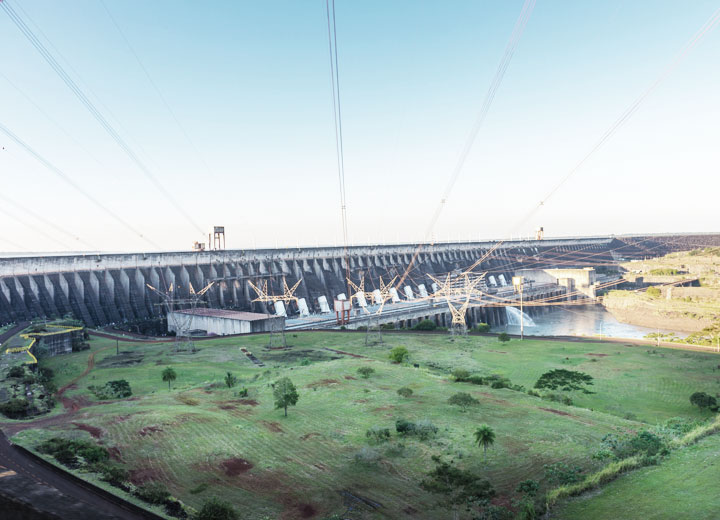
The attention of participants in the electric sector will be directed, until August 4, to discussions of Public Consultation No. 33/2017. It was launched by the Ministry of Mines and Energy with the ambitious purpose of discussing proposals for legal measures that would enable the long-term sustainable future of the electricity sector.
The document that will guide the discussions on the proposed measures is Technical Note No. 5/2017, which, in an educational and pragmatic manner, recognizes the need to improve the regulatory and commercial model in force in Brazil in order to identify what has been conventionally called “basic elements of a vision of the future."
If mere description of the purpose of the discussions is enough to get an idea for the size of the challenge proposed by Public Consultation No. 33/2017, the list of the "basic elements of a vision of the future" confirms that the task, in addition to being necessary, will in fact be arduous.
Removal of barriers to the entry of participants, respect for contracts in force and institutional formalities, incentives to align individual and systemic interests, respect for individual business decisions and economic signaling, adequate allocation of risks, rate stability, security of supply, and socio-environmental sustainability are goals to be achieved and harmonized.
A good part of these issues appeared in the discussions of Public Consultation No. 21/2016, whose purpose was to obtain the view of different participants on the risks and benefits involved in the expansion of the free market. It is precisely for this reason that, the propositions of Technical Note No. 5/2017 revolve, to a greater or lesser extent, around improvements in the business model of the electric sector.
In this sense, the proposals were divided into four different groups, namely:
- Reform commitments and elements of cohesion - with emphasis on the new rules of self-generation and gradual reduction of the limits on access to the free market, measures aimed at encouraging expansion in generation.
- Unlocking measures - a group which includes the proposals that are the most incipient and which need to be further developed and specifically regulated, including: the possibility of segregated marketing of availability and energy products; reduction of transmission costs and their centralized settlement with repercussions for existing contracts; and new mechanisms for price formation, with express provision for the creation of a business grant fund.
- Allocation of costs and rationing - a group in which are found the measures that have been discussed for a long time among the participants in the sector and whose need for adoption, with some degree of variation, is recognized by them. They can be summarized as: recognition of migration as an involuntary exposure of distributors and greater flexibility for relief mechanisms; segregation of tariff components; change in the type of subsidies for incentivized sources that will no longer enjoy discounts in network tariffs in exchange for a premium for effective production; and return of types of contracts based on quantity and availability, with preference given to the first option.
- Sustainability and litigation abatement measures - possibly the most urgent and, therefore, most controversial measures due to the plurality of interests involved, such as: removal of price restrictions for privatized plants, the return of the RGR (Global Reversion Reserve) and the allocation of its resources for the payment of compensation for transmission concessions; anticipation of the CDE (Energy Development Account); and the easing the frequency of litigation with respect to hydrological risk, by offsetting the compensation for the hydroelectric displacement to 2013, thus reaching all energy not renegotiated and not litigated in that period.
As one can see, the agenda is vast and the time is quite scarce. However, it is a unique opportunity to revisit the Brazilian electric sector model with depth and responsibility. Many participants in the industry will certainly do their best to converge around a cohesive proposal, even if this entails mutual concessions. We all know that the last thing the industry needs is to relive the recent experience of "unmeasured government edicts" and "normative patchwork."

- Category: Capital markets
The changes in the rules of the B3 (Brasil, Bolsa, Balcão) segment called Novo Mercado, approved in June by listed companies, will now be submitted to the Brazilian Securities Commission (CVM) for approval. After this stage, companies will be notified of the final content of the regulation and the deadline for complying with the new rules.
As companies listed in Level 2 did not approve the changes, there will be a difference between the rules applicable to the two segments for the first time since they were created. It is not yet possible to assess the impacts, if any.
The outcome of the vote on the proposed changes to Level 2 and Novo Mercado regulations was announced by B3 on June 23rd. The changes were being discussed with listed companies in these segments and with market players since March, 2016.
The voting by the companies was divided into two parts. The first, called the basic regulation, proposed to amend, inter alia, the rules concerning:
- outstanding shares: the percentage of outstanding shares may be 25% of the share capital, as provided for in current regulations, or 15% of the share capital if the average daily trading volume of the company's shares remains equal to or higher than R$ 25 million when taking into account trades carried out in the last 12 months;
- dispersion of shares: exempts companies from using their best efforts to achieve share dispersion in public offerings with restricted placement efforts;
- composition of the board of directors: the board must have at least two independent directors or 20%, whichever is greater;
- public offerings of shares of pre-operating companies: should be directed only to qualified investors - trading among non-qualified investors may only occur when the company has net operating revenues;
- supervision and control: companies must create an auditing committee, whether or not provided for in the bylaws, and have their own internal audit department. They must also implement compliance, internal controls, and corporate risks functions, which cannot be combined with the company's operational activities;
- public offers for purchase of shares to exit the segment (OPA): must be approved by shareholders owning more than 1/3 of the outstanding shares, or a higher percentage if defined in the bylaws;
- corporate reorganization: if it involves companies that do not intend to apply for entry into the segment, the majority of the holders of the company's outstanding shares present at the general meeting must approve the proposed structure.
Of the 131 companies listed on the Novo Mercado on March 15, 2017, 65 voted in favor of the basic regulation, 35 voted against, and 29 abstained. Accordingly, the basic regulation was approved. The specific rules, with the exception of those relating to the assessment of management, were rejected.
The situation was different with Level 2. Of the 19 companies listed there, 11 rejected the amendment to the basic regulation, and the specific rules were also rejected by more than 1/3 of the companies.

- Category: Tax
Decree No. 9,042, promulgated by the President of Brazil in early May, modified the rules for determining the reference price of oil and the basis for calculating royalties and special participations by adding provisions to Decree No. 2,705/1998.
According to the new decree, by December 2017, the reference price for oil will continue to correspond to (i) the weighted average selling prices practiced by the concessionaire under normal market conditions or (ii) the Minimum Reference Price (MRP) established by the National Petroleum Agency (ANP), whichever is greater. The MRP is currently calculated based on the formula defined in ANP Ordinance No. 206/2000, which considers the international quotation of Brent oil as a benchmark for the pricing of oil produced in Brazil.
Starting in 2018, the reference price of oil should be exclusively established by the ANP based on a standard basket of up to four types of oil listed on the international market, with similar physicochemical characteristics and competitiveness equivalent to that produced in Brazil. The use of the weighted average of the prices practiced in the sale is discarded.
There is great expectation on the part of oil concessionaires regarding the changes introduced by Decree No. 9,042, especially regarding the regulations on the matter by the ANP scheduled for the coming days.
At first, there was doubt as to whether the rules would be in some measure self-enforcing and would dispense with the regulation by the ANP for application of the standard basket.
However, because the decree does not set objective criteria for using the standard basket and certain guidelines to carry out the controversial analysis of similarity between oil types, there is a consensus that regulations with respect to the new rules is imperative. The ANP has already expressed its opinion in this regard, noting that it should submit a new draft resolution for public review by the end of July and that the new oil reference price will be "introduced in a gradual manner, in four years", starting on January 1, 2018.¹
The regulations must comply with the provisions of the Petroleum Law (Law No. 9,478/1997) regarding the need for the criteria for calculating royalties to be determined based on (i) market prices for oil, (ii) specifications for the product, and (iii) the location of the field.
To that end, proper use of the standard basket in defining the reference price depends on the application of a differential that represents the repercussion of several factors in the pricing process. These are factors related to product specifications and the location of the field, logistics and production and transportation costs, production flow stability, field volume, and the oil’s liquidity in the international market, among others.
It is expected that the new ANP draft resolution will be compatible with the Petroleum Law, thereby ensuring the legal stability and legal certainty necessary for existing investments and concessions and for the next rounds of block bids for exploration and production of oil.
_________________
¹ ANP will apply new guidelines established by the National Energy Policy Council - CNPE for calculating the minimum oil price for the purposes of royalties and special participation starting in 2018. Available at: http://www.anp.gov.br/wwwanp/noticias/anp-e-p/3758-anp-aplicara-novas-diretrizes-estabelecidas-pelo-cnpe-para-o-calculo-do-preco-minimo-do-petroleo-para-fins-de-royalties-e-participacao-especial-a-partir-de-2018. Published on May 12, 2017. Accessed on July 5, 2017.