Publications

- Category: Labor and employment
Many companies face practical difficulties and legal uncertainty in meeting the requirement to hire the minimum quota of young apprentices. This happens especially in industries whose activities are classified as hazardous or dangerous by the Occupational Health and Safety Regulatory Norms. This is the case for private security companies and heavy construction, among others, who cannot hire young people between 14 and 18 years of age to meet the apprenticeship quota established in article 11, sole paragraph, of Decree No. 5,598/05.
In order to resolve this situation, in May the Ministry of Labor and Social Security (MT) published Ordinance No. 693/2017, which establishes rules for the training of apprentices in entities that provide practical experience - which are public bodies, civic organizations (Pursuant to article 2 of Law No. 13,019/2014), and the units of the National System of Socio-Educational Assistance (SINASE), according to paragraph 2, of article 23-A of Decree No. 5,598/05.
In its article 1, the ordinance provides rules for what those economic industries are where companies may apply for a Commitment Agreement to fulfill the quota via an entity that provides practical experience to apprentices, as already established by article 23-A of Decree No. 5,598/2005. Those industries are:
- cleaning and maintenance;
- private security;
- cargo transport;
- transportation of valuables;
- collective, urban, intermunicipal, and interstate transportation;
- heavy construction;
- urban sanitation;
- waterway and maritime transport;
- cattle and crop raising activities;
- outsourcing services companies;
- telemarketing activities;
- fuel sales; and
- companies whose activities are preponderantly those listed in the TIP list (Decree No. 6,481/2008).
These industries are the ones that have frequent practical difficulties in meeting the quota required by article 429 of the Consolidated Labor Laws. In addition to the legal prohibition on hiring minors under the age of 18 to work in hazardous and dangerous conditions, there is a lack of interest on the part of the apprentices themselves in working in these areas.
The existence of obstacles in fact does not exempt companies from complying with the Apprentice Law (Law No. 10,097/2000). It establishes that all medium and large companies are obliged to hire adolescents and young people from 14 to 24 years of age, by means of a special employment contract with a maximum of two years in duration. The number of apprentices must be at least 5% of the total number of employees in each establishment of the company (except those that carry out activities requiring higher education, technical and managerial functions, and positions of trust). In addition, the employer is required to enroll the young person in a apprenticeship program of a qualified entity, such as Senai (National Industrial Learning Service) or Senac (National Service for Commercial Apprenticeship), for technical and professional training compatible with the company’s industry.
By allowing certain industries to meet the apprenticeship quota by means of entities that provide practical experience, young people are not exposed to functions considered risky by the MT itself, and employers can continue their social contribution to training minors via apprenticeships.
Because compliance with the quota is individualized by establishment, the application to sign a Commitment Agrement for the companies that fit within the list published by the MT should be made to the Regional Superintendence of Labor and Employment of the state where the establishment is located, in accordance with article 28 of Decree No. 4,552/2002 (Labor Inspection Regulations - RIT). According to the recently published ordinance, the MT may accept requests from companies from other industries, at the discretion of the labor oversight board and per the terms of article 23-A of Decree No. 5,598/2005.
Once the Commitment Agreement has been signed with the MT, the company and the qualified entity engaged must establish a partnership with one of the entities that provides practical experience to apprentices in order to conduct practical classes. Pedagogical supervision will be the responsibility of the qualified entity.
In this way, the company will have support to defend itself in the event of an administrative demand by the Public Prosecutor's Office for Labor Affairs or judicial dispute, by means of verifying compliance with the quota for apprentices in an alternative manner.

- Category: Labor and employment
Few employers realize that exchanging messages via WhatsApp can be used as evidence in a labor claim. The use of this mechanism has already been accepted, including to prove that the company is able to monitor at a distance the work schedule of an employee who works remotely. In practice, this means that the employee can claim the right to overtime simply because the employee does not fall within the exception provided for in Article 62, I, of the Consolidated Labor Laws (CLT), which exempts from the monitoring of hours of remote activities incompatible with the establishment of a work schedule.
In another situation, the messages exchanged via the application were used to prove that the respondent company was aware of an accident with an employee on its premises, an allegation that it initially denied.
A few decisions required transcription of the messages via a sworn notary to validate the use of WhatsApp content as evidence, in view of the possibility of manipulation of the information. However, most of the judges accepted the information as evidence in labor proceedings without requiring this formality.
It should also be remembered that the exchange of messages outside of the time and place of work can constitute work and give rise to the employee’s right to receive overtime. For the Labor Courts, the use of this tool is equivalent to the situation of employees who attend to work demands by cell phone.
Thus, it is imperative that the employer be careful in using tools such as WhatsApp, whether it is the time of the message exchange or the content of the conversation with the employee.

- Category: Environmental
Although the private sector in Brazil is aware of the opportunities for concessions and public-private partnerships related to classic public services and the execution of infrastructure projects, these forms of transactions are still little used for environmental conservation.
According to a survey conducted by the Semeia Institute, in the United States, only one federal agency, the National Park Service (NPS), has approximately 600 private sector service concession contracts (UCs). Meanwhile, in Brazil, the examples of private participation in the management of public protected areas amount to roughly ten. One of the most cited cases is that of the Iguaçu National Park, where a private investor installed and operates the attractions related to waterfalls, in addition to providing services related to the infrastructure of the park, such as sewage treatment.
This is a model that could be a determining factor for the preservation of UCs, since, despite having been legally established, many of these areas do not have the structure necessary for their protection. Data also indicate that UCs open to the public are better conserved, since the visitation of tourists helps in the oversight of the area, thereby curbing environmental crimes.
The scarcity of examples of private sector exploration of the country’s UCs is likely to change in the coming years. The National Park of Brasília, for example, is in the public tender phase to grant the provision of services such as food, cyclist spaces, and management of the Visitor Center. The concessionaire must adapt the physical structures required, with an estimated investment of approximately R$ 4.5 million, to be amortized over the 10-year concession period.
The new opportunities for providing services in UCs are not limited to the federal sphere. The Partnership Program of the State of São Paulo, for example, authorizes the concession for a period of up to 30 years of services or the use, in whole or in part, of areas appropriate for ecotourism and the commercial exploitation of timber or forest by-products.
Among the state parks that have already begun a study of the public tender model for concession we may cite the Cantareira State Park, the Alberto Lofgren State Park, the Campos do Jordão State Park, and the Capivari Park tourist complex, all with an estimated term of 15 years for the concession.
At the local level, on May 10, 2017, the Municipality of São Paulo published a Public Notice for Term of Interest (PMI) for the concession of 14 municipal parks. City managers may receive studies on potential investment projects and define the most appropriate concession model. Among the parks that are the subject of PMIs are Ibirapuera, Chácara do Jockey, and Trianon.
At the São Paulo Parks Partnership event, held on May 22 by the Semeia Institute and the São Paulo City Government, the municipal secretary for Privatization and Partnerships, Wilson Poit, stated that São Paulo’s concession model is based on what was adopted by former New York City mayor Michael Bloomberg. During his tenure, Bloomberg carried out a series of public-private partnerships that improved the quality of the services offered in parks and the conservation of public areas (tree planting, placement/restoration of benches, flowerbeds, among others). Central Park today is an example of a public-private partnership.
In a scenario of cost management and a quest for greater effectiveness in the protection of UCs, the concessions represent a win-win solution, which brings benefits not only to the State, but also to its citizens, who have a right to quality public services and an ecologically balanced environment. On the other hand, the initiative generates opportunities for investors, who can obtain funds through usage tariffs or payment from the public power.
- Category: Tax
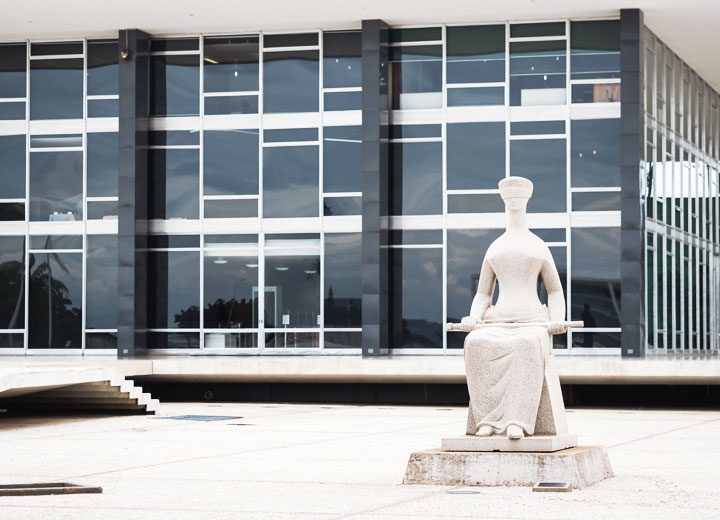
In March, the plenary session of the Federal Supreme Court ruled on one of the cases most anticipated by taxpayers. The topic: exclusion of the ICMS from the PIS and Cofins calculation basis (Extraordinary Appeal No. 574.706/PR). The legal theory settled by the Supreme Court is that the ICMS does not make up the calculation basis for the application of PIS and Cofins (topic of general repercussion no. 69).
The tendency, and especially the expectation of taxpayers, is that this same understanding should be extended to similar cases, such as the exclusion of the ISS from the PIS and Cofins calculation basis and these same taxes from the calculation basis of the Social Security Contribution applied to Gross Revenue (CPRB).
Per the terms of the vote by Justice Carmen Lúcia, the reporting judge for the leading case by the Federal Supreme Court on the matter, the ICMS only applies to the taxpayer's net assets, without integrating its billing, and for this reason it is not included in the calculation basis for Social Security contributions.
In recent decisions on the exclusion of the ICMS from the PIS and Cofins calculation basis (Interlocutory Appeal in Special Appeal No. 1.570.532/PB and Interlocutory Appeal in Special Appeal No. 1.536,341/BA), the 1st Panel of the Superior Court of Justice (STJ) authorized the immediate application of the understanding settled by the STF and ruled out the need to await modulation of the effects on the subject or adaptation of the understanding of the 1st Section of the STJ to the guidance established by the Federal Supreme Court.
In this same sense, the votes of STF Justices Dias Toffoli and Luis Roberto Barroso were handed down in the decision on Extraordinary Appeal No. 1.034.004 (not yet concluded). The Court found that it was necessary to apply the theory established so as to exclude the ICMS from the calculation basis of the CPRB, given that the tax does not constitute billing for or revenue of the company.
There is also an opinion by the Attorney General's Office on the record of Extraordinary Appeal No. 1.034.004, recognizing that the case is identical to the one addressed by the plenary session of the STF in the ruling concluded in March of this year.
The same understanding has been applied by the Federal Regional Court of Appeals (TRF) of the 3rd Region, which, until then, had a position unfavorable to the taxpayer. In a recent decision by the 3rd Panel, Federal Appellate Judge Nelton dos Santos, Reporting Judge in Appeal No. 0001241-19.2016.4.03.6114, extended the effects of the decision of the STF to exclude the ISS from the PIS and Cofins calculation basis. According to the reporting judge, recognition of the exclusion of the ICMS could also be applied to municipal tax, since it is not billing for or revenue of the company.
The extension is not only consistent with the legal theory settled by the STF, but also with the recent and significant changes in the new Brazilian Code of Civil Procedure, whose objective is to standardize case law understanding based on the principles of reasonable length of procedure and legal certainty

- Category: Litigation
The Judiciary in Brazil has faced for many years the difficult task of resolving the growing number of lawsuits that are filed in the courts every day. According to the most recent survey by the National Justice Council (CNJ), Brazilian courts closed the year 2015 with almost 74 million lawsuits pending, an increase of approximately 20% in six years. Many of these lawsuits have very similar causes, which were filed separately by thousands of people seeking the same relief, based on a single theory of law that is repeated in all of them. These are called "repetitive demands".
To deal with this problem, the new Code of Civil Procedure (CPC) introduced a series of tools with the objective of rationalizing the treatment of repetitive demands. Among them, the Incident of Resolution of Repetitive Demands (IRDR) has been subject to much attention, which allows for the selection of a "pilot case", representative of the recurring controversy and whose judgment will serve as a mandatory parameter for the resolution of other similar cases. Regulated by articles 976 to 987 of the Brazilian Code of Civil Procedure, an IRDR can be instituted whenever there is effective repetition of cases on the same issue of law and risk of offense to isonomy and legal certainty. Once the incident has been admitted, the court will stay (for up to one year) the progress of all similar cases pending in that jurisdiction. The decision reached should be observed in all other cases that deal with that issue of law. In a little more than a year of validity of the new Brazilian Code of Civil Procedure, some 21 thousand matters have already been stayed due to the establishment of an IRDR.
In addition to facilitating and accelerating the resolution of repetitive demands, IRDRs ensure predictability by preventing substantively identical cases from being decided differently. For large litigants, in general companies dealing with class actions, such as banks, retailers, telephone companies, among others, the novelty certainly has significant impacts, since the decision rendered in the pilot case affects not only the stayed cases, but also those that will be brought in the future. Therefore, this creates a parameter for definition of strategy in companies with a large volume of cases, including with respect to the provisioning of resources.
Because it is a new mechanism in the Brazilian legal system, a number of practical questions have arisen and it is natural that IRDRs must be improved until they become an effective tool in the treatment of repetitive litigation in Brazil. An example of recent debate is the discussion that reached the Superior Court of Justice (STJ) regarding the role of IRDRs in the higher courts. Strictly speaking, the Brazilian Code of Civil Procedure provides for IRDRs only in the courts of justice and federal courts of appeal, but there is no provision that prevents them from being used in the Federal Supreme Court and in the Superior Court of Justice in cases in which, for example, these courts have original jurisdiction.
The controversy began to be analyzed recently by the Special Court of the Superior Court of Justice, in the decision on Petition No. 11,838. The reporting judge in that case, Justice Laurita Vaz, defended the restriction of IRDRs to the courts of justice and federal courts of appeal, leaving the higher courts responsible only for reviewing the merits of an IRDR when one of the parties files a special or extraordinary appeal before these courts. Justice Napoleão Nunes, on the other hand, advocated the full possibility of initiating an IRDR before the Superior Court of Justice, only reserving the scenarios in which the Superior Court has already affected an appeal in defining a theory on the issue of law under debate. This line of reasoning was followed by Justice Luis Felipe Salomão. The ruling has not yet been completed, due to the request for review made by Justice João Otávio de Noronha.
The text of the rule gives space for both understandings because, while it does not expressly authorize the initiation of an IRDR before a higher court, it also does not prohibit or prevent it anywhere in its text. Hence the relevance of the ruling in question in delimiting the use of IRDRs in specific situations.