Publications

- Category: Real estate
In a decision published in REsp 1,937,821 – SP (2020/0012079-1) on March 3, the Superior Court of Justice (STJ) set The Repetitive Topic 1,113 on the basis for calculating the Real Estate Transfer Tax (ITBI). This decision puts an end to an old discussion about what would be the basis for calculating this tax:
- the same assessed value used as a basis for calculating the Urban Land and Property Tax (IPTU);
- the reference value assigned by the municipalities for the purposes of calculating the ITBI exclusively; or
- the actual price of the transaction assigned by the parties.
The ITBI - or Inter Living Transmission Tax (ITIV) – is a tax of municipal jurisdiction that focuses on onerous transfers of property or rights in real estate (with the exception of warranty rights, such as the constitution of mortgages and fiduciary disposals under guarantee) and on the assignment of rights relating to such onerous transfers.
According to article 38 of the National Tax Code (CTN), the calculation basis of the ITBI is the assessed value of properties or rights that are being transferred. This means, for example, that, in real estate acquisitions, the buyer is responsible for paying the ITBI, whose rate ranges from 2% to 5% (depending on the municipality in which the property is located) on the value of the property or right being transmitted.
This rate generally focuses on the value attributed by the city to the property (reference assigned value) or on the price assigned by the parties to the transaction, which is higher between the two values.
In practice, it is common for the value assigned unilaterally and previously by the municipalities to be higher than the price assigned by the parties to the sale and purchase, leading the ITBI to be calculated on a calculation basis greater than the value of the real estate business.
Although the buyer may administratively question the reference assigned value attributed by the city, this does not mean that this administrative review will be admitted by the municipal authorities to recognize that the price negotiated between the parties is the correct value to be used as a basis for calculating the municipal tax.
Moreover, often buyers do not even administratively question the reference value, because this questioning ends up delaying the realization of the real estate business, since the payment of ITBI is a requirement for the drafting of the deed of sale and purchase of the property.
Considering this information, the Supreme Court has fixed the following theses:
- the ITBI calculation basis is the value of the property transmitted under normal market conditions and is not linked to the calculation basis of the IPTU, which cannot even be used as a tax floor;
- the value of the transaction declared by the taxpayer enjoys the presumption that it is consistent with the market value, and that presumption can only be ruled out by the tax administration by the filing of its own administrative proceedings (article 148 of the CTN); and
- the municipality cannot previously arbitrate the ITBI calculation basis based on a reference value established by it unilaterally.
The decision of the STJ rightly recognizes that the prior fixation of a reference assigned value by the municipalities to serve as the basis for calculating the ITBI is illegal. The price of the property negotiated between the parties shall enjoy a presumption of veracity and good faith and shall be regarded as the one that best reflects the selling value of the property or right under normal market conditions.
The STJ also understood that, although the IPTU has as a calculation basis the assessed value of the property, this assessed value attributed by the municipalities and used as the basis for calculating the IPTU should not be confused with the assessed value that will serve as the basis for calculating the ITBI.
It was also decided that the assessed value attributed by the municipalities for the purposes of calculating the IPTU should not be used or as a minimum floor for calculating the ITBI, because the value for disposal under normal market conditions reflects other market criteria besides those evaluated by the municipal agencies to define the assessed value of the IPTU. The definition of the assessed value of the IPTU is done by sampling, leveling down the value of the properties evaluated. Basically, the footage and the location of the property are taken into account.
Other relevant market criteria in the pricing of the property, such as the state of conservation of the property, existing improvements, the supply and demand of real estate in the region, the existence of encumbrances on the property and the commercial conditions of payment of the price, are not taken into account in this definition of the market value of the IPTU and, therefore, this value is inadequate to serve as the basis for calculating the ITBI.
According to the STJ, it will be up to the taxpayer to inform the sale value of the property or right transmitted (value of the real estate transaction) to be used in the calculation of the tax. If it understands that the amount reported by the taxpayer is lower than what would correspond to the actual sale value of the property, the municipality may review this value within five years through the filing of its own administrative process. Therefore, given this new jurisprudence that can be signed by the STJ, it will be essential that the parties of a real estate transaction gather consistent evidence so that, if the value of the business is questioned by the municipal authorities, they have concrete elements to confirm the value attributed to the real estate transaction.
This decision of the STJ, if it remains and becomes final, will directly impact the calculation of the ITBI paid in real estate transactions. The procedures adopted by the municipalities will need to be revised to reflect the understanding set by the Supreme Court, under penalty of illegality of the requirement of ITBI that is in disagreement with the court's decision.
Dissatisfied with the understanding established by the STJ, the municipality of São Paulo filed an appeal in which it defends, through a motion to clarify, the extinction of the process without the resolution of the merits, keeping controversial the topic defined by the STJ as Repetitive. The municipality also argues that, if the case is not extinguished, the decision changes the parameters affixed because it allegedly exceeded the limits of the requests made.
If the appeal of the municipality of São Paulo is not accepted, the understanding defined by the STJ must be applied to existing lawsuits on this controversy and other cases that discuss the same subject in the future, due to the general repercussion of the issue. Taxpayers who have paid ITBI on a calculation basis greater than the actual value of the transaction in the last five years may question them in court to get those amounts back. To recover the largest amount paid in the past, it will be essential that, in these questions, there is concrete evidence that confirms and validates the value of the real estate transaction practiced.
We understand that this decision of the Supreme Court is right, because it definitively removes the ingrained practice adopted by municipalities to use assigned values for the ITBI requirement, without considering the specificities of the actual real estate business carried out by taxpayers.
References:
ITBI - Portal of the City of Belo Horizonte
WHALER, Aliomar. Brazilian tax law. 12. ed. Rio de Janeiro: Forensics, 2013. 1575 p.
DE MELO, José Eduardo Soares; PAULSEN, Leandro. Federal, State and Municipal Taxes. 9. ed. Porto Alegre: Livraria do Advogado Editora, 2015. 463 p.

- Category: Environmental
Oil pollution incidents require a coordinated set of procedures and actions to mitigate their possible impacts, whether on a corporate level or to the ecosystem. For these reasons, such crisis situations are often subject to constant updating of its regulations, in order to impose obligations to minimize their consequences, generate less losses and enable the identification of opportunities for improvement, both for entrepreneurs and the regulatory entities.
Federal Decree 10.950/22, which provides for the National Contingency Plan for Incidents of Oil Pollution in Waters under National Jurisdiction (PNC), was issued to regulate Federal Law 9.966/00, which establishes rules for the prevention, control and supervision of pollution caused by release of oil and other harmful or dangerous substances in waters under national jurisdiction. The recent oil spill incident off the coast of Peru, whose oil spills reached part of the coast of state of Ceará, had an impact on the decision.
Edited as an update of the previous PNC - established by revoked Federal Decree 8.127/13- the new normative instrument establishes responsibilities, sets out organizational structure and defines guidelines, procedures and actions, with the purpose of:
- ensuring the joint and coordinated action of the public and private sectors in measures to respond to oil pollution incidents in waters under national jurisdiction;
- mitigating possible environmental damage; and
- avoiding, as far as possible, damage to public health.
In general, PNC will come into force in cases of major oil pollution incidents, whenever considered of national significance by the Monitoring and Evaluation Group (Grupo de Acompanhamento e Avaliação - "GAA")[1] and in which individualized actions taken by those directly or indirectly responsible for river or maritime/port structures, as provided for in their respective Individual Emergency Plans, do not prove sufficient to reverse the problem.
In such circumstances, it will be up to the polluter:
- to compensate the public authorities in relation to the goods and services, human resources and materials applied in the exercise of any impact mitigation operation (art. 9, item VI, point (a) of Federal Decree 10.950/22);
- provide immediate communication of such oil pollution incident to the Brazilian Institute of the Environment and Renewable Natural Resources (IBAMA), the state environmental agency responsible for the jurisdiction in which the incident took place and the National Petroleum Agency (ANP) – according to Annex II of Federal Decree 4.136/02; and
- provide situation reports to all authorities indicated in Article 13,[2] in the form and periodicity established by the GAA or operational coordinator, containing detailed information about the incident, such as the description of its current situation, whether or not the occurrence has already been controlled, discharge volume, volume that can still be discharged, product characteristics, mapping of affected areas, measures adopted and planned, date and time of observation, human resources and materials mobilized, additional resources needed, current location and possible predicted trajectories of the oil slick (art. 15).
Regarding its organizational structure, PNC’s new regulation aims to overcome some weaknesses that found in Federal Decree 8.127/13, which, in addition to the GAA and the National Authority (Autoridade Nacional), referred to an Executive Committee (Comitê Executivo) and a Support Committee (Comitê de Suporte), both extinguished after Federal Decree 9,759/19. The two support committees were not reestablished by the new decree. However, GAA and National Authority – whose functions will be executed by the Minister of the Environment (Ministério do Meio Ambiente) – were joined by the Integrated Action Network (Rede de Atuação Integrada), which will be composed by representatives of the vast majority of ministries, in addition to the Office of Institutional Security of the Presidency of the Republic (Gabinete de Segurança Institucional da Presidência da República) and the Civil Office (Casa Civil).
Although dealing with issues related to responsibility of action and prevention, reimbursement, costs and plans, Federal Decree 10.950/22 does not regulate any compensation system for environmental damages resulting from oil pollution, as provided for in international conventions.[3]
In practice, we are still waiting to acknowledge PNC’s real effectiveness, since the absence of compensation funds that enable an organized, fast and efficient action in coping with crises can lead to an exclusive dependence on individual emergency plans and area plans prepared by private entities.
[1] GAA will be composed of representatives of Brazilian Navy, Brazilian Institute of the Environment and Renewable Natural Resources (IBAMA) and National Agency for Petroleum, Natural Gas and Biofuels (ANP).
[2] They are: Brazilian Institute of the Environment and Renewable Natural Resources (IBAMA), state environmental agency of the jurisdiction of the incident, Captaincy of Ports or Fluvial Captaincy of the jurisdiction of the incident and National Agency of Oil, Natural Gas and Biofuels (ANP).
[3] It is worth remembering that, although it is a signatory to the International Convention on Civil Liability for Damage caused by Oil Pollution of 1969 (CLC 69), Brazil did not adhere to the updated protocol of the Convention on Civil Liability for Damage caused by Oil Pollution of 1992, which provides for an environmental damage compensation fund (IOPC Fund 92).

- Category: Digital Law
The euphoria of fan tokens started in 2020/2021, and it possibly will remain on the agenda for a long time.
The trend of fan tokens is not passionate fan thing only. Behind a fan, there may also be a consumer and an investor. This new type of digital assets brought a number of legal risks not yet dimensioned.
The risks vary depending on the type of token fan issued and traded. In the case of fan tokens of member-supporters, which give their purchasers access rights to products or services immediately or at a future date, problems of lack of information may occur. Questions like: what is that fan token for? What benefit does it give the purchaser? What happens if the purchaser is not satisfied with the benefit made available at a future date?
All these issues should be addressed in detail in the terms of use of the platform that publicly offers fan tokens. Many of such initiatives, however, are not sufficiently clear in their terms, which can lead to serious problems in the future.
Even if one informs the public about details of the fan token, risks still exist. The terms of use of the platform that trades fan tokens can be considered adareagreements, not subjecting the the purchaser to many of the clauses expressed there before Brazilian courts. An example is the foreign forum election clause for resolving any conflicts between the token purchaser and its issuer or offeror. This risk can be enhanced if the dispute involves consumer rights.
In addition to the risks associated with the member-supporter tokens, there is a more general risk that may affect the entire category of fan tokens, including so-called solidary tokens. This is the risk of the fan token being associated with a collective investment contract. In this case, the fan token will possibly be subject to Law 6,385/76, which establishes the need for registration with the Brazilian Securities and Exchange Commission (CVM).
A fan token offering may be considered a collective investment contract if it generates, when publicly offered, the right of participation on profits or remuneration, including as a result of the rendering of services, and whose profits derive from the efforts of the entrepreneur or third parties.
Despite this broad definition, the CVM, when analyzing the specific case of Vasco Token – solidary token that represents credit rights in future transactions of some players of the team – has understood that this fan token consisted of a collective investment contract. CVM considered that the participation rights resulting from the commercialization of Vasco Token were so uncertain that it would not be possible to say that the tokens would represent by themselves the right to participate, partnership or remuneration with income coming from the effort of the team or third parties.
Nevertheless, the risk of similar fan tokens fall within the definition of a collective investment contract is considerable. In order to mitigate this risk, every single detail of the fan token offering must be rigorously thought out. Otherwise, the legal problems may be proportional to the passion for the team.

- Category: Digital Law
Economists and law professionals seek to find a method to understand the exact value of goods or services. Economics works with complex mathematical formulas to calculate the value. In law, we try to use the analogy with leading cases to achieve the same outcome.
What none of the methods has been able to establish exactly is the value of the feeling of a fan or an enthusiast. Despite the difficulties that this task involves, technology has been addressing this issue, even if imperfectly.
In the era of the dissemination of blockchain, it is possible not only to measure fans´feelings, but also to market them in the form of Tokens. This innovation has been called fan token, which mean several things. Fan tokens are blockchain based digital assets that are usually traded in economic segments bustling with feelings linked to fans – the passion for a team, the desire for victory etc.
Big football, basketball and motorsport teams have already issued their own fan tokens to raise funds and create engagement between the brand and their fans and enthusiasts.
Two types of fan tokens are very common in the market and, so far, the Brazilian legal scenario has been very receptive to this innovation.
The first of fan tokens resembles a kind of partner-supporter portfolio, very similar to the socio-supporter programs widespread in the country in the last decade. This type of fan token is a kind of utility token and has no specific regulation. Its name derives precisely from the "utilities" conferred on the owner of the asset.
Through the acquisition of fan tokens, a person may receive specific benefits, proportional to the amount of tokens. One type of benefit may be, for example, the right to vote on issues of "low governance" of the team, such as the choice of the color of the uniform of the team or the mascot. Another common benefit is the right of access to preferred seats in matches played by the team or, also, the right to discounts on products and services offered by the brand.
A second type of fan token, less known, but no less interesting, is the so-called solidary tokens. These assets confer future rights to their owners in the event a team “sells” a particular player.
Generally, the team that markets the players rights receives a percentage of the transfer amount based on an arrangement called "solidarity mechanism". The team can take advantage of this benefit and issue and market fan tokens which, at a future and uncertain date, will give their purchasers the right to receive a portion of the receivables. The Brazilian Securities and Exchange Commission (CVM) analyzed the specific case of Club de Regatas Vasco da Gama. CVM has understood that fan tokens like this (solidary tokens) shall not be deemed securites – and are therefore not under their regulatory perimeter.
There is a growing possibility that other types of tokens that attribute different benefits to their purchasers be issued and traded in the future. The evolution of this market is growing at a fast pace. From the legal perspective, it is necessary to follow the complex – and creative – legal arrangements that involve the commercialization new type of asset.
- Category: Tax
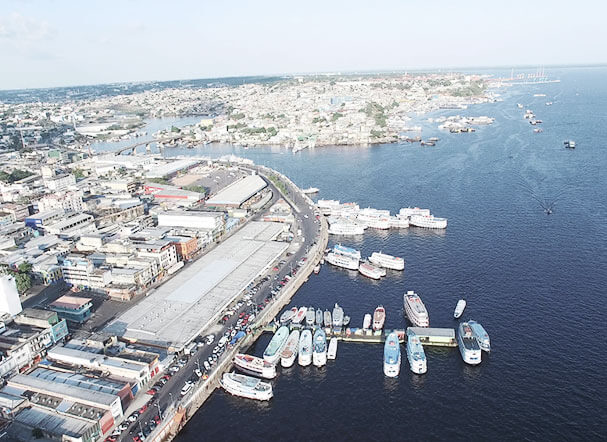
The Superior Chamber of the Court of Taxes and Fees of the State of São Paulo (TIT) judged, in the thematic session held on March 24, appeals that deal with the cancellation of ICMS credits arising from the acquisition of taxpayer goods from the Manaus Free Zone, which enjoys benefit granted by the state of Amazonas.
Complementary Law 24/75 provides that ICMS tax benefits can only be granted by states after approval of an agreement by the National Council for Business Policy (Confaz). The only exception is provided for in Article 15 of Complementary Law 24/75, which establishes: "The provisions of this Law does not apply to industries installed or that come to settle in the Manaus Free Zone, being forbidden to the other Units of the Federation determine the exclusion of tax incentive, premium or stimulus granted by the State of Amazonas".
Prevailed in the TIT, however, the position that the benefits granted by the state of Amazonas to taxpayers located in the Manaus Free Trade Zone need to have approval of agreement by Confaz. Thus, according to the court, the state of São Paulo would not be obliged to admit the credit bookkeeping of ICMS highlighted in the tax documents of purchase of goods, if the manufacturer enjoys benefit granted by the state of Amazonas and there is no payment of the tax at the origin.
We understand that the court conferred the mentioned provision too restrictive interpretation, which does not agree with the rule and legal regime applicable to the Manaus Free Trade Zone. There are, therefore, solid legal arguments to defend a position contrary to the court's decision.

- Category: Labor and employment
Interministerial Ordinance MTP/MS 17, published on April 1, 2022, amends Annex I of Joint Ordinance 20/2020, again updating the measures to be observed to prevent, control, and mitigate the risks of covid-19 transmission in work environments.
Among the main changes the following may be highlighted:
- possibility of dispensing with the use of a protective mask in work environments where, by decision of the federal entity where the company is located, the use of protective mask equipment is not mandatory in closed environments (click here to read our article with more information on the subject);
- updating the concept of contacts of confirmed cases and including the possibility of not withdrawing from on-site activities if the contact is fully vaccinated;
- exclusion of the concept of close contact of a suspected case;
- no obligation to keep a record of suspected cases;
- exclusion of the requirement to refer suspected cases to the organization's medical clinic for evaluation and follow-up;
- exclusion of the requirement to adopt specific procedures for workers to avoid touching surfaces with high frequency of contact;
- exclusion of the requirement to increase the frequency of cleaning and sanitizing procedures for sanitary facilities and changing rooms, as well as for points of frequent contact.
The table below shows the main concepts and changes:
| TOPIC | HOW IT WAS | HOW IT IS NOW |
|
A confirmed case is considered to be a worker in the following situations: a) Influenza Syndrome - IS or Severe Acute Respiratory Syndrome - SARS, as defined by the Ministry of Health, associated with anosmia (olfactory dysfunction) or acute ageusia (taste dysfunction) with no other previous cause, and for which it was not possible to confirm covid-19 by other criteria; b) IS or SARS with a history of close or household contact with a confirmed case of covid-19, within 14 days prior to the onset of signs and symptoms; c) IS or SARS with laboratory test results confirming covid-19, according to the guidelines of the Ministry of Health; d) asymptomatic individual with laboratory test results confirming covid-19, according to the guidelines of the Ministry of Health; or e) IS or SARS or death from SARS for which it was not possible to confirm covid-19 by laboratory criteria, but who present alterations in the lung imaging exams suggestive of covid-19, according to the guidelines of the Ministry of Health. |
No change |
|
A suspected case is considered to be any worker who presents a picture compatible with IS or SARS, as defined by the Ministry of Health. A worker with at least two of the following signs and symptoms is considered to have IS: - fever (even if patient reported); - cough; - difficulty breathing; - olfactory and taste disorders; - shivers; - sore throat and headache; - coryza; or - diarrhea. A worker is considered to have SARS if, in addition to IS, he presents: - dyspnea and/or respiratory distress or persistent chest pressure or pain; or - oxygen saturation of less than 95% in ambient air, or a bluish coloration (cyanosis) of the lips or face. |
No change |
|
A close contact of a confirmed case of covid-19 is considered to be an asymptomatic worker who was in the vicinity of a confirmed case of covid-19, between two days before and ten days after the onset of signs or symptoms or the date of the laboratory confirmatory examination (confirmed asymptomatic case) of the case, in one of the following situations: a) had contact for more than 15 minutes, less than a meter away, with a confirmed case without both wearing a face mask or wearing one incorrectly; b) has had direct physical contact, such as shaking hands, hugging, or other types of contact, with a person with a confirmed case; c) remained less than one meter away during transport for more than 15 minutes; or d) shared the same home environment with a confirmed case, including bedrooms and living quarters. |
A close contact of a confirmed case of covid-19 is considered to be an asymptomatic worker who was in the vicinity of a confirmed case of covid-19, between two days before and ten days after the onset of signs or symptoms or the date of the laboratory confirmatory examination (confirmed asymptomatic case) of the case, in one of the following situations: a) had contact for more than 15 minutes, less than a meter away, with a confirmed case without both wearing a face mask or wearing one incorrectly; b) had direct physical contact, such as shaking hands and hugging, with confirmed case, without both using face mask or using it incorrectly; c) remained less than one meter away during transport for more than 15 minutes without both wearing a face mask or wearing one incorrectly; or d) shared the same home environment with a confirmed case, including bedrooms and living quarters. |
|
A close contact of a suspected case of covid-19 is considered to be an asymptomatic worker who had contact with a suspected case of covid-19 between two days before and ten days after the onset of symptoms of the case, in one of the following situations: a) had contact for more than 15 minutes, less than a meter away, without both wearing a face mask or wearing one incorrectly; b) had direct physical contact with a person with a suspected case; or c) shared a home environment with a suspected case, including bedrooms and living quarters. |
Interministerial Ordinance MTP/MS 17 does not provide for contacts of suspected cases. |
|
The organization must remove from face-to-face work activities, for ten days, workers considered to be close contacts of confirmed cases of covid-19. The leave period for close contacts of a confirmed case of covid-19 should be considered from the last day of contact between the close contacts and the confirmed case. The organization can reduce the absence of these workers from on-site work activities to seven days provided that molecular method testing (RT-PCR or RT-LAMP) or antigen testing is performed from the fifth day after contact if the test result is negative. Close contacts who reside with a confirmed case of covid-19 must present proof of disease from the confirmed case. |
The prior provisions have been retained. However, Interministerial Ordinance MTP/MS 17 added a provision to establish that workers considered close contacts of confirmed covid-19 cases who are fully vaccinated according to the vaccination schedule recommended by the Ministry of Health are not required to be removed from face-to-face work activities. |
|
The organization must remove from face-to-face work activities, for ten days, workers considered to be suspected cases of covid-19. The organization can reduce the absence of these workers from on-site work activities to seven days as long as they have been fever-free for 24 hours, without the use of anti-fever medication, and with remission of respiratory signs and symptoms. The organization should consider the first day of isolation of a suspected case to be the day after the onset of symptoms. |
The organization must remove from face-to-face work activities, for ten days, workers considered to be suspected cases of covid-19. The organization can reduce the absence of these workers from on-site work activities to seven days as long as they have been fever-free for 24 hours, without the use of anti-fever medication, and with remission of respiratory signs and symptoms. The organization should consider the first day of isolation of a suspected case to be the day after the onset of symptoms. Workers on leave may return to their on-site work activities before the designated period of leave when molecular method testing (RT-PCR or RT-LAMP) or antigen testing, performed starting on the fifth day, rules out covid-19 according to the Ministry of Health's guidelines. The SARS-CoV-2 antigen self-test is for screening and orientation purposes only, and cannot be used for purposes of leave or return-to-work. |
|
The organization must establish procedures for identifying suspected cases (including channels for communicating with workers about the appearance of signs or symptoms compatible with covid-19) and about contacting a confirmed or suspected case of covid-19, surveys, by physical or electronic means, telephone contact, or electronic service channels. | The organization must establish procedures for identifying suspected cases (including channels for communicating with workers relating to the appearance of signs or symptoms compatible with covid-19) and about contacting a confirmed or suspected case of covid-19. |
The other measures remain in place and must be fully observed by companies to reduce the risks of transmission and contagion among workers.
Note below the main measures provided for by the ordinance, as updated:
Guidance, prevention, control, and mitigation measures
- Obligation to adopt the measures necessary to prevent, control, and mitigate the risks of transmission of covid-19 in work environments. Measures should include:
- Prevention measures in work environments, in common areas such as cafeterias, bathrooms, changing rooms, rest areas, and in the transportation of workers, when provided by the employer;
- Early identification and removal of workers with signs and symptoms compatible with covid-19;
- Procedures for workers to report, including remotely, signs or symptoms compatible with covid-19 or possible contact with a confirmed case of covid-19; and
- Hand sanitation instructions and respiratory etiquette; and
- Dissemination/clarifications of the forms of infection, signs, symptoms, and care needed to reduce transmission in the work environment and community.
- The organization should extend this information to outsourced workers and workers from other organizations who frequent the facility.
Conduct to be adopted in confirmed, suspected, and confirmed contact cases
- Immediately remove from in-person work activities workers with confirmed cases, suspected, cases and confirmed cases of close contact with covid-19 for a period of ten days.
As the beginning of the leave period the following should be considered:
- for confirmed cases, the day after the onset of symptoms or the collection of the molecular method test (RT-PCR or RT-LAMP) or antigen test;
- for suspected cases, the day after the day of symptom onset;
- for close contacts, the last day of contact with the confirmed case.
The period of leave may be reduced to seven days in the following cases:
- Confirmed: as long as they have been fever-free for 24 hours, without the use of anti-fever medication, and with remission of respiratory signs and symptoms.
- Close contacts: provided that testing by the molecular method (RT-PCR or RT-LAMP) or antigen testing is performed from the fifth day after contact, if the test result is negative. This is not mandatory if the contact is fully vaccinated.
- Suspected: as long as they have been fever-free for 24 hours, without the use of anti-fever medication, and with remission of respiratory signs and symptoms.
- Guidance to workers on leave regarding the need to remain at their place of residence, with pay maintained during the period of leave.
- Communication channels for workers to report the appearance of compatible signs or symptoms, as well as contact with confirmed or suspected covid-19 cases.
- Gathering of information on contacts, activities, workplace, and common areas frequented by the workers with covid-19.
- Up-to-date record keeping with the following information:
- Workers by age group;
- Workers with clinical conditions at risk for developing complications related to more severe covid-19 conditions (specification of the disease not permitted, preserving confidentiality). The following are considered clinical conditions at risk for the development of covid-19 complications: severe or decompensated heart diseases (heart failure, stroke, revascularization, arrhythmia, decompensated hypertension); severe or decompensated pneumopathies (oxygen-dependence, carriers of moderate/severe asthma, chronic obstructive pulmonary disease - COPD); the immunosuppressed; chronic renal patients at an advanced stage (grades 3, 4 and 5); diabetics, according to clinical judgment, and high-risk pregnancies.
- Confirmed cases;
- Workers on leave who had close contacts; and
- Measures taken to adapt work environments to prevent covid-19.
- When the activities of a certain sector or of the establishment itself are shutdown as a result of covid-19, the following procedures must be adopted before the activities return:
- ensure the adoption of prevention measures provided for in the annex to the ordinance and the correction of situations that may have caused the contamination of workers in the work environments;
- sanitizing and disinfecting the workplace, common areas, vehicles used;
- enhance communication to workers; and
- strengthen worker monitoring to ensure the removal of confirmed cases, suspected cases, and close contacts of confirmed cases of covid-19.
Hygiene and cleaning of the environments
- Disinfecting and cleaning workplaces whenever a worker is assigned to occupy another's workplace.
Hand hygiene and respiratory etiquette
- Guidance to employees to engage in frequent hand sanitizing, with the provision of resources for this purpose near work stations, including water, liquid soap, disposable paper towels, and a trash can (with no manual contact to open) or adequate hand sanitizer, such as 70% alcohol, and guidance on not sharing towels or products for personal use.
- Guidance on not sharing towels and personal use products.
- Workers should be instructed to avoid touching their mouths, noses, eyes, and faces with their hands, and to practice respiratory etiquette, such as using disposable handkerchiefs for nasal hygiene, covering nose and mouth when sneezing or coughing, and cleaning their hands after sneezing or coughing.
- Participation by the SESMT and Cipa in the prevention actions implemented by the organization.
Social distancing
- Adoption of measures to increase distancing and decrease personal contact between workers and the external public.
- Minimum distance of one meter between workers and between workers and the public. If physical separation of at least one meter cannot be adopted to reduce the risk of transmission between workers, customers, users, contractors, and visitors, one must:
- for activities conducted at fixed workstations, maintain the use of surgical or cloth masks and adopt waterproof partitions or provide face shields or goggles; and
- for the remaining activities, maintain the use of surgical or cloth masks, observing the cases of exception on the mandatory use of masks.
- Adoption of measures to limit the occupation of elevators, stairways, and restricted environments, including sanitary facilities and changing rooms.
- Demarcation and reorganization of places and spaces for queues and waiting with at least one meter between people.
Personal Protective Equipment (PPE) and other protective equipment
- Guidance to employees on the use, cleaning, disposal, and replacement of masks and other protective equipment, as well as their limitations in protecting against covid-19.
- The organization's medical service professionals, if any, should receive PPE or other protective equipment, according to the risks, including respiratory protection type PFF2 (N95) mask, in accordance with the guidelines and regulations of the Ministry of Labor and Social Security and the Ministry of Health.
Click here to read our article on the supply and use of masks.
Ventilation of workplaces and common areas
- Priority should be given to natural ventilation in workplaces or the adoption of measures to increase as much as possible the number of exchanges of air in enclosures, bringing clean air from outside and avoiding the recirculation of conditioned air.
- When a split air conditioning system is used, it is recommended that the doors and windows be kept open or that an air renewal system be added, subject to technical or operational feasibility.
- The ventilation systems installed must be kept in operation during business hours.
Risk groups
- Surgical masks or masks of type PFF2 (N95) or equivalent must be provided for workers aged 60 years or older or who have clinical conditions at risk for developing complications of covid-19, when telecommuting or remote work is not adopted at the employer's discretion, except in localities where, by decision of the federal entity where the company is located, it is not mandatory to use protective mask equipment indoors
Common areas of the company
- For the common areas, Ordinance 20/2020, as amended, established a series of obligations and recommendations to be followed by employers, ranging from the cafeterias to the transport offered to workers.
Cafeterias
- It is forbidden to share glasses, plates, and cutlery without sanitization.
- Self-service should be avoided or, when it cannot be avoided, control measures should be implemented, such as:
- Conditions for hand sanitization before eating or provision of disposable gloves;
- sanitation or frequent change of shared kitchen utensils, such as ladles, handles, and spoons; and
- installation of food protector over self-service structures.
- Provide the frequent cleaning and sanitation of tables, benches, and chairs surfaces, as well as adopt in the cafeterias minimum spacing of one meter between people, with marking and demarcation of spaces in the row and at the tables. When the front or side distance is not observed, a physical barrier must be used on tables at least one and one half meters above the ground.
- Distribution of workers into different time slots at meal places.
- Delivery of set of sanitized utensils, individually packaged.
- Inclined jet drinkers should be adapted in such a way that it is only possible to drink water using a disposable cup or individual container.
Locker rooms
- Avoid crowding of workers at the entrance, exit, and during the use of locker rooms.
- Direct workers to maintain a distance of one meter from each other while using the facilities.
- Guide workers on the order of removal of clothing and equipment, so that the last protective equipment to be removed is the mask.
- Availability of sink with water and liquid soap, as well as disposable towels or sanitizer dispensers suitable for hands, such as 70% alcohol, at the entrance and exit of the locker rooms.
Transport offered by the employer for commuting between home and work
- Implementation of procedures for reporting, identifying, and removal of workers with symptoms before boarding, thus preventing the entry of symptomatic persons or close contacts of confirmed cases of covid-19 in the vehicle.
- Obligation to wear protective masks when boarding workers and use during the trip.
- Guidance to workers to avoid crowding when embarking and disembarking transport, with the implementation of measures to ensure a minimum distance of one meter between each person.
- Compliance with the maximum passenger capacity, limited to the number of seats in the vehicle.
- Maintenance of natural ventilation inside vehicles and, where the use of the air conditioning system is necessary, recirculation of air should be avoided.
- Seats and other surfaces in the vehicle most frequently touched by workers should be sanitized regularly.
- Record keeping of the workers who use the transportation, listed by vehicle and trip.