
- Category: Labor and employment
There is no other subject being talked about than the first debate of the presidential candidates in the 2022 electoral race. The topic is on people's lips and, of course, in virtual chat groups.
In our last article, we addressed the precautions employees and employers should take when using work tools and private social networks to exchange messages, and the consequences they may face when transmitting fake news. It was not for nothing: shortly after publication, the Federal Supreme Court (STF) opened an investigation against members of a virtual chat group precisely because of the content shared.
Fearing something already discussed in the 2018 election - the possibility of businessmen influencing their employees to vote for one candidate or another - the Labor Prosecutor's Office (MPT) this year issued Recommendation 01/2022 to curb certain corporate practices.
According to the agency, companies must refrain from granting (or promising to grant) any benefit in exchange for voting, as well as threatening, embarrassing, or directing people to vote for candidates in the upcoming elections.
The message is clear and ends with a warning: failure to comply with the recommendation will lead the Labor Prosecutor's Office to apply administrative and judicial measures to guarantee individual liberties and the democratic order.
It is important to say that this embarrassment does not have to take place within the gates of the company, nor does it have to be materialized solely by the acts of its officers or CEO. It can happen in the virtual field - in message groups or in posts on social networks - and can be committed by any representative of the company who has a management position, such as managers and coordinators, among other employees who can influence the decision of their subordinates.
Once again, awareness is the appropriate instrument to prevent the conduct. Companies should not ignore the political moment that Brazil is going through and simply close their eyes to the possibility that certain anti-democratic practices may occur among their employees, even if they are disguised as jokes or “pranks".
Information, lectures, and courses can be given to employees so that they avoid unnecessary exposure of the employer and practices considered abusive by the prosecutorial bodies. The companies must also be prepared to deal with any non-compliance of their conduct by employees who do not follow the Labor Prosecutor’s guidelines. To do this, they need to draw up a contingency plan.
The authorities are watching the companies' movements closely. It is therefore essential to guide and monitor employees so that they do not end up engaging in anti-democratic practices during the presidential elections.

- Category: Capital markets
The Brazilian Securities and Exchange Commission (CVM) has the function of regulatory agent of the Brazilian capital market under the terms of Law 6,385/76. In this capacity, the authority is responsible for the regulation, oversight, and imposition of sanctions on issuers, controllers, and administrators of securities, to the entities that are part of the securities distribution system, to the independent auditors, and to other persons that act professionally in the capital market.
Due to the inspection and supervision activities performed by the CVM, a securities markets oversight fee was instituted by law. The taxable event is exercise of the police power legally attributed to the CVM, under the terms of Law 7,940/89, with constitutional support in article 145, subsection II, of the Federal Constitution.
This Law 7,940/89 was recently amended by Law 14,317/22 (originated from the conversion of Executive Order 1,072/21), which modified the oversight fee as follows:
- expanded the list of taxpayers;
- updated the sums charged;
- established a new calculation criterion based on the net equity of the regulated participants;
- created a type of fee resulting from CVM registration activity, in addition to the already existing periodic oversight fee and public offering fee; and
- changed the form of appeal for coercive fines imposed when a CVM order is not complied with.
For the purpose of clarifying the levying and collection of the oversight fee, the CVM disclosed Circular-Letter 1/2022-CVM/SER, on January 14, 2022. The CVM also makes available on its website a series of answers to frequently asked questions, through which it seeks to clarify the taxpayers' main doubts about the levying, collection, and calculation of the oversight fee.
Considering, however, the questions received, especially from investment fund managers, regarding the correct interpretation of Law 14,317/22, the CVM published, on September 20, 2022, Circular-Letter 2/2022/CVM/SIN/SSE, with guidelines on the levying and collection of the oversight fee, directed especially to the sector in which these administrators operate. We highlight the main clarifications provided by the authority:
-
Modalities of the CVM oversight fee
There are three cases for levying the oversight fee for the securities markets (CVM fees):
- CVM registration activity, for which a registration fee will be due;
- periodic inspection activity, for which an annual fee will be due; and
- activity of public offering oversight, for which an offering fee will be due.
-
CVM Fee Payers
The CVM fee payers are the individuals and legal entities listed in article 3 of Law 14,317/22, among which are, with special regard for the investment fund industry:
- individuals and legal entities within the securities distribution system;
- investment funds, regardless of the assets that make up their portfolio;
- administrators of securities portfolios;
- providers of securities bookkeeping and custody services;
- non-resident investors' portfolios (and not directly the investors); and
- offerors of securities in the public offering of securities, subject to registration or exemption from registration by the CVM.
-
Situations, frequency, and conditions for the collection of CVM fees
The situations, frequency, and conditions for the collection of CVM fees are indicated in articles 4 and 5 of Law 14,317/22. We highlight the main points:
Registration Fee
The CVM registration fee will be due upon initial application for registration as a securities market participant or issuance of an equivalent authorizing act, including market participants whose registration is simplified or automatic, as long as they are regulated by the CVM.
This fee must be paid in full, regardless of the date of the initial registration application or equivalent act, and therefore pro rata payment is not allowed.
As a general rule, the registration fee will be due within 30 calendar days of the registration request. The CVM advised to pay within this deadline, even if the payment notice issued on the CVM website has a different due date.
The regulator explained that it was not possible to customize the system used to issue the payment notice to allow correct setting of the due date. It advised that it is the participant's responsibility to keep track of the deadline.
The CVM made a point of clarifying again, as it had already done in its answers to frequently asked questions, that the registration fee is different from the annual fee. The former is not an advance, even if partial, of the payment of the latter. This point raised doubt since the registration fee consists of 25% of the annual fee applicable to the regulated participant. This, however, does not mean that it is an advance; it only refers to the way of calculating the amount due as a registration fee.
Annual Fee
This fee will be due annually and must be paid in full considering the entire year to which it refers, with pro rata payment not being admitted.
The CVM's annual fee is now due from the date of registration with the CVM until the request for cancellation or suspension is granted, even if the taxpayer is not performing activities or has had its registration suspended by an administrative act of the CVM.
Law 14,317/22 contains a table in its Annex I with the ranges of amounts owed by legal entities for the annual fee. The calculation criterion used is the taxpayers' net equity, except in relation to independent auditors, whose criterion is the number of establishments, according to Annex III of the standard. For individuals, the fees are fixed and are listed in Annex II of the law.
- Investment Funds:
The annual fee for the oversight of investment funds has some specifics:
- Investment funds with asset separation between classes/subclasses:
If the units of the fund are divided into classes or sub-classes for the purposes of calculating the annual fee the sum of the amounts calculated according to the net equity of each class or sub-class should be considered, observing the parameters established in Annex I of Law 14,317/22.
The CVM clarified that this form of calculation provided in the law already considers the new structure of investment funds with mandatory separation of equity between classes and subclasses, whose regulation is still being discussed in the scope of Public Hearing SDM 08/20, which intends to change the rules for investment funds, regulated by CVM Instruction 555 and the standardized and non-standardized Receivables Investment Funds (FIDCs), regulated by CVM Instruction 356 and CVM Instruction 444.
The public hearing has already been subject to comments by market participants and, according to the CVM's Regulatory Agenda 2022, the standard should be issued this year.
- Investment funds with a single class:
In relation to single class funds, for the purposes of calculating the annual fee, the fund's net equity should be considered, observing the parameters set forth in Annex I of Law 14,317/22.
- Method of calculation of the annual fee:
The value of the net equity of the investment funds for the purpose of determining the annual fee should be calculated as follows:
- by the arithmetic average of the daily net assets ascertained in the first four months of the calendar year (i.e. January to April) for funds with daily calculation; or
- based on the value calculated on the last business day of the first four-month period of the year (that is, the last business day of April) for those who have not calculated their net equity on a daily basis.
In view of the rule set out above, the CVM clarified in Circular-Letter 2/2022/CVM/SIN/SSE that the annual fee will only apply to funds that have been created by the end of April of each year and are operating during this first four-month period.
There will be no annual fee for investment funds created after the beginning of May of each year. In this case, the annual fee will be due as of the next calendar year.
If the fund is created at any time after the beginning of May and ends up being closed in the same year, there will also be no levying of the annual fee.
If the fund is created or closed during the first four months of the year, however, the calculation of the annual fee should consider the arithmetic average of the net equity in the period in which the fund operated within that four-month period.
- Investment funds with net equity or zero equity:
The authority clarified that the investment funds registered with the CVM that have zero or negative net equity during the entire first four months of the year must pay the annual fee at the lowest value of the table in which they fit. This means that pre-operational investment funds are also required to pay the annual fee, at the lower amount provided for in Annex I of Law 14,317/22.
- Investment funds that are closing down their activities:
As a general rule, the annual fee will be due up to the closing date of the fund's registration with the CVM, calculated in the ways set out above.
The CVM has clarified how taxpayers should proceed when faced with two exceptional situations related to the liquidation of investment funds:
- in extraordinary liquidation attributed to some external factor caused by a third party (such as liquidation order by the CVM or resignation or extrajudicial liquidation of the fund administrator without replacement), a new annual fee will not be due if the forced liquidation extends into the following year;
- in ordinary liquidation ordered by unitholders, whether by total redemption of the units or by resolution in a meeting, the annual fee for the following year will be due, if the liquidation extends into the next calendar year.
Offering Fee
The CVM offering fee will be due on the occasion of a public offering of securities, including cases of exemption from registration by the CVM, and will be calculated based on the total value of the transaction.
Regarding the public offering of investment fund units, the offering fee must be collected:
- in the case of public offerings subject to registration with the CVM, when filing the registration request; and
- in the case of public offerings with restricted placement efforts that benefit from an automatic waiver of registration with the CVM, by the closing date of the public offering. As stated by the authority, this date may be the settlement date, but not necessarily, since it may be some later date if the structure of the offering provides for the fulfillment of steps related to the completion of the offering after the liquidation date.
If the public offering is done concomitantly with the issuer's initial application for registration with the CVM - including for investment funds - there will be no registration fee, only the offering fee. In other words, there can be no double charging of the CVM oversight fee in this situation.
The offer rate corresponds to a 0.03% rate over the total value of the transaction, observing the minimum rate of R$ 809.16 (that is, transactions under R$ 2,697,200.00 must pay the minimum amount). There is no longer a maximum ceiling for the offering rate.
In public offerings, the total value of the transaction for purposes of calculating the registration fee must cover the base lot, the additional lot, and the supplementary lot, if any. In case of a bookbuilding procedure, the ceiling value of the issue must be considered.
In restricted offerings, the total value of the transaction for the purposes of calculating the registration fee will be the total amount effectively raised, as reported in the closing notice. In this notice, the reference number of the payment of the offering fee that has been made at the closing of the offering must be filled out for information to the CVM.
It is important to note that the concept of the closing of the offering, for the purposes of payment of the registration fee, is not necessarily confused with the date of sending the closing notice.
The offering fee is not charged for public offerings:
- of shares owned by the Federal Government, states, Federal District, and municipalities and other Public Administration entities, which cumulatively: do not seek placement with the public in general and are held in an auction organized by an entity managing an organized market, under the terms of Law 8,666/93;
- of a single, indivisible lot of securities; or
- of Audiovisual Investment Certificates.
The CVM guidelines in Circular-Letter 2/2022/CVM/SIN/SSE are timely and useful to clarify unclear areas, especially regarding the assumptions of levying and form of calculation of the CVM fees that must be collected by administrators of investment funds at the time of registration of issuers, periodically for the funds under management and for the administrator itself and its employees accredited with the CVM, and in conducting public offerings of units.
This is a subject with material economic implications, since any errors that lead to under calculation of the amounts due or delays may generate interest and a late payment fine, in addition to legal charges, under the terms of article 5, paragraph 1, of Law 7,940/89 , which is obviously undesirable.
We remain at your disposal for any further clarifications on this subject.

- Category: Labor and employment
Published on September 5, Law 14,442/22 substantially amended the rules on food allowances and remote work.
The new law clarifies that the amounts paid by the employer as food allowance, provided for in paragraph 2 of article 457 of the Brazilian Labor Law (“CLT”), must be used for the payment of meals in restaurants and similar establishments or for the purchase of foodstuffs in commercial establishments.
The concept of food allowance encompasses both food vouchers and meal vouchers.
Regarding the hiring by employers of a legal entity to provide the food allowance, the legislation now states that the employer cannot demand or receive:
- any kind of discount or imposition of discounts on the contracted value;
- onlending or payment terms that denature the prepaid nature of the amounts to be made available to the employees; and
- other amounts and benefits not directly related to promotion of the employee's health and food safety in the contracts executed with companies that issue food allowance payment instruments.
The prohibitions on the relationship between the employer and the companies that provide the food allowance established by the law do not apply to contracts for the provision of food allowances in effect until their termination or until the period of 14 months has elapsed from the date of publication of the law (November 5, 2023), whichever occurs first. It is forbidden to extend a contract for the provision of a food allowance that does not comply with these prohibitions.
The new legislation establishes a fine ranging from R$5,000 to R$50,000, applied in double in the event of recurrence or obstruction against inspection, inadequate execution, deviation, or distortion of the purposes of the food allowance by the employers or companies that issue the instruments for payment of the food allowance.
The establishments that sell products not related to employee nutrition and the companies that accredited them are also subject to a fine. The criteria and parameters for calculating the fine will be subject to an act by the Ministry of Labor and Social Security.
From a tax standpoint, the new legislation amends the provisions of Law 6,321/76, which deals with deduction from taxable income for corporate income tax purposes, to establish that corporate entities may deduct from taxable income, for corporate income tax purposes, twice the expenses proven to have been incurred during the base period in worker food programs previously approved by the Ministry of Labor and Social Security, in the manner and limits set forth by the decree that regulates the matter.
The new law also establishes that expenses allocated to worker food programs (so called “PAT”) must cover exclusively payment of meals in restaurants and similar establishments and acquisition of foodstuffs in commercial establishments.
Law 14,442/22 reproduces in Law 6,321/76 the prohibitions on the relationship between the employer and the companies that provide food allowances (such as prohibition on any kind of discount on the contracted value). The prohibitions will be in effect as defined in the regulations for the worker food programs.
The new legislation also provides that food payment services contracted to carry out food programs must observe the following additional rules:
- placement into operation by means of closed or open payment arrangements, and companies organized in the form of closed payment arrangements, must allow interoperability among themselves and with open arrangements, indistinctively, to share the accredited network of commercial establishments, as of May 1, 2023, it is worth noting that operation of open arrangements is allowed as of now. 2023 is the date as of which the sharing of accredited networks will be mandatory, always respecting the commercial conditions established; and
- free portability of the service upon express request of the worker, in addition to other rules set forth in a decree from the Executive Branch, as of May 1, 2023.
In relation to the penalties applicable in the event of inadequate execution, deviation, or distortion of the purposes of the worker food programs by the beneficiary legal entities or companies registered with the Ministry of Labor and Social Security, the new legislation introduces a provision in Law 6,321/76 that establishes the same fine mentioned above, in the same terms.
Furthermore, it establishes as a penalty the cancellation of registration of the beneficiary legal entity or registration of companies linked to the worker food programs registered with the Ministry of Labor and Social Security, as of the date of the first cancellable irregularity and, consequently, loss of the tax incentive of the beneficiary legal entity.
If the registration of the beneficiary legal entity or registration of the companies linked to the worker food programs registered with the Ministry of Labor and Social Security is cancelled, a new enrollment or registration with the same ministry can only be requested after the deadline to be defined in regulations.
It is important to explain that the penalties established by Law 14,442/22 as a result of inadequate execution, deviation, or distortion of the purposes of the food allowance by employers or companies that issue instruments for payment of the food allowance are applicable to all companies, regardless of whether they are enrolled in food programs, with the exception, of course, of cancellation of the registration of the legal entity in food programs, applicable only if the company is enrolled in a food program.
Due to the changes introduced, companies must reevaluate their food allowance programs to adapt them to the new rules, both from the labor/employment perspective and from the tax and regulatory perspective, especially companies that adopt flexible benefits policies.
In addition to the changes regarding the food allowance, Law 14,442/22 also introduced changes regarding remote work. We addressed this topic in another article, available through this link.
Machado Meyer Advogados will continue to monitor the evolution of the matter and its potential developments. Keep up with our publications by subscribing to our newsletter.

- Category: Tax
Executive Order 1,137, published on February 21 of this year, introduced a zero rate for withholding income tax (IRRF) on income paid to foreign investors. The goal is to attract foreign credit and encourage the issuance of private debt securities.
After republished in an extra edition of the Official Gazette of the Federal Government on the same date, MP 1,137 also changed the legal regime applicable to foreign investment, regulated by CMN Resolution 4,373, in equity investment funds (FIP), among others.
The MP incorporates some provisions that were being discussed in Congress in the scope of Bill 4,188, the substitute of which had already been approved by the House of Representatives in June of this year and became known as the Legal Framework of Guarantees.
The measure takes effect January 1, 2023, and must be converted into law within 60 days, extendable for another 60 days.
Main changes
| Change | Requirements and conditions - who can benefit |
|
The previous rules regarding the composition of FIP's portfolio (minimum limit of 67% of shares of joint stock companies, convertible debentures, subscription warrants, and debt securities in a percentage greater than 5% of the net equity) have been revoked.[1] There is compatibility and alignment with the rules of the Securities and Exchange Commission of Brazil (CVM). The restriction on applying the zero tax rate to foreign investors who hold more than 40% of the FIP’s units was also revoked. Expansion of the benefit to: · foreign investors who are shareholders in FIP-IE and FIP-PD&I; and · sovereign wealth funds.[2] Important: expansion of the restriction on the application of the zero tax rate for investors domiciled in a tax-favored jurisdiction to beneficiaries of a privileged tax regime[3] (except sovereign wealth funds). |
· securities subject to public distribution, issued by private legal entities, excluding financial institutions;[4] · FIDC whose originator or grantor of the credit rights portfolio is not a financial institution and other institutions authorized to operate by the Central Bank of Brazil; · financial notes; and · investment funds that invest exclusively in: - securities mentioned above; - federal government securities; - assets producing exempt income referred to in the MP; and - repo operations backed by federal public securities or units of investment funds that invest in federal public securities. *The MP defines income as "any amounts that constitute remuneration of invested capital, including that produced by variable income securities, such as interest, premiums, commissions, bonuses, and discounts, and positive results from investments in investment funds.” |
· The securities must be registered in a registration system authorized by the Central Bank of Brazil or by the CVM. · FIDCs and CRIs can have as objective the acquisition of receivables from only one assignor or debtor. · The FIDC units must be admitted for trading in an organized securities market or registered in a registration system authorized by the Central Bank of Brazil or by the CVM. Exceptions: transactions entered into between related parties[5] and an investor domiciled in a tax-favored jurisdiction or beneficiary of a privileged tax regime do not qualify for the 0% tax rate (except in the case of a sovereign wealth fund). |
[1] Repeal also applicable to the general regime for investments in FIP (15% tax rate).
[2] Foreign investment vehicles whose assets are composed exclusively of funds derived from the sovereign savings of the respective country.
[3] As per IN 1,037/2010.
[4] The following are considered to be financial institutions: banks of any kind; credit cooperatives; savings banks; securities distribution companies; foreign exchange and securities brokerage companies; credit, financing, and investment companies; real estate credit companies; and leasing companies.
[5] As defined in subsections I to VI and VIII of the head paragraph of article 23 of Law No. 9,430/96.

- Category: Tax
In recent years, incentives for electric and electrified vehicles, such as hybrids and plug-ins, have become increasingly common. This is because these vehicles are seen as a way to tackle the climate crisis by reducing greenhouse gas emissions.
In the state of São Paulo, for example, the Pro Green Vehicle program, created in March of 2022, aims to encourage the development of industrial companies assembling less polluting motor vehicles through the immediate monetization of accumulated ICMS credits. For commercial companies of this type of vehicle, the São Paulo state government reduced the ICMS tax levied on the marketing and sale of trucks, buses, and electric and electrified vehicles from 18% to 14.5% as of January of this year.
The market for electric and electrified vehicles is tending to become even more consolidated, as pointed out in the report by the UN Conference on Trade and Development (UNCTAD), which estimates an almost 500% growth in the production of electric cars by 2030.
However, despite the growing stimulus to the production, marketing, and sale of electric and electrified vehicles, it is noted that the tax treatment of the commercial recharging of these vehicles has not received due attention. Before analyzing the possible tax effects of recharges, it is worth clarifying some relevant technical issues about these operations.
Broadly speaking, the charging process for electric and electrified vehicles follows the following flow:
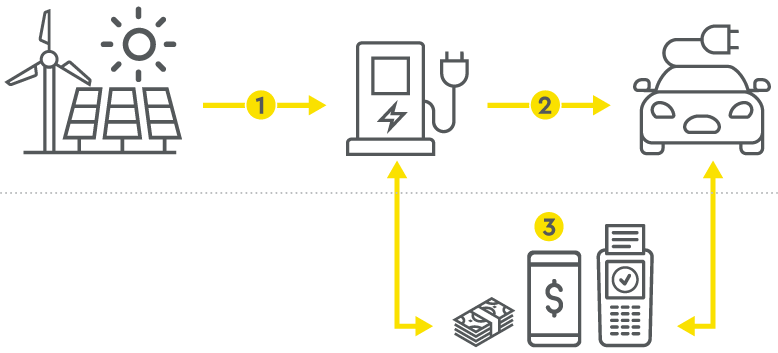
- The electricity supplier (distributors, in the case of captive consumers of electricity, or generators/traders, in the case of electricity contracted in the Free Contracting Environment - ACL) feeds the load stations with electricity.
- The Charge Point Operator (CPO), commonly called an electric station, offers consumers electric charging from chargers (wallbox or electric pump), with other additional services, such as the possibility of remote station reservation, information about free terminals and charging power, payment methods, etc.
- To facilitate the management of the various issues associated with recharging, the electric station can operate recharges through an e-Mobility Service Provider (eMSP), which brokers recharging - with the management of additional services via the platform - and payment of the recharge. In this situation, the eMSP enters into the contract with the consumer and releases to the consumer the recharge and other service components received from the charging station.
Regarding the remuneration for recharges, the price charged generally consists of a basic fee per charge plus a variable fee per volume (per kWh) or per charge time (per hour or minute). However, it is common for large supermarket chains, shopping centers, and office buildings to also offer free charging of vehicles during the customers' stay, as a form of attraction.
Considering the above scenario, a number of relevant questions arise regarding the tax treatment of electric vehicle recharging activities, which may become even more complex if the eMSP is also involved in the recharging supply process.
In particular, there is a lot of uncertainty regarding the levying of ICMS and ISS on the charging activities of electric vehicles. The uncertainty lies especially in the qualification of the recharging activity as a service, taxable by the ISS, or as a form of electricity trading, taxable by the ICMS.
At first sight, we believe it would be defensible to qualify electric vehicle recharging activities as a service, of which electricity would be an input. This perspective is based on the fact that consumption of the electric energy used for recharging is done by the charging station (which uses this input to provide its recharging service).
In other words, the charging station would act only as a consumer unit of the electricity supplied by the distributor, generator, or trader, and the electricity trading cycle for ICMS purposes would end there.
Supporting this interpretation, the chairman of the National Agency of Electric Energy (Aneel), when approving Aneel Normative Resolution 819/18 - which regulated electric vehicle recharging activities - expressed the understanding that "the recharging of electric vehicles is characterized as a distinct service, which uses electricity as an input.
Although the resolution was revoked by Aneel Normative Resolution 1,000/21, the provisions on electric vehicle recharging activities were maintained in the current resolution, which seems to indicate no change in Aneel's interpretation on the subject.
It would be possible to argue, therefore, that operation of recharging electric vehicles does not represent marketing and sale of a commodity (in this case, electric energy), since it only aims to offer optimized recharging of the vehicle. Electricity is used as an input for a recharging service, not as a commodity in itself.
However, considering the perspective that recharging of vehicles represents a service, the list of services attached to Complementary Law 116/03 is not clear enough as to the qualification of this activity for ISS taxation purposes and the form of taxation (the tax calculation basis).
Specifically as to the form of taxation, we recall that the only item on the list of services attached to Complementary Law 116/03 that refers to the "loading and reloading" of vehicles (item 14.01) excluded the "parts and pieces used" from the municipal tax assessment, which would be subject to the ICMS.
The absence of an express provision on energy (which would not be a part and piece) in the ISS legislation could be considered by the states as permission for the ICMS to be levied on the amount of electricity used in the recharge, even if the recharge activity is considered a service.
However, it seems to us that electric energy could not be considered a part or piece used in the recharging of electric vehicles, since it is not part of the car, much less indivisible from it - so much so that the recharging is consumed integrally with the use of the vehicle.
The very nature of electricity - as the movement of electric charges resulting from the existence of a potential difference between two points - prevents it from assuming the appearance of a part or piece, since it has no material aspect.
Although the value of the energy has already been taxed by the ICMS when it is acquired by the charging station, this same value could be understood as a cost of providing the recharge service and, consequently, included in the calculation basis of the ISS. As the municipal tax legislation did not expressly intend to cover recharging of electric vehicles, there is a risk that the ISS tax basis would be unduly broadened to also include the values of the energy used in recharging.
Even if the charging station is not considered an electricity trader for regulatory purposes, one cannot rule out the possibility that the state treasury departments will consider these operations to be a type of supply of electricity, directly taxable by the ICMS.
Even if the state tax authorities have this claim, it does not seem to us that there is an ICMS taxable basis. Let us explain: when the electric station recharges the vehicle, the recharge value (P) will be priced based on the sum of the amount paid for the electric energy consumed by the recharging point (E) and the remuneration for the service provided (S).
As is known, the value "E" was taxed by the ICMS when the electricity was supplied by the distribution company or when the energy was contracted with the generating/trading company in ACL. With regard to the supply of this energy in the recharge, there is no surcharge on the purchase price of the electricity by the charging station. Thus, there would be no ICMS taxable amount on the energy used in the recharge.
The only remaining controversy regarding any ICMS taxation would be regarding the "S" value, since Complementary Law 87/96 provides in its article 13, paragraph 1, II, that all "other amounts paid, received, or debited" in the context of the paid circulation of goods are integrated into the ICMS tax basis. There is therefore a risk that states would consider the remuneration fee for the recharging service (S) as part of the ICMS tax basis.
However, it does not seem possible to accept the levy of ICMS on the "S" value, since the recent Complementary Law 194/22 - in addition to establishing the essential nature of electricity, fuels, communication services, and public transportation for purposes of defining the applicable ICMS rates - expressly provided for non-assessment of the ICMS on "transmission and distribution services and industry charges related to electricity transactions," as provided for in the new subsection X added to article 3 of Complementary Law 87/96.
Among these services and charges now exempt from the ICMS are included the Tariff for the Use of the Electricity Transmission System (TUST) and the Distribution System Use Tariff (TUSD).[1]
In a systematic and analogical interpretation of the new subsection X added to article 3 of Complementary Law 87/96, the amounts charged for recharging electric vehicles (S) must also be covered by the same device, since they constitute an amount paid in consideration for a service of distribution/supply of electricity by the charging stations.
In addition, Precedent 391 of the Superior Court of Appeals (STJ) provides that "[t]he ICMS is levied on the value of the electricity tariff corresponding to the power demand actually used.” If the charging station represents an electricity consumer unit, ICMS taxation on the electricity consumed could occur only when it is purchased by the charging station, and there is no possibility for subsequent levying of a state tax on the fee charged for the recharging service (S).
Considering the vagueness of the current tax scenario regarding electric vehicle recharging activity, we believe that legislative changes will be necessary to better accommodate these operations, guaranteeing greater legal security to the market players. The sectors related to electrified means of transportation have been speaking out about the lack of a legal framework and infrastructure, according to a recent report in Valor.
It is necessary that the various incentives that have been granted for the industrialization and sale of electric vehicles be accompanied by a better definition in the tax field of the electric vehicle charging activities. Thus, it seems to us that the issue will still be subject to extensive and considerable discussion, until it is sufficiently tackled and settled by the tax authorities.
[1] The inclusion of the Tariff for the Use of the Electricity Transmission System (TUST) and the Electricity Distribution System Use Tariff (TUSD) in the ICMS tax basis is subject to the STJ's Repetitive Topic 986, which is awaiting judgment by the First Section of the Court. With Complementary Law 194/22, however, we believe that this judicial discussion is substantively moot.

- Category: Litigation
The electronic performance of procedural acts has been constantly favored by the legal system not only to adapt procedures to the technological innovations experienced by society, but also to make it an instrument capable of ensuring a fair and satisfactory judicial outcome within the shortest time possible.
The phenomenon began, still incipiently, on May 26, 1999, with the publication of Law 9,800/99, more commonly known as the "Fax Law". This standard allowed - in an innovative way for the time - the use of a facsimile or similar data and image transmission system for the performance of procedural acts.
Shortly thereafter, Law 10,259/01, known as the "Law of Special Civil and Criminal Federal Courts" was enacted, establishing, for the first time, the possibility for courts to organize services for serving parties and receiving petitions electronically.
In order to increase the security of electronic performance of procedural acts in the scope of the special courts, president Fernando Henrique Cardoso promulgated Executive Order 2,200/01, responsible for creating the Brazilian Public Keys Infrastructure (ICP-Brasil). This system was intended to "ensure the authenticity, integrity, and legal validity of documents in electronic form, of the supporting applications, and of the enabled applications that use digital certificates, as well as secure electronic transactions," as stated in the executive order.
Given the great repercussion of the standards in question, several laws were published amending the Code of Civil Procedure of 1973 (CPC/73) to allow the performance of procedural acts electronically. This was the case with Law 11,280/06, which established the possibility for the courts to regulate the practice and communication of electronic procedural acts, and Law 11,341/06, which authorized the presentation of proof of divergence of case law for the purposes of filing special appeals through electronic media.
In this context of growing technological procedural evolution, Law 11,419/06 was published, more commonly known as the "Electronic Procedure Law".
This normative law brought in several innovations to the CPC/73, besides having regulated the performance of several procedural acts electronically, such as the complaint and interlocutory petition. It also authorized the bodies of the Judiciary to develop electronic systems for processing and managing lawsuits through totally or partially digital records, which led to the creation of various digital platforms, such as PJE, e-proc, e-saj, and projudi, among others.
With the publication of Law 13,105/15, the current Code of Civil Procedure (CPC/15) entered into force, giving even more importance to the electronic performance of procedural acts, by providing, for the first time, that the Public Administration (direct and indirect) and public and private companies must keep their records updated in the digital case systems for the purpose of receiving summonses and subpoenas electronically (articles 246, 1,050, and 1,051, CPC/15).
Under the pretext of regulating this registry, Judicial Review Board Resolution 236 was issued (CNJ Resolution 236/16), which established the Platform for Procedural Communications (Electronic Domicile), among other procedures. Given the shallowness of the regulation, however, this system was not adopted in court cases immediately.
After that, Law 14,195/21 was issued, which amended several provisions of CPC/15, especially with regard to the communication of procedural acts. This standard established, among other points, that service of process will preferably be done electronically, reinforcing the obligation of registering the parties for the purposes of receiving summons and subpoenas, raising this registration to the category of a procedural duty (articles 77, VII, 246, head paragraph, CPC/15).
It was also established that, if the electronic summons is not received by the defendant within three business days, it must present in the record, at the first opportunity, justification for not having received the summons, under penalty of answering for contempt against the Judiciary, subject to a fine of up to 5% of the amount in controversy (article 246, head paragraph, paragraphs 1-B and 1-C, CPC/15).
With this, again with the objective of regulating the registration of the parties in the electronic case systems, CNJ Resolution 455/22 was promulgated. This resolution established the Judicial Branch Services Portal and regulated the service of summonses and subpoenas via Electronic Judicial Domicile and the National Electronic Gazette of the Judiciary (DJEN) - the latter already in regular use by the federal courts.
According to information recently released by the CNJ, the Judicial Branch Services Portal and the Electronic Judicial Domicile will finally be implemented on September 30.
According to CNJ Resolution 455/22, the Judicial Branch Services Portal, a digital platform for access by external users, will allow unified consultation of all electronic proceedings in progress, electronic petitioning, and access to summonses and subpoenas received both via Electronic Judicial Domicile and via DJEN. The system promises to standardize the various digital platforms operated by the courts, giving users greater security.
The Electronic Judicial Domicile, in turn, will allow the parties to receive summons and subpoenas electronically, either by e-mail or other digital means of communication they may opt for, such as SMS or instant messaging applications (for example, WhatsApp), unifying the communication channel between the litigants and the Judiciary.
It is important to reinforce that registration is mandatory for the Public Administration (direct and indirect) and for public and private companies, which must register within 90 days from the date of implementation of the Electronic Judicial Domicile, as expressly established by CNJ Resolution 455/22. This requirement is not imposed on individuals, micro-enterprises, and small businesses that have an e-mail address registered in the integrated system of the National Network for the Simplification of Registration and Legalization of Companies and Businesses (Redesim).
Without the registration, the interested party will be subject to procedural sanctions, ranging from possible imposition of a fine in the event of failure to confirm receipt of the electronic summons within the established deadline, to expiration of the deadline to respond to the summons. It will also be subject to the legal consequences associated with its inaction (article 246, head paragraph, paragraphs 1-B and 1-C, CPC/15 and article 20, paragraphs 3 and 4, CNJ Resolution 455/22).
It is essential, therefore, to monitor the implementation of the Electronic Court Domicile and subsequent registration as requested. We are available to assist you with this new measure.

- Category: Labor and employment
The possibility of working from wherever employees want, without limiting themselves to a home base, is currently one of the most desired benefits by employees.
According to research conducted by MBO Partners,[1] the number of North American professionals who adopted work-from-anywhere grew 50% in the first year of the pandemic. The Conference Board estimated that only 8% of jobs were primarily remote in the US before the coronavirus. After that, estimates range from 20% to 50% of jobs.[2]
This change did not happen exclusively in the US. It is a global trend. Various companies have adopted strategies to improve remote working to make it more attractive, healthy, and productive, benefiting both employees and employers. More and more people are rethinking the need to continue living in large cities and working only from one place.
According to Vagas, a Brazilian HR tech recruitment company, the technology, finance, consulting and business management, insurance, telecommunications, and education sectors are the ones that most offer remote work positions in Brazil.
The work-from-anywhere model has allowed a major change in Brazil, as the number of foreign companies, without local subsidiaries/entities in Brazil, engaging Brazilians citizens to work remotely from Brazil has substantially increased over the last three years.
It is becoming common, especially in the tech industry, to have Brazilian individuals engaged directly by foreign companies, receiving in USD, EUR or even in bitcoins, abroad.
But what are the labor and employment risks/issues foreign companies should consider before engaging individuals in Brazil? Do they have to comply with local employment laws?
Firstly, it is important to have in mind that, according to Brazilian laws as well as case law, labor relationships (which include independent contractor relationships) and employment relationships with the provisions of services in Brazil are both subject to Brazilian labor and employment laws and, also, to the jurisdiction of Brazilian labor courts.
The parties cannot agree otherwise and, even if they do so by, for example, agreeing to an arbitration clause or to the application of US law, such contract would be deemed null and void. This is because, according to the Brazilian Federal Constitution, whenever there is a dispute involving the existence of a potential employment relationship between two contracting parties, Brazilian labor courts have jurisdiction to rule the dispute and such ruling must be made in accordance with Brazilian labor and employment laws.
In this context, it is important to have in mind that, although there is no statute prohibiting foreign companies from hiring Brazilian citizens, it is not possible, from a practical perspective, for a foreign company to engage an individual, in Brazil, under an employment relationship, without having a local subsidiary incorporated in Brazil. This is because there are certain obligations that employers must comply with vis-à-vis the Brazilian Government that require the existence of a Brazilian entity.
Due to this, foreign companies hiring individuals in Brazil usually engage them as independent contractors only, without an employment relationship.
In Brazil, independent contractors may be engaged (a) as individual independent contractors or (b) through legal entities incorporated by them (so called “PJs”).
Independent contractors are not entitled to labor and employment benefits (annual vacations and vacation bonus, Christmas Bonus, deposits into the Guarantee Fund for Length of Service (FGTS), benefits established by the applicable collective bargaining agreement, etc.), but solely the remuneration package agreed upon between the parties.
Payments made to independent contractors by foreign companies are also not subject to social security charges in Brazil, as the paying source is not a Brazilian entity.
This is why foreign companies are able to offer remuneration packages much more attractive to Brazilian individuals when compares to Brazilian companies. Not only they usually pay abroad, in USD or EUR, but also they do not collect charges in Brazil.
However, Brazilian laws do not avoid the pronouncement of a direct employment between independent contractors and the contracting company in the event the legal requirements for an employment relationship are found to have been met.
On the contrary: if the independent contractor renders services (i) on a personal basis, (ii) on a regular basis, and (iii) under the subordination/direction of the contracting company’s employees/representatives abroad, an employment relationship must be declared directly between the individual rendering services and the contracting company.
This is based on the general principle of “substance over form”, according to which an employment relationship shall exist directly between the contracting parties, regardless of any agreement entered into between them if all the legal requirements for an employment relationship described above are found to have been met in the case.
In this case, if the independent contractor files a labor lawsuit against the contracting company, it may be required to pay all labor and employment benefits described above, in accordance with Brazilian law. This risk exists regardless of the nature of the contract.
It is true that if the foreign entity does not have a Brazilian legal entity, the chances of materialization of the risks are lower, but they still exist. As there is no Brazilian entity, the independent contractors would have to sue the foreign company, which is time consuming and depends on how long the courts take to rule the case, etc. Even though the risk exists, it would be more difficult to enforce a decision against a foreign company.
The risks increase, however, if the foreign entity decides to incorporate a local entity in Brazil, as it will become liable for all potential past labor and employment liabilities. This is especially relevant for foreign companies plaining to set foot in the Brazilian territory.
Bearing this in mind, foreign companies should map potential risks and address them before engaging individuals in Brazil.
[1] https://s29814.pcdn.co/wp-content/uploads/2020/10/MBO-Digital-Nomad-Report-2020-Revised.pdf, accessed on August 30, 2022.
[2] https://vocesa.abril.com.br/sociedade/o-futuro-do-anywhere-office/, accessed on August 30, 2022.

- Category: Real estate
On October 17, the Judicial Review Board of the State of Rio de Janeiro issued CGJ Ordinance 77/22 with the intention of facilitating the disposal of assets of estates before completion of probate, without the need for intervention by the Judiciary.
Under the new rule, it will be possible to sell an estate's assets by public deed, regardless of court authorization. The deed, however, must include and prove the payment, as part of the price, of the full causa mortis transfer tax on the entire inheritance, in addition to prior deposit of the fees due for the extrajudicial probate. In other words, instead of giving this part of the price to the seller, the purchaser will directly discharge these expenses of the estate.
The change aims to facilitate the sale of real estate during out-of-court probate, whether due to urgency on the part of the parties or the heirs' lack of resources to complete the probate process. It is not uncommon for the cost of fees and taxes to prevent the division of the estate or to resort to the courts in the probate process in an attempt to obtain a court order to authorize the sale of part of the estate and thus raise funds to pay for these expenses. The new rule, therefore, can be seen as an important litigation prevention measure.
It is fundamental to note, however, that failure to draw up the public deed of extra-judicial probate within 90 days from the acknowledgement of the prior deposit, unless there is a fully justified reason, will cause the seller to lose the fees deposited by the purchaser in favor of the notary public, since, in this case, the notarial act will be considered effectively performed.
Although the real estate transaction itself is not affected, it is recommended, therefore, that the parties assess the inclusion of a regulation on this subject in the deed of sale and purchase, with possible consequences and penalties if the established deadline is not met, in order to provide greater security for the parties and the transaction.
The property sold will be listed in the estate list for the purposes of determining the emoluments, tax classification, and calculation of the apportionment, but it will not be subject to partition. Its sale will be noted in the probate deed.
This new rule does not apply to disposal of real estate located outside the State of Rio de Janeiro and will also not control in cases where probate cannot be done up by a public deed in an extrajudicial manner and/or where there is an unavailability of assets in relation to one of the heirs or the executor.
The new regulation is an incentive for heirs to proceed with the extrajudicial division of property. At the same time, the rule relieves the Judiciary by stimulating the payment of transmission causa mortis, speeding up the process and benefiting the purchaser, who gains legal security with the regulation of the transaction.

- Category: Litigation
The Fourth Panel of the Superior Court of Appeals (STJ) completed in August the judgment of Special Appeal (REsp) 1.837.386/SP, in which it was litigated whether the promulgation of Precedent 326 of the STJ[1], based on the Code of Civil Procedure of 1973 (CPC/73), would conflict with the wording of article 292, V, of the Code of Civil Procedure (CPC) in force.[2]
Among the provisions submitted for analysis by the court in the REsp,[3] article 86 of the CPC merits attention, according to which the parties must bear, proportionally, the case costs and the attorneys' fees in the event of reciprocal loss of suit.
According to the recent understanding of the STJ, established on the occasion of the judgment of REsp 1.837.386/SP, in actions for compensation for non-economic damages, even if the amount of the compensation awarded by the judgment is miniscule if compared to the amount indicated in the complaint, "there is no question of loss of suit for the plaintiffs, who were victorious in their claim for compensation," which reinforces the content set forth in Precedent 326.
This is because the plaintiff would be allowed to formulate a claim for compensation for non-economic damages in an estimated manner, such as, for example, using "generic formulas like 'compensation not less than', without an award in an amount higher than his estimate qualifying as an ultrapetita decision."
The discussion submitted to the STJ is old and subject to divergence. On one side, there are those who, in the legal scholarship[4] and in the case law,[5] defend maintenance of the validity of what is stated in the precedent. Considering that the judge, in theory, is be bound to the amount requested in the complaint to fix the quantum of the compensation, the understanding would prevail that, if the request for compensation for non-economic damages is granted, even if in an amount lower than that requested, there would be no partial or reciprocal loss of suit between the parties.
In this sense, although article 292, V, of the CPC expressly requires that a claim for non-economic damages be quantified and determined by the plaintiff when the suit is filed, the total loss of suit would fall to the defendant, since the amount indicated in the complaint for the award of compensation for non-economic damages would be merely an estimate.
From the point of view of constitutional law, the first current seeks to protect full access to Justice (article 5, XXXV, of the Federal Constitution), as it finds that the risk of the party incurring costs for loss of suit, in the case of partial acceptance of the claim for compensation, may inhibit the filing of suits seeking compensation for non-economic damages. In practice, this happens not infrequently, since the amount of compensation is derived from the subjective assessment of the judge.
In line with the understanding held by the STJ when ruling on REsp 1.837.386/SP, it would be inconsistent to impose a burden for loss of suit on plaintiffs who won a suit for compensation for non-economic damages, since, depending on the situation, the amount of the compensation set by the court could even be lower than the attorneys' fees imposed on the winner in the claim.[8]
Thus, by upholding the understanding set forth in Precedent 326, the STJ demonstrates its concern for the potential legal effects and consequences that would result from a possible overruling of said precedent, as provided for in article 21 of the Law of Introduction to the Norms of Brazilian Law (LINDB).[9]
On the other hand, as to the second trend, it is impossible to ignore that the CPC is explicit in requiring the plaintiff to present a certain and determined claim in “actions for compensation, including those based on non-economic damages", not allowing generic or estimated requests. Although we recognize the existence of legal authorization in article 324, paragraph 1, II, of the CPC for the formulation of a generic claim, "when it is not possible to immediately ascertain the consequences of the act or fact", this scenario does not apply to claims for non-economic damages.
This is because, even though the instability of the case law is undeniable, the courts, especially with the advent of the internet, have ample access to countless parameters to quantify claims for compensation according to the concrete case, as seen in case research in the courts of all the states in the federation, preparation of legal studies, among others.
Even if the judgment does not establish the exact amount of damages requested in the complaint, the judge should evaluate whether, in the concrete case, the plaintiff lost in a minimum part of the claim that would justify an exclusive judgment against the defendant for the costs for loss of suit, as provided for in the sole paragraph of article 86 of the CPC.
This interpretation honors the system provided for in article 7 of the CPC, assuring the parties exercise of the adversarial process, inasmuch as, in addition to allowing the defendant to discuss the extent of the amount sought by the plaintiff, it prevents irresponsible claims for compensation for non-economic damages due to the possibility of partial loss of suit.
Except in the case provided for in the sole paragraph of article 86 of the CPC, it seems reasonable that the percentage of the fees for loss of suit to be awarded in favor of the defendant's lawyer should observe the economic benefit obtained, reached by the difference between the excessive amount claimed and the amount awarded in the judgment as non-economic damages.
This understanding was ratified by Ruling 14/15 of the National School for Training and Improvement of Judges (Enfam),[10] approved by about 500 judges during the seminar The Judiciary and the new CPC, held from August 26 to 28, 2015, at the seat of the STJ itself.
In summary, we start from the premise that bringing suit in court involves risks, among them the burden of loss of suit. In this context, the procedural subjects, including the judge, have the duty to cooperate with each other to enable delivery of judicial relief (article 6 of the CPC).
On the one hand, it is incumbent on the plaintiff to prudently set the amount claimed for non-economic damages, under penalty of, failing to do so, bearing part of the burden for loss of suit. On the other hand, it is the judge's role, weighing the defendant's allegations to the contrary, to examine the reasonableness of the amount of compensation sought, taking into account the factual situation and the existing case law on the subject.
This is the co-participative and collaborative model of proceedings,[11] founded on the principles of legal security and due process of law provided for in article 5, XXXVI and LIV, of the Federal Constitution, which also lends itself to improving the case law.
Regardless of sympathy for one view or the other, the fact is that the CPC does not provide an express solution for the controversy. Considering that article 292, V, of the CPC deals specifically with actions for compensation based on non-economic damages, the best way to settle the issue might be to seek the adaptation of the procedural law through the ordinary pathway of the constitutional legislative process, through the popular participation of all interested parties.
Until this occurs, or the matter is submitted for judgment under the system of repetitive appeals provided for in articles 1036 et seq. of the CPC, the result of the judgment in the STJ will continue to be the target of reasoned criticism, especially in light of the robust case law and scholarly divergence on the subject.
[1] "In the action compensation of non-economic damages, the judgment at a lower amount than that requested in the complaint does not imply reciprocal loss of suit" (Special Court, decided on June 7, 2006).
[2] Article 292. The value of the cause shall be established in the complaint or counterclaim and shall be: (...) V - in actions for compensation, including those based on non-economic damages, the sum sought;
[3] In the appeal briefs, the appellant indicates violation of articles 186 and 927 of the Civil Code (CC) and of articles 85, paragraph 2, and 86 of the CPC.
[4] “An interesting position has been adopted by the case law regarding the action for compensation for non-economic damage. As the award of the amount of the compensation is of the judge's exclusive competence, the understanding of the Superior Court of Appeals has been fixed to the effect that, 'in actions compensation of non-economic damages, the judgment at a lower amount than that requested in the complaint does not imply reciprocal loss of suit’ (Precedent 326/STJ)." (THEODORO JÚNIOR, Humberto. Course on Civil Procedure Law. 56th ed. Rio de Janeiro: Editora Forense, 2015, p. 308).
[5] STJ, REsp 579.195-SP, opinion drafted by Justice Castro Filho, 3rd Panel, decided on October 21, 2003; TJMG, Motion for Clarification-Cv 1.0000.22.037448-2/002, opinion drafted by Appellate Judge José Augusto Lourenço dos Santos, 12th Civil Chamber, decided on September 2, 2022; TJSP, Civil Motion for Clarification 1000476-56.2017.8.26.0412, opinion drafted by Appellate Judge Coelho Mendes, 10th Chamber of Private Law, decided on February 5, 2019.
[6] "A problem that deserves careful analysis is that of a generic claim in actions for non-economic damages: should the plaintiff quantify the amount of the compensation in the complaint or not? The answer is in the affirmative: the claim in these lawsuits must be certain and determined, limiting the plaintiff in how much he seeks to receive as compensation for the non-economic damage he has suffered. Who, other than the plaintiff himself, could quantify the 'non-economic pain' he claims to have suffered? How could a stranger, and therefore unaware of this 'pain', assess its existence, measure its extent, and quantify it in money? The judge's job is to judge whether or not the amount requested by the plaintiff is due; it is not incumbent on him, without a provocation from the plaintiff, to say how much the amount should be. Furthermore, if the plaintiff requests that the judge determine the amount of the compensation, he will not be able to appeal decisions that, absurdly, set it at one Brazilian Real (R$ 1.00), since the claim would have been fully granted, with there being no way to find an interest on appeal. Article 292, V, of the CPC seems to go in this direction, by imposing as the amount in controversy the amount of the prayer for relief in actions for compensation, 'including those based on non-economic damage'. The illiquidity of the claim is only possible, in these cases, if the act that caused the damage may also have repercussions in the future, generating other damages (e.g.: a situation in which the non-economic damage is continuous, such as undue registration in personal credit history or continuous offense to one's image); then, one would apply subsection II of paragraph 1 of article 624, commented here. Outside this case, the formulation of an illiquid claim is unacceptable" (DIDIER JÚNIOR, Fredie. Curso de direito processual civil: introdução ao direito processual civil, parte geral e processo de conhecimento [“Course on civil procedural law: introduction to civil procedural law, general part and cognizance process”], 17th revised ed., expanded and current. Salvador : JusPodivm, 2015, p. 581).;
[7] TJRJ, Appeal 0002064-42.2017.8.19.0079, opinion drafted by Appellate Judge Alexandre Câmara, 2nd Civil Chamber, decided on September 16, 2020.
TJSP, Appeal 1002707-40.2016.8.26.0655, opinion drafted by Appellate Judge Antonio Rigolin, 31st Chamber of Private Law, decided on January 23, 2018. TJ-MG, Appeal 10000191312040001, opinion drafted by Appellate Judge Lílian Maciel, decided on January 20, 2020. TJ-DF, 0723140-23.2018.8.07.0001, opinion drafted by Appellate Judge Leila Arlanch, 7th Civil Panel, decided on July 24, 2019.
[8] STJ, AgRg no Ag 459.509-RS, opinion drafted by Luiz Fux, 1st Panel, decided on November 25, 2003
[9] Article 21. The decision that, in the administrative, oversight, or judicial spheres, orders the invalidation of an act, contract, adjustment, process, or administrative rule must expressly indicate its legal and administrative consequences.
[10] Enfam Ruling 14/2015: "In the event of reciprocal loss of suit, the difference between what was claimed by the plaintiff and what was granted, including with regard to awards of non-economic damages, shall be considered the defendant's economic benefit, for purposes of article 85, paragraph 2, of the CPC/2015" (emphasis added)
[11]DIDIER JR, Fredie "The three models of procedural law: inquisitive, dispositive, and cooperative." Revista de Processo: RePro, v. 36, n. 198, p. 213-225, Aug. 2011.

- Category: Capital markets
The Securities and Exchange Commission of Brazil (CVM) published CVM Guidance Opinion 40, approved by its joint committee, on October 11th. The document makes public the regulator's consolidated understanding of the rules applicable to cryptoasset securities. The aim of the agency is to guide market participants and bring legal security and predictability to development of the sector.
Cryptoassets, or virtual assets, are divided into cryptocurrencies, such as bitcoin, altcoins, and stablecoins, and tokens, such as utility tokens, security or equity tokens, and non-fungible tokens (NFT).
CVM's position is that bitcoins and most other cryptocurrencies are outside its regulatory scope, as they are not considered securities or financial assets.[1] The competence of the agency, therefore, does not cover service providers that perform administration, management, custody, or operate exchanges on which only cryptocurrencies are traded.
Tokens, in turn, may fall under the regulatory reach of the CVM, provided they are classified as securities. When this occurs, all service providers involved in the issuance, public distribution, centralized deposit, clearing and settlement, bookkeeping, and issuance of certificates, custody, as well as brokers that act, directly or indirectly, in the secondary trading of these tokens must comply with CVM regulations applicable to the respective professional activities performed.
Currently underway in the National Congress, Bill 4,401/21,[2] known as the Legal Framework for Cryptocurrencies, proposes regulation of virtual asset service providers. Its main regulatory focus, however, is virtual assets used for investment or payment that are not considered securities, since there is no regulation of their activities or supervision by a regulatory body.
The bill expressly excludes regulation of virtual assets considered securities, which are already subject to Law 6,385/76 (Capital Markets Law) and to the CVM’s supervision.
There is, therefore, complementarity between the initiatives of the CVM and the Legislative Branch regarding the regulation of the cryptoasset sector (virtual assets) as a whole. The Legal Framework for Cryptocurrencies bill even makes it clear that the CVM's jurisdiction over tokens considered securities should remain unchanged.
Regarding CVM Guidance Opinion 40, we highlight the main guidelines:
- Technological neutrality: following the international trend, the CVM adopts a neutral posture in relation to the technologies employed and is receptive to new technologies. The technologies behind cryptoassets (e.g. blockchain or other DLT) are not subject to regulation in the capital markets, nor are they relevant to the process of classifying an asset as a security or for submitting a certain activity to CVM regulation.
- Cryptoasset categories: the CVM chose to adopt a functional approach in categorizing cryptoasset to indicate their legal treatment, classifying them among:
- Payment tokens: their functionality replicates that of currencies, as a unit of account, medium of exchange, and store of value.
- Utility token: their functionality is to purchase or access a certain product or service.
- Asset referenced token: their functionality is to represent one or more assets, which can be tangible or intangible, such as, for example, security tokens, stablecoins, non-fungible tokens (NFT), and other assets subject to tokenization operations.
A single cryptoasset may fall into more than one category according to the functions performed and the associated rights. Furthermore, tokens may or may not be characterized as securities, depending on the analysis of each case, based on the guidelines explained below.
- Classification of cryptoassets as securities: the classification of cryptoassets as securities is important as this brings about the CVM's jurisdiction over issuers and public offerings of these virtual assets, as well as the agents involved in the brokerage, bookkeeping, custody, centralized deposit, registration, clearing, and settlement of transactions involving cryptoassets considered securities, in addition to the administration of organized markets for secondary trading of this type of cryptoasset.
According to the CVM’s guidance, cryptoasset securities should be considered securities in the following cases:
- If the token is characterized as a publicly offered collective investment contract that generates holding, partnership, or remuneration rights, including those resulting from the provision of services, whose income arises from the efforts of the entrepreneur or third parties, as set forth in subsection IX of article 2 of the Capital Markets Law.
This can occur even if the collective investment vehicle invests in or takes on exposure to cryptoassets that are not considered securities, such as bitcoin or other cryptocurrencies. According to the administrative case law of the CVM, the characterization referred to in the above paragraph does not depend on a prior opinion of the CVM but on the application of the Howey Test, which will be explained below.
- If the token is the digital representation of any of the securities provided for in subsections I to VIII of article 2 of the Capital Markets Law, that is:
- shares, debentures, or subscription warrants;
- coupons, rights, subscription receipts, and certificates of splitting of such receipts;
- certificates of deposit of securities;
- debenture notes;
- quotas of securities investment funds or investment clubs in any assets;
- commercial notes;
- futures, options, and other derivatives contracts, whose underlying assets are securities; and
- other derivative contracts, regardless of whether or not the underlying assets are cryptoassets.
- If the token is the digital representation of certificates of receivables offered publicly or admitted for trading on a regulated securities market, as provided for in article 20, paragraph 1 of Law 14,430/22 (Legal Framework of Securitization Companies).
- Collective investment contracts and the Howey Test to characterize a publicly offered cryptoasset as a collective investment contract under the terms of subsection IX of article in order to classify a security as a marketable security, the CVM uses the Howey Test, inspired by the method used by the U.S. Securities and Exchange Commission (SEC).
The CVM lists the characteristics that must be taken into consideration for classification purposes when analyzing a case:
- investment;
- formalization;
- collective nature of the investment;
- expectation of economic benefit by entitlement to some form of holding, partnership, or remuneration, which must result from the efforts of the entrepreneur or a third party, and not from external factors, such as, for example, equity participation or redemption rights, remuneration agreements, and receipt of dividends;
- entrepreneurial or third-party effort, such as when the entrepreneur's or the third party's actions are necessary for the creation, improvement, operation, or promotion of the enterprise; and
- public offering.
- Public Offering: the public distribution of cryptoassets considered securities in the capital markets is subject to prior registration with the CVM, as provided for in article 19 of the Capital Markets Law, except in situations in which the distribution is expressly exempted under the terms of the infra-regulatory rules issued by the CVM, as delegated to the agency by articles 8, I, and 19, paragraph 5, of that law.
At the infra-legal level, issues and offers for public distribution of securities are currently regulated by the CVM in CVM Instruction 400/03 and in Instruction 476/09. These two instructions, however, will be replaced and repealed on January 2, 2023, with the entry into force of CVM Resolution 160/22, which will inaugurate a new regulatory framework for public offerings of securities.
In addition, as the public offering of cryptoasset products is common through the internet and without geographic restrictions, the CVM advises that, in this case, one must observe the parameters of CVM Guidance Opinion 32 and CVM Guidance Opinion 33, both of 2005 and applicable to public offerings of securities issued abroad for a target public residing, domiciled, or incorporated in Brazil.
In the new opinion, the CVM supplemented the guidelines given in 2005 with information regarding the criteria to be taken into consideration in the evaluation of the:
- effectiveness of measures to prevent the general public from accessing the page containing a private offering of securities; and
- irregularity of public offerings of securities abroad, without the due registration with the CVM, and of brokerage of transactions with securities issued abroad, including derivatives, intended, in both cases, to the general public resident in Brazil.
- Informational framework and valuing of of transparency: based on the principle of wide and adequate disclosure that guides the information framework adopted by the CVM, the agency has guided the participants of the cryptoasset market classified as securities to value maximum transparency in their issuance, public distribution, and trading in the secondary market.
It recommended that the applicable regulation on this subject be observed and pointed out as an example CVM Resolution 80/22, CVM Resolution 86/22, and CVM Resolution 88/22, as applicable in view of the characteristics of the cryptoassets and the issuer, under the terms of articles 19 and 21 of the Capital Markets Law. As explained above, the current regulations applicable to public offerings of securities must also be complied with.
Regarding the admission for trading in the secondary market, the agency guided that cryptoassets classified as securities must be traded in organized markets that have authorization from the CVM, pursuant to CVM Resolution 135/22.
In a complementary way, it highlighted as an example a minimum set of information related to the rights of crypto holders and to trading, infrastructure, and ownership of cryptoassets, the provision of which in language accessible to the target audience of the offering was considered important by the agency.
The regulator has indicated that it may evaluate the creation of a more flexible framework in the future depending on the evolution and development of the issue. For now, it recommended that market participants give preference to broad transparency and observe all the rules that guide the disclosure of information in effect regarding their respective activities, so that the investor can make a more informed investment decision.
- Role of brokers: the CVM highlighted the role of brokers that act, directly or indirectly, in the secondary market for trading of cryptoassets considered securities. In addition to the duty to observe applicable regulations, the agency again emphasized the importance of disclosing information to investors.
It recommended that, within their area of expertise, these participants act to ensure an adequate level of transparency and information regarding the characteristics and risks associated with virtual assets in trading, especially when cryptoassets are offered directly, rather than through a regulated product such as, for example, investment funds and ETFs - these investment vehicles are already required to comply with a fairly comprehensive information arrangement.
In the case of business partnerships conducted by brokers, the CVM’s guidance is that they promote due diligence on the internal controls of business partners to mitigate risks and assess whether the investor should be informed about the nature and extent of the business partnership. It also directed that they have segregations and safeguards of an operational, structural, and regulatory nature to prevent any problems arising from a non-security cryptoasset trading environment from impacting on the business of brokers.
Brokers must also, if trading partners offer cryptoassets that are not securities or provide services outside the cryptoeconomy, inform the target audience of the associated risks.
- Investment funds: the CVM allows indirect investment in crypto assets abroad by investment funds, pursuant to article 98 et seq. of CVM Instruction 555/14.[3] Direct investment, on the other hand, is not allowed, as the regulator has ruled out the possibility of cryptoassets being considered financial assets for the purposes of article 2, subsection V, of CVM Instruction 555/14.[4]
In CVM Guidance Opinion 40, the agency maintained its understanding on the matter, reporting that the evolution of the treatment of the topic depends on the deepening of studies and interactions with the market.
The regulator's focus was to convey guidance for fund administrators and managers to adopt new criteria and take the steps necessary to increase the level of transparency, and to adequately disclose the risks linked to cryptoassets in the funds' mandatory disclosure materials, with an emphasis on describing the risks related to virtual assets based on innovative technologies, such as NFTs.
The CVM also addressed the Regulatory Sandbox experience, reporting that three projects related to tokenization of securities have been approved and given temporary permits to be tested in the market with regulatory waivers. For the regulator, this initiative is a tool that allows evaluation of the need for revision and regulatory updating to accommodate new technologies.
As explained in CVM Guidance Opinion 40, the regulator is tracking the evolution of innovative technologies and use cases for cryptoasset securities classified as securities in the capital markets and related activities. The agency has anticipated that it may regulate this new market, within the limits of its competence, if it sees the need, based also on the experience of the Regulatory Sandbox. Approval of the opinion by the joint committee consolidates the regulator's understanding on the subject and also points in this direction.
The CVM took advantage of the communication with the market to alert participants that it is vigilant and will take the appropriate measures for the prevention and punishment of violations of the laws and regulations of the securities market in the cryptoasset market that may be identified.
We are at your disposal for any further clarifications on this subject.
[1] According to Circular Letter 1/2018/CVM/SIN, of January 12, 2018.
[2] After being approved in the House of Representatives, the text was approved in the Federal Senate, with amendments to the merits, and, therefore, was sent back to the House of Representatives, where it awaits approval on the floor.
[3] As per Circular Letter 11/2018/CVM/SIN, of September 19, 2018.
[4] According to Circular Letter 1/2018/CVM/SIN, of January 12, 2018.

- Category: Banking, insurance and finance
Accompanying global technological development, Brazilian contract law was successful in regulating electronic signatures for digital contracts through Executive Order 2,200/01. Besides standardizing electronic signatures, this MP also created the Brazilian Public Keys Infrastructure (ICP-Brasil) as a way to certify the validity of the documentation.
However, even in the face of these innovations, there was still a major obstacle in the notary industry, which remained for a long time oblivious to the developments in the electronic world. This obstacle was the apostille process. Since then, the creation of the digital apostille in Brazil has been understood as an agenda of great importance.
The electronic apostille agenda began to take shape in 2021. Since 2016, Brazil has issued the Hague Apostille in the 188 countries that are members of the Hague Apostille Convention. The apostille process, however, was still done exclusively via physical documents and only through authorized notaries. Even documents signed electronically needed to be materialized in order to receive the Hague Apostille seal, which maintained much of the slowness of the process.
To circumvent this challenge, in 2021, the National Council of Justice (CNJ) put on the agenda the possibility of digitizing apostilles, which was approved at the 86th Virtual Session of the CNJ. The electronic apostille now has its procedure provided for in a normative act (Resolution 392/21), which amended Resolution 228/16 (Apostille Convention). The following are important additions made to the convention:
Article 7. The apostille must be in accordance with the model in Annex I of this Resolution, with the following characteristics:
Paragraph 2. The National Judicial Board shall define the security, validity, and effectiveness standards for the placement of the apostille on documents signed electronically and for the issuance of an apostille in electronic media. (included by Resolution 392/21)
Article 8. The apostille shall be issued and registered in an electronic system. (as amended by Resolution 392/21)
Paragraph 1. The apostilles shall be signed with a digital certificate and registered by the issuer. (as amended by Resolution 392/21)
Paragraph 2. The apostille shall be issued after confirming the authenticity of the signature, the function or position held by the signer of the document, and, when applicable, the authenticity of the stamp or seal affixed to it. (as amended by Resolution 392/21)
These changes made it possible to combine the security of the apostille with an unprecedented agility in this process. According to the National Judicial Board, Justice Maria Thereza de Assis Moura, during her speech at the 1st National Forum of the Hague Apostille: "In 2021, we had a 35% increase in apostilles, 1.6 million documents apostilled. In March of 2022, we recorded a monthly record of 206,000 apostilles."
Although impressive, these numbers were not the goal for the document digitization process in Brazil. On June 3, 2022, the 1st Hague National Apostille Forum took place, where another step was taken towards evolution in the issuance of apostilles. As a result of a joint demand from the National Judicial Board and the Brazilian Notary College (CNB), the Electronic Apostille System (Apostil) was created, which finally allowed the electronic and agile apostille of documents through a national platform.
Its operation is similar to the process we observe daily in Brazilian notary offices. The electronically signed document is sent to the Apostil platform. Then, instead of what would originally be authentication of signature, the platform verifies the legal validity of the signatures, done necessarily by means of a digital certificate. Finally, once the validity of the document is confirmed, Apostil generates and issues the final document, the Hague Apostille, accepted as an extrajudicially enforceable instrument.
The digitally issued apostille is similar to the physical one requested from the notary. The difference is only its electronic format and the speed generated by the possibility of validating documents via QR Code or CRC Code.
Apostil will be used both for making and looking up and managing apostilles throughout the country, thus unifying services and information on apostilles in a single, easily accessible location.
We believe there will be no difficulty in accepting digital apostilles. As the platform was created only three months ago, there are still no court decisions that attest to their validity as extrajudicially enforceable instruments. It is already possible to observe, however, the use of the Apostille by notary offices all over Brazil, something that should increase exponentially with time.
The considerations made here are valid for the purposes of Brazilian law. If this document involves the jurisdiction of other countries, all the checks described and the apostille process must be done by professionals qualified by the respective jurisdiction.

- Category: Litigation
In the Brazilian legal system, there are three types of precatórios: small value obligations, precatórios of a priority nature, and ordinary precatórios.
The precatórios of a priority nature are those that, as provided for in the first paragraph of article 100 of the Federal Constitution, derive from "salaries, wages, earnings, pensions and their supplements, social security benefits, and compensation for death or disability, based on civil liability, by virtue of a final and unappealable decision."
The attorney's fees for loss of suit awarded by the Judiciary against a public entity (Federal Government, states, municipalities, as well as their independent agencies and foundations) are also considered priority precatórios.
Priority precatórios have preference in the order of payment over precatórios of a common nature. Holders of priority precatórios who are at least 60 years old or have a serious illness or disability will be given special preference within the system itself.
Since precatórios can take years to be paid and there are still many uncertainties related to the constant legislative changes in the framework for these securities, assignments of precatórios entered into by their original holders with third parties are common.
Through the assignment of a precatório, the assignor benefits from the advance - partial - receipt of his receivable, while the assignee purchases the precatório at a discount, i.e. for a lower amount, in order to receive, in the future, full payment of the precatório to be made by the public entity.
Many investors have doubts about the maintenance of the priority nature of the precatório after its assignment to a third party. This would be the case, for example, of an investment fund in credit rights that, by means of assignment, acquires a precatório relating to a receivable for loss of suit fees held by a lawyer or law firm. In such a situation, would the priority of the precatórios be maintained, even if the purchaser is not a lawyer or a law firm?
After several contradictory decisions handed down by the Judiciary, this impasse was resolved by the Federal Supreme Court (STF), which granted relief to Extraordinary Appeal 631.537 and unanimously defined Topic 361 of general repercussion. According to the court's decision, the change in the ownership of the priority precatório by means of assignment does not imply a change in its nature, and the precatório continues to have, therefore, its original preferential nature.
According to the vote of the reporting justice, Marco Aurélio, there is no rule in the legal system that mandates change in the priority nature of the precatório after its assignment. The Judiciary and the public debtor entity, therefore, could not modify this intrinsic preferential characteristic of the priority precatório, which would directly interfere in its payment system.
According to the Supreme Court, if the precatório lost its preferential quality, there would evidently be less interest from investors in its acquisition and a decrease in its market value, which would be harmful to those creditors considered preferential by the Federal Constitution.
The court ruled for the application of articles 286 and 298 of the Civil Code, to the effect that there is no impediment on assignment of a priority precatório. When acquiring a claim by assignment, the assignee assumes the legal position of the assignor, and the assignment covers the ancillary rights. Thus, for purposes of assignment of the precatório, the objective or subjective conditions of the new creditor are irrelevant, since it is subrogated to the same and exact conditions as the original creditor.
In addition, article 42, paragraph 1, of the National Judicial Board Resolution 303/19 already established that assignment does not alter the nature of the precatório and that the assignee may enjoy a preferential condition resulting from its priority nature, maintaining the original chronological position of the precatório.
The judgment by the Federal Supreme Court in Extraordinary Appeal 631.537 is considered a leading case that has brought legal security to investors interested in acquiring priority precatórios and to their original holders.

- Category: Banking, insurance and finance
The National Agency for Supplementary Health (ANS) has recently put in public consultation draft normative resolution that should havecriteria for defining the regulatory capital of health care plan operators. If approved in the terms proposed, the text will modify Normative Resolution 515/22 and revoke Normative Resolutions 526/22 and 514/22, as well as Ans Normative Instruction 22/22.
The public consultation will be open for contributions until October 29, 2022. The subsidies on the subject, specifically regarding the text proposed by the draft normative resolution, should be forwarded directly through the ANS website.
To propose the standard in question, the ANS claims to have considered international discussions that resulted in the progression and updating of prudential regulation models in Brazil, for the banking and insurance sectors, as well as internationally applied models for some regulated sectors.
The improvement of prudential regulation for the banking sector was due to the Basel agreements (Basel I, II and III – 1998, 2004 and 2010, respectively), whose main intention was to adapt the capital of financial institutions to the risks actually faced by them.
The regulators of the insurance market acted in the same direction. The International Association of Insurance Supervisors (IAIS), of which the ANS is a part, has promoted a very extensive review, proposing to the sector and its supervised entities to meet the relevant and material categories of risks to which they may be subject to the application of solvency rules.
Both sectors also migrated to the model now considered by the ANS, which takes into account qualitative criteria for the identification of the minimum regulatory capital required.
The current model of regulatory capital definition of health plan operators considers the solvency margin for its calculation. However, because it is a variable amount and defined according to the volume of indemnified payments and events measured by the regulated entities, this capital could sometimes not be congruent with the risks to be mitigated.
Thus, the main intention of the ANS with the proposed adjustments, in summary, is to replace the current model with a more modern one, which will effectively consider the risks to which the regulated entities are subject, according to the calculation carried out in the terms established by the regulator itself.
In addition to the migration of the regulatory capital definition model explained above, the draft new normative resolution also proposes to update the value of the reference capital, which will increase to R$ 10,883,087.01 (ten million, eight hundred and eighty-three thousand, eighty-seven reais and a penny).
If approved without reservation, the provisions will come into force on 1 January 2023.

- Category: Digital Law
The year 2022 has been very promising in terms of regulating technologies. Some legislative projects have been highlighted in regulating the use of artificial intelligence mechanisms, cryptoactives and social media.
In this scenario, there is great expectation of the market in relation to the advance of the regulation of sports betting, especially because we are in world cup year.
This activity is successful in several countries, with very expressive numbers. In the United States, the practice generated more than $4 billion in revenue in 2021, a growth of almost 180% compared to 2020.
Sports betting (sports betting) are just one of the gaming practices species. Its regulation needs to be considered, alongside, for example, the regulation of lotteries, animal racing betting, physical and online casinos, fantasy games, poker or other games understood to be skill, games and applications.
In Brazil, the modality is already usual and practiced on platforms hosted outside the country, which does not violate rules associated with the practice of games, such as the Law of Criminal Misdemeanors, which in its art. 50 considers the practice of gambling a criminal offense.
Before dealing with the regulation of sports betting in the country, however, it is worth examining two points:
- the reasons why the Gambling it is regulated; and
- the main issues justifying legal concern with the subject.
Among the reasons for regulating the Gambling, stand out:
- the interest in the tax profitability provided by the activity;
- economic development promoted by the evolution of trade interrelations; and
- protection of the rights of vulnerable publics (children, the elderly, etc.).
Regarding the concerns and risks involved, the need to:
- protect responsible gambling;
- bring legal certainty to investors in the sector and other services involved (financial institutions, advertising agencies, etc.);
- establish standards of compliance robust;
- protect users (consumers) in matters relating to fraud, vulnerable public and processing of personal data;
- avoid the use of platforms for the commission of crimes (especially money laundering);
- follow appropriate advertising standards;
- provide legal-contractual and intellectual property protection in all industry relations;
- contain the increase in cases of pathological gamblers and the resulting social problems; and
- mitigate the practices of match fixing.
The regulation of online sports betting in Brazil has begun more markedly with the Law 13,756/18. In article 29, this lottery modality is defined as fixed quota bets:
"Art. 29. Lottery is created, in the form of an exclusive public service of the Union, called fixed quota bets, the commercial exploitation of which will take place throughout the national territory. § 1 - The lottery modality of which the Caput this article consists of a betting system related to real sports-themed events, in which it is defined, at the time of the bet, how much the bettor can win in case of correct prognosis".
Regardless of the discussions on the definition established in the law (bets would not exactly be a lottery mode, for example), the fact is that fixed quota bets (or sports bets, online or not) are defined in the order as betting systems related to real sports-themed events, in which, at the time of the bet, the bettor knows how much he can win if the prognosis of the bet is confirmed.
By detailing the concept a little, you can extract the following elements:
- there is a bet contract signed with the promise of a payment to the user, if the prognosis is confirmed;
- the bet must be tied to a real sports-themed event, which includes any sporting event – such as football, chess, e-sports –, but excludes fanciful or non-real situations;
- the activity must be done by a physical or digital system (set of organized elements), usually supported by the well-known betting platforms that exploit the business (bookmakers); and
- when the bet is made (either before the sporting event or during), the bettor already knows what amount he will receive if the prognosis of his bet (future results of the sporting event) is confirmed (staked result is equal to the final actual result).
Paragraphs 2 and 3 of Art. 29 defined that such bets will be authorized or granted by the Ministry of Finance, which must regulate the subject within two years after the publication of the law, a renewable term for up to two more years. That is, the maximum deadline is December 2022.
The regulation is in charge of the Secretariat of Evaluation, Planning, Energy and Lottery (Secap) of the Ministry of Economy, and some drafts of the regulatory decree have already circulated.
One of the points that should be addressed in this regulation is the legal definition of the agents involved in this market – who are the regulator, the bettor, the operator, those who provide services to operators, resellers etc.
Another point is how the authorization of the exploitation of the activity will be made:
- monopoly (most unlikely), limited number of players or open number of players (global trend in Europe, for example, 25 out of 29 countries follow this form);
- under authorisation, authorisation or concession scheme (the tendency is to be by the authorisation scheme);
- for how long; and
- under what criteria.
A third aspect concerns the definition of the powers of the Ministry of Economy and Secap in the regulation, supervision and supervision of this market and how this will be done.
The decree should also establish the obligations of the agents involved in the exploitation of sports betting, such as ensuring responsible gambling and the integrity of betting, mitigating the risks mentioned above and respecting appropriate advertising parameters.
It is also expected that the regulatory decree will regulate the tax operationalization of the collection of the amounts involved in the exploitation of bets.

- Category: Tax
The climate of antagonism experienced between the tax administration and the taxpayer favors the maintenance of a conflict relationship between the two parties. The construction of a new paradigm presupposes reducing the distrust of the taxpayer in relation to the public power, as well as changing the perception of the tax authority in relation to the taxpayer.[1]
Well known for the high levels of litigation, tax litigation reflects a complex and bureaucratic tax system, which leaves the taxpayer subject to penalties and sanctions.
As an effect of this imbalance, the ineffectiveness of the conflict resolution system is observed, which results in excessive litigation in Brazilian tax system. Statistics pointed, already in 2019, a tax litigation (administrative and judicial, at the three federative levels) that exceeded the level of R$ 5.44 trillion – 75% of national GDP.
The use of preventive measures against tax litigation is an international trend, with emphasis on the use of tax transparency and compliance programs in favor of a less antagonistic relationship based on the paradigms of trust and collaboration. The cooperative tax compliance consists of fulfilling the main tax obligation (payment) through reciprocal cooperation between the state management and the taxpayer.[2]
The initiative to create a diploma for the protection of the taxpayer has already been adopted in countries such as the United States (Taxpayer Bill of Rights II) and Spain (Ley de Derechos y Garantias de los Contribuyentes), among others.
In early 2022, Brazil received the invitation letter from the Organization for Economic Cooperation and Development (OECD), with unanimous approval by the ambassadors of the 37 countries that make up the group, start the process of adhering to the organisation.
In addition, Brazil is a member of the OECD Forum on Tax Administration (FTA), whose main objective is to improve the performance of the tax administration in order to make it more efficient and effective and increase tax compliance, reducing costs for taxpayers and encouraging a cooperative environment based on mutual trust.
In the analysis of the current national tax system and the data related to the stock of cases in the administrative and judicial spheres, attention is drawn to the search for alternative ways of resolving disputes in tax matters and the establishment of a harmonious relationship between the parties that make up the legal-tax relationship.
It is being processed in the House of Representatives Complementary Bill 17/22 (PLP 17/22), authored by Mr Felipe Rigoni (União Brasil) together with 31 other parliamentarians. He proposes to establish the Taxpayer's Defense Code in Brazilian legislation. The content presents a set of rules, rights and duties to regulate the interaction between taxpayer and Brazilian Federal Revenue (Brazilian IRS) and curb abuses.
The original text of PLP 17/22 is structured in five chapters:
- Preliminary provisions and definitions;
- Fundamental standards;
- The rights of the taxpayer;
- The fences and duties of the Public Treasury; and
- The final provisions.
The Taxpayer's Defense Code opens its text recognizing the asymmetry between taxpayer and Brazilian IRS and provides for fundamental norms, such as the protection of taxpayer's rights, especially contradictory and broad defense, in addition to the presumption of the good faith of the taxpayer in its interaction with the IRS.
Another important point brought by the PLP 17/22 is the indication of the assumptions and fundamentals of fact and law that determine decisions in administrative proceedings, under penalty of invalidity. This provision is established as a principle to be considered by the Brazilian IRS in the trial of cases under its competence, to bring greater legal certainty to the taxpayer in the course of administrative discussions.
In relation to the rights of the taxpayer and the prosecutors who represent him, we highlight the provision for compensation of property and moral damages of acts performed by public servants without strict observance of tax legislation and the impediment of seizure of assets as a coercive means for paying taxes.
PLP 17/22 also deals with old issues, but in wide discussion both in the judiciary and in the tax administration to this day. This is the case of the confiscatory effect of the tax fine, a matter of general repercussion pending trial in the Supreme Court.[3]
Specifically in article 11, item XVI, the PLP 17/22 expressly provides for the prohibition of the application of confiscatory pecuniary penalty that exceeds the amount of the tax due. The measure is in line with a frequently fought clash in tax litigation involving lawsuits against the IRS, which insists on applying heave-high penalties for infractions, even for those not qualified as simulation, fraud or collusion.
The legal diploma provides for protection of confiscatory acts that reach the taxpayer's assets resulting from the tax authorities' actions, as presented in the justification of the PLP 17/22:
"What is intended in these articles is the delimitation of guidelines for the imposition of taxes on the taxable person, according to the best jurisprudence and tax guidelines. Considering, also, the principles of free initiative and Business Freedom, we emphasize that the existence of judicial or extrajudicial proceedings in the face of taxpayers does not prevent the enjoyment of tax benefits and incentives and participation in bids, understanding that the taxpayer of the tax relationship cannot be deprived of the exercise of economic activity".
In this context, the legislative proposal includes prerogatives that aim to facilitate the taxpayer's access to the tax administration, such as the facilitated entry to the hierarchical superior of the business office where his case is being analyzed; immediate remission of any performance, ensuring the immediate exercise of defense; and appropriate and effective treatment in the division of the company.
The Taxpayer's Defense Code presents procedures that precede the beginning of the tax assessment, such as the prior issuance of notification for the beginning of inspection procedure and the analysis of the taxpayer's defense before the tax assessment.
The proposal also presents changes to end obstacles regularly faced by taxpayers by allowing the enjoyment of tax benefits even with the existence of tax proceedings (administrative or judicial) pending and the novation in case of adhering to tax installments, giving the taxpayer the state of delinquency.
The project provides for other practical measures that benefit the taxpayer, such as the sealing of the taxpayer's qualification as a sympathetic person responsible for mere presumption and the configuration of disregard of legal personality only by court decision.
The text also amends some rules provided for in the National Tax Code, with the reduction of the current limitation period of the tax credit collection action from five to three years. The same limitation period should be considered at the enforceable stage of locating the debtor's assets.
In relation to the Brazilian IRS, the project establishes several fences, including the use of police force in the steps in the taxpayer's establishment, except with judicial authorization. The text also conditions the purpose of criminal proceedings against the taxpayer for the commission of a crime against the tax order and the action of breach of confidentiality at the end of administrative proceedings that prove the taxpayer's tax irregularity.
The proposal brought by PLP 17/22 corroborates the need for change in the traditional form of the IRS, characterized by a limited dialogue with the taxpayer and the adoption of a repressive priority posture.
The tax compliance programs widely adopted in international experience evoke the deepening of the dialogue between tax authorities and taxpayers, increasing legal certainty as voluntary adaptation to tax legislation is promoted and the logic of the dispute is reversed.
In Brazil, states such as São Paulo, with "Nos Conformes"; Ceará, with the "Contribuinte Pai D'Égua"; and Rio Grande do Sul, with "Nos Conformes RS", already present compliance programs to establish an environment of reciprocal cooperation, aimed at guiding and serving taxpayers and stimulating the self-regularization of their tax status.
Measures such as the procedure for prior review of infringement notices are widely used in Spain and recommended by the OECD, demonstrating a reciprocal trust relationship between tax and taxpayer. According to the Administrative Litigation Diagnosis (2022),[4] some Brazilian states already adopt this same measure as a procedure to ensure greater legal consistency to the self. This is the case of the State of Minas Gerais, which avoids entering the tax litigation of tax requirements without being able to be confirmed by the trial bodies.
In this sense, the research highlights solutions adopted as preventive measures of tax litigation and covers the international experience in cooperative compliance as factors to reduce tax litigation. This shows that the exclusively punitive bias (or threat of imposition of sanction) has not proved sufficient to increase the taxpayers' compliance with current tax rules, causing conflicts that translate into high rates of tax litigation.
The construction of a cooperative tax regulation model should be studied and discussed to direct the state's action. The model should be established through the use of regulatory instruments and tax extrafiscality, as proposed in the international scenario.
The Taxpayer's Defense Code may be a path, even if not the only one, for the promotion of compliance, especially with regard to possible ways of implementing a model more based on collaboration and mutual trust between the tax administration and taxpayers.
PLP 17/22 is in the process awaiting a vote of the plenary of the House of Representatives. There has already been a public hearing to discuss the project. A substitute has been presented to the original text, which awaits approval.
[1] According to the Diagnosis of Tax Administrative Litigation (2022), perceptions brought by qualitative research, based on the responses of the administration s or their representatives, point to the existence of a mutual mistrust in the relationship between the child and taxpayers. There is, therefore, an opportunity to improve this relationship, to build a more preventive system that resolves conflicts.
[2] Co-operative compliance: a framework: from enhanced relationship to co-operative compliance. Paris: OECD Publishing, p. 14, 2013
[3] The theme returned to the agenda of the Supreme Court in February 2022, when it was recognized the general repercussion in Extraordinary Appeal 1,335,293, which will discuss on the merits the possibility of fixing punitive tax fine, unqualified, in an amount greater than 100% of the tax due (Theme 1,195).
[4] Brazilian Association of Jurimetry (ABJ). Administrative Tax Litigation Diagnostic Seminar. Brasilia, 2022. Fifty-five p.

- Category: Real estate
Law 14,405/22 was published in the Official Gazette of the Federal Government, on July 13, 2022, which amended article 1351 of the Civil Code to reduce the quorum required in condominium buildings for approval of a change in the building's or real estate unit's use. The Civil Code provided for the need for unanimous approval of the condominium owners. With this change, the quorum is now two-thirds (2/3) of votes.
Law 14,405/22 was based on the fact that the demand for commercial space has been decreasing over the years, generating, consequently, vacancies in rooms and buildings with this use. The scenario was aggravated by the Covid-19 pandemic, especially with the implementation and maintenance of home offices.
Several condominiums, as well as the municipalities themselves, started to rethink how to occupy these vacant properties, since those with an exclusively commercial use and adequate structure could be reused, by changing their use to mixed or residential use. The need for unanimous approval by all condominium owners, however, considerably hindered the adaptation of these enterprises to the new demands of the market.
The change has a major positive impact on the market. From now on, it is easier to change the use of real estate projects that have already been built, or even to expand them by building new buildings for purposes that are different from what was originally established.
This is the case, for example, with mixed used complexes. Many times this type of enterprise is initially composed of only one building of a commercial, residential, and/or hotel nature, and the developers decide, later on, to expand the enterprise with the construction of other buildings with different purposes. The requirement of unanimous approval by the condominium owners often made this decision difficult or even impossible.
The expectation is that the innovation brought by the law represents, in addition to an advance and dynamism to the sector, an incentive for revitalization practices (retrofit) and even for expansion of real estate projects.