
- Category: Tax
The Law 10.456/24, sanctioned without vetoes, establishes a special tax treatment for companies or consortia responsible for independent projects of plants for the generation of electrical energy from natural gas in the State of Rio de Janeiro.
The incentive is intended for new projects that have obtained a prior environmental license and are winners of energy auctions held by the National Electrical Energy Agency (Aneel) between 2015 and 2032.
The new tax benefit provides for the deferral of ICMS in the following transactions:
- import of machinery, equipment, parts, pieces and accessories intended for the installation of the project, insofar as they are imported and customs-cleared by the ports and airports of Rio de Janeiro;
- internal acquisition of machinery, equipment, parts, pieces and accessories intended for the installation of the project; and
- interstate acquisition of machinery, equipment, parts, pieces and accessories intended for the installation of the project, in relation to the ICMS rate differential.
The deferral also applies to companies contracted or subcontracted for the construction of the plants of companies and consortia holding the tax benefit.
Additionally, there is also an ICMS exemption on the internal acquisition or import of natural gas – even if liquefied – to be used in the process of electrical energy generation.
The ICMS deferral also applies to internal transactions with natural gas produced in the State and destined to companies or consortia not granted with the special tax treatment mentioned above. In this case, the tax must be collected in the occasion of the electrical energy output transaction from the thermoelectric plant. The ICMS deferral extends to the supply of transport services of natural gas.
The payment of ICMS will be waived:
- when the electrical energy output is destined to another State for commercialization or industrialization; or
- when it is a remittance of goods or supply of services that is not taxed or that is exempt, as long as the legislation allows the full maintenance of the credit.
As a return for the tax benefits provided for in the Law and as a mechanism of energy compensation, companies and consortia holding the tax benefit must invest at least 2% of the variable cost related to the natural gas fuel in projects for the generation of electrical energy from renewable sources.
Alternatively, this investment can be made in:
- projects for the preservation of energy in public buildings, public lighting, monuments of historical or tourist interest;
- studies on energy transition, renewable energy and sustainable development; or
- studies on the energy sector within the State of Rio de Janeiro.
Machado Meyer Advogados remains available to clarify any doubts on the subject.

- Category: Crisis management
"We are acting in the logic of risk management and not just the disaster (...) because we understand that the cost of prevention is always lower than that of the remedy,"[1] said the Minister of Environment and Climate Change, Marina Silva, in June, after the federal government installed a preventive situation room to deal with drought and firefighting in the country.
Similar to a disease that is only treated after the expression of severe symptoms, many issues are lately addressed, when the crisis is already ongoing. Early intervention, however, could have mitigated or even avoided the problem.
In this moment of reflection, considering the context of corporate business, we can refer to risk analysis among the preventive measures normally used for strategic decision-making.
It is unlikely that an oil company, for example, will not carry out a risk assessment before deciding how much it will invest in biofuels each year. Likewise, it is expected that a hospital network will assess the risks involved before deciding to close emergency care in one of its units.
So far, we are dealing with standardized actions. The real innovation, when it comes to prevention in crisis tenure, occurs when this risk analysis is accompanied by a damage mitigation plan.
The decision to take risks is a day-to-day business constant, but the difference is that not everyone invests in effectively preparing to mitigate the losses that will result from the materialization of these risks. Let's think of two distinct examples:
- a company carried out a risk analysis led by its best engineers and reviewed by a prestigious consultancy, but did not prepare a damage mitigation plan or invested in crisis preparedness actions beyond those required by the business's regulator;
- Another company also did the due risk analysis with external review but went further and was concerned with engaging its internal business legal team in the evaluation process. In addition to complying with all the actions required by the laws and regulations, it drew up a plan to mitigate possible damage and carried out periodic training and simulated exercises with different sectors, which, up to that point, were not so used to interact among each other.
Both companies complied with the laws and regulations and assessed business risks, but which would be better prepared to deal with a crisis?
We know how difficult it is to bring awareness to a company about the importance of investments in preventive measures, the results of which are not usually immediately noticed. We can imagine that it is more difficult for a manager to obtain funds to prepare for hypothetical crisis’ scenarios than to invest in what has chances of having positive financial impact for the business.
Fortunately, there are a few low-cost actions and efforts that can be adopted in aid of building preventive crisis management awareness and still generate results. Some examples:
- Leadership awareness – The effort to raise leadership awareness is of paramount importance so that executives and managers are prepared to face a crisis and mitigate its damage. With good prior awareness, a lot of wear and tear will be avoided when responding to and managing a crisis, as the team will be better able to deal jointly with the situation.
- Training of foreign stakeholders – If a company has a foreign shareholder, the prior training of this stakeholder on Brazilian customs can also be adjudged as an action to prevent crisis. After all, it is not simple to explain the modus operandi of the Brazilian Judiciary, the litigant culture, the profile of the Public Ministry and the Brazilian procedural rules, especially the possible injunctions that may be granted and all the consequences of a bad procedural management. Try doing this amid chaos…
- Training, workshops and guided simulations – Another relevant tool is the realization of various exercises with the teams to understand the consequences of any crises. From the identification of operational bottlenecks and the visualization of the developments that may occur if the previously mapped risks materialize – which reinforces the need for the damage mitigation plan mentioned at the beginning of this article – it is possible to continue with training and workshops. These initiatives are important to better train people, to facilitate engagement between areas, or to unlock failures that may have been identified along the way.
Through these examples, we see that investments do not need to be high so that companies can go beyond strict compliance with laws and regulations to better prepare for crises.
Although it may not be the custom, we increasingly realize how positive it can be to dedicate efforts in preparing for responses to emergencies, catastrophes, accidents or crises. Although these actions led by the business legal team do not propose to prevent a crisis from occurring, they greatly influence the ability of companies to react. This, undeniably, has enormous power, since every decision made by a company has consequences of legal repercussions and can reflect, positively or negatively, on the continuity of the business dealings, the rebound time, etc.
Preventive measures can not only guide a more organized, faster and effective reply, but, above all, to decrease the damage caused by crises.
The recently established crisis in Rio Grande do Sul and the drought and fires in the Pantanal and the Amazon (two opposite sides of climatic problems) have put a spotlight on the sum of prevention and preparedness actions, in addition to drawing attention to the issue.
We know that the challenge is great, and the topic is very difficult. However, in a world where the impacts resulting from climate change are increasingly frequent and critical, it is worth to make the best efforts to neutralize these impacts, mitigate them or, at least, better prepare to provide effective responses – specially knowing that measures of easy implementation and high impact, with low efforts and investments, can have a striking impact on crisis management.
These preventive actions are beneficial for all companies, especially those located in sectors that are naturally more exposed to various types of risks.
[1] Agência Brasil: Government installs crisis room for fires and drought in the country

- Category: Crisis management
In this second article on crisis management, we deal with the industry of electricity, in which public service concessionaires face increasingly complex challenges, especially in adverse weather conditions – such as excessive rainfall – whose recurrence is aggravated by climate changes and global warming.
Allied to the increase in the frequency and intensity of these climatic events, which impose higher pressure on the electricity infrastructure, there is also the growing politicization of debates involving the electricity business and in companies that have undergone privatization processes.
In this context, it is necessary that companies in such sector prepare adequately for a crisis– whether due to events originating in energy generation, transmission or distribution.
As a heavily regulated business, the electricity industry has a series of legal obligations that must be strictly followed by utilities. These obligations are constantly changing and have accompanied the growing need to adapt to extreme weather events, which are increasingly frequent.
As an example, the National Electric Energy Agency (Aneel) initiated the Subsidy Taking 002/24 (TS 002/24), as a result of Technical Note 7/2024-STD-SFT/Aneel. The aim is to assess the need for regulatory intervention for these events, addressing the regulation of services and criteria for the application of variable overdue feed to unavailability.
The technical note also mentions the need to review companies' contingency plans and deals with the definition of cut off in an emergency.
To deal with crisis situations, such as in the event of a blackout due to extreme weather events, there is Normative Ordinance 61/GM/MME, of March 13, 2023, which instituted the General Protocol for Security and Crisis Management of Infrastructure Assets of Electric Energy, Mining, Oil and its by-products, Natural Gas and Biofuels (PGC), like others the Crisis Management Committee (CGC).
The PGC defines preventive and responsive actions for situations that compromise the integrity or availability of services. The CGC, on the other hand, has the function of monitoring and proposing strategic actions, categorizing incidents, establishing response procedures, and defining the contents of communications during crises.
An effective preparation for a crisis, however, requires more than organization (highly recommended) and strict compliance with regulation – especially because, as a rule, the triggers and legal statutory requirements are focused on technical and operational aspects, not on legal developments and actions that, if taken, could mitigate losses.
An example of this is the assessment of energy supply and risks of possible blackouts or unavailability of equipment of companies operating in the business. If carried out as an effort to prepare for a possible crisis, this assessment can help avoid major inconveniences.
Likewise, efforts to structure, guide and organize that allow open, direct and secure communication with the regulator and society have a lot to add.
If, instead of making their communications as a mere compliance with regulatory requirements, companies strive to share more detailed information with the State, the public authorities will be effectively able to employ efforts in a mobilization to furnish any gaps pointed out.
In both examples, the efforts mentioned can not only deliver immediate and noticeable results to companies, but also contribute considerably to mitigating risks and losses in the event of critical events.
Being prepared for a crisis (and knowing how to act before and in the face of it) is relevant to make the right legal decisions, which results in effective responses, capable of controlling the situation that the company is experiencing at that time.
In short, from a legal point of view, proactive action by companies in the electricity business to contribute to the system and mitigate the chances of a cut off in the regular energy supply may lead for them not being held responsible for unforeseen events (or at least mitigating the losses), such as extreme weather events.
Therefore, in the face of the challenges of the electricity business – in which innovations and improvements go hand in hand with higher pressure in general – strategic, critical and provocative preparation can prove to be a relevant ally of companies in managing a blackout, for example.
It is true that the legal departments do not have the power to properly avoid a blackout, an eminently technical issue. However, they can greatly contribute in advance to mitigate the effects of a crisis, especially by making a critical assessment of the potential legal consequences and advising on actions capable of minimizing damages in the civil, administrative, regulatory, and criminal spheres.

- Category: Crisis management
Accidents, data leaks, systems compromised, labor complaints, power blackouts, product recalls, raw material shortages, environmental issues, climate disasters, and several other complications. Internal or external situations, capable of temporarily paralyzing operations and with great potential to be amplified by the press, media or social networks. Regardless of their kinds and magnitude, crises are increasingly complex and multifaceted.
If not even national laws and regulations are capable to curtail all the nuances of a society in constant evolution, the difficulties faced by companies – small, medium or large – to prepare for situations that require emergency action are understandable.
What to do? Who to contact? When to activate the insurer? What are the impacts? How to contain the damage? What can be done to hold business continuity or to resume payments, etc.? How to guide communication? What are the legal consequences of each decision taken in an emergency? Anyway: where to start? The ability to provide an adequate and rapid reply to the problem can be vital.
What we call crisis management is the antidote that allows companies not only to face their problems, notwithstanding of complexity, but also to curtail and prepare themselves to, if necessary, minimize losses and unwanted legal, economic, financial and reputational consequences.
After all, better-prepared companies are more likely to recover faster from a crisis. Considering the importance of the topic, we inaugurate with this text the series of articles that aims to inform and address issues about emergency response, reputational tenure, and all the efforts that can be undertaken in advance to mitigate risks and control legal repercussions in a crisis.
To begin with, at first: what is a crisis?
We consider a crisis to be any fact or event – sudden or gradual – capable of causing damage and that, therefore, requires an immediate response. It is therefore not limited to major accidents such as explosions and leaks. It covers any and all circumstances, of higher or lesser degree, with the potential to cause damage to the activity, reputation and/or financial results.
For airline companies, for example, crises are not limited to a plane crash – which, by the way, has a very low recurrence. Crises can also occur due to the accusation of the crew for discriminatory treatment, the death of an animal transported or a forced landing due to unforeseen health emergency with passengers. Or even, of course, due to the most diverse developments of flight delays and cancellations, generated by issues of the company itself – such as extrapolation of the flight hours limit – or external factors – such as weather events.
It is also extremely relevant to keep in mind the possibility that these external factors may lead to major crises, which can also occur in the event of fuel shortages, lack of parts and components essential for maintenance, or even a strike by flight controllers.
In an oil and gas company, in another example, the crisis is not only due to environmental accidents of great repercussion. Protests by social and environmental movements, bird deaths, task accidents on platforms and logistics complications are examples of sensitive incidents that can be very difficult for companies.
Regardless of the business’ sector and the size of the company, the fact is that organizations are faced with all sorts of crises on a daily basis.
Even if companies are, as in the examples, from heavily regulated industries and consider themselves, in principle, technically prepared to respond promptly to crises, failures can occur at any time – and the problems are accentuated precisely when these failures accumulate.
As James T. Reason[1] teaches, small failures can converge into big problems, and it is precisely at this point that seemingly insignificant factors individually gain relevance when combined. Definitely, small can get big. Each decision made necessarily leads to a legal consequence.
Attention to the legal implications
It is in this context that crisis management is of crucial importance to deal with the legal implications that a crisis can entail. Poor crisis management, especially by ignoring the legal aspects involved, can have devastating impacts on a company's business and reputation.
A crisis always triggers a range of legal challenges, from litigation with customers, suppliers, or employees, to regulatory investigations and lawsuits. Lack of preparation and inadequate response to these issues can result in significant financial damage, loss of stakeholder trustworthy, and irreparable damage to its reputation.
By ignoring the legal aspects involved in a crisis, one runs the risk of facing serious consequences, such as fines, penalties, loss of inflow of contracts, and even criminal prosecution. Additionally, the lack of a proper legal approach can undermine the company's ability to recover and to resume payments, etc. normal operations, directly impacting business continuity.
Therefore, it is essential aspects to understand that prevention and proactive tenure of legal issues during a crisis are essential to protect the company and its interests. It is necessary to identify, mitigate, and manage the legal risks associated with crises, ensuring that the company is prepared to efficiently face challenges and minimize negative impacts.
A preventive approach focused on the legal issues related to crisis management can add great value, protect the company from potential damages, and enable business continuity in a resilient format.
Companies that are always in the routine of "putting out fires" usually adopt immediate measures that can temporarily close gaps and avoid momentary risks. In the long run, however, postponing action on relevant issues can also turn into a crisis itself. Problems recur and often "overflow". Temporary solutions, which deal only with superficial aspects, cause old problems to reappear and new ones to be created.
An unmanaged or poorly managed crisis can result in avoidable and significant losses. Having a well-designed and properly structured crisis management and business continuity plan is the first step. However, if it is not accompanied by other actions, it may not be enough.
There is no point in having policies if the company does not have constant training and synergy between the areas that will need to work together in crisis situations. In the same sense, a risk matrix prepared only by the business continuity/technical areas are also not the best strategy. By acting in this way, for example, a legal assessment capable of mitigating the legal impacts inherent to the situation and reducing exposure to litigation is no longer to have, which would help to decrease losses.
What is increasingly seen is that, in the imminence of operational challenges, the ability to respond becomes vital.
In each such context, this series of articles will seek to address the most varied types of crises, in different segments and sizes of companies. The objective is to contribute to preparing companies to provide immediate responses, capable of mitigating the impacts and damages generated by a crisis. For those who are interested, our multidisciplinary team from the Crisis Management practice is prepared to debate and to deepen the topics that we will bring in this space. See you in the next article!
[1]James T. Reason CBE is a former professor of psychology at the University of Manchester and has contributed to studies and research related to risk management in companies, by proposing that factors associated with tenure and organization converge massively to the occurrence of accidents in organizations, constituting latent failures of task systems and can cause major accidents.

- Category: Crisis management
We have witnessed, in recent years, a large increase in cyberattacks, which often keep cybersecurity experts up at night. On July 19, however, the world woke up to a different cyber crisis: it was not a hacker attack or a data leak, but an impact caused by a failure of bringing up to date the security system of the cybersecurity company Crowdstrike. The problem ended up affecting computers using Microsoft's operating system globally.
At times like this, some questions arise:
- How to react?
- Has my company been prepared to deal with unexpected situations?
- Who should lead internally?
- Who should I contact externally?
What we call crisis management is the antidote that allows companies not only to face their problems, notwithstanding the complexity; it also relief organizations to curtail and prepare to, if necessary, minimize losses and unwanted legal, economic, financial, and reputational consequences.
A preventive approach focused on the legal issues related to crisis management can add great value, protect the company from potential damages, and enable business continuity in a resilient format.
Fortunately, in Brazil, the impacts of this cyber crisis on the 19th were milder than in other parts of the world. There was no news of a stoppage at the airports. The main obstacles involved access to the internet in general and the difficulty of using important applications – especially those related to financial institutions.
We know, however, that the impossibility of accessing banking applications, for example, can cause panic among users, even further so if accompanied by fake news. It is a situation capable of causing damage to consumers and third parties, among others.
Companies that are well-prepared for crises can minimize the impacts of these adverse episodes due to their ability to communicate in an agile and effective format to transmit the necessary information and, at the same time, calm their users and stakeholders.
It should not be forgotten that all measures adopted, and decisions taken in the heat of the moment bring future legal consequences and repercussions – which, if ignored, may even bring serious reputational and financial impacts on business.
Companies can preemptively take some measures to respond appropriately to crises. Among them, the following stand out:
- to accomplish a risk assessment;
- identify in advance the responsible parties who must lead and to make the necessary approvals in cases of crisis;
- have a draft of an official communication ready – to be adapted to the specific case; and
- Constantly training teams so that they are able to deal with similar situations and calm down direct users.
Preventive measures can not only guide a more organized, faster and effective reply, but, above all, to decrease the damage caused by crises. Preparation is the key to better navigating turbulent waves. We increasingly have indications – as the July 19 event showed – of how this preventive effort should not be neglected.

- Category: Real estate
In a recent decision, the Superior Court of Justice (STJ) established the understanding that a municipality can start charging property tax on property that has become part within city limits, even if Incra has not held a prior hearing.
In the trial of REsp 2.105.387/SP, which took place on May 14, the owner of a property located in São José do Rio Preto, state of São Paulo, filed a lawsuit for the annulment of the collection of IPTU. The argument was that the property would still have rural destination and Incra had not been notified about the change in land use. In addition, the taxpayer claimed that the municipality did not have an specific law that identified the property as part of its urban area.
The dispute refers to the question of the necessary requirements for a property to cease to be taxed by the Rural Territorial Property Tax (ITR) and to be taxed by the IPTU.
The IPTU is the tax levied on urban properties, while the ITR is levied on rural properties, as provided for in articles 29 and 32 of the National Tax Code. However, according to the court precedents (Topic 174 of the STJ), the definition of which tax will be applied to each property depends on the analysis of the spatial criteria – which takes into account the location of the property – and the criteria of destination – which considers rural properties intended for agricultural, livestock or agribusiness extractive exploitation, regardless of their location.
For a property to cease to be rural and start to be considered urban, some requirements must be observed. According to the Statute of the City (Law 10.257/01), municipalities that intend to expand the urban perimeter must define, by law, the parameters and guidelines for urban renewal of the areas in question, especially in relation to infrastructure, road system and public equipment.
In cases where the property is in a rural area, but is used for urban activity, the owner, as a general rule, must contact the municipality through an administrative procedure, to file for conversion based on the mischaracterization of the ownership in the capacity of owner as rural.
Once the procedure is completed, the property will be registered in the municipal registry and will be taxed by the IPTU. In this case, after the conclusion of the procedure in the municipality, the owner must request the decharacterization of the property at Incra.
When the property is included within city limits by law, the municipality may, from then on, start taxing by the IPTU.
To make the decharacterization, however, it is necessary that the municipality itself send a request to the regional superintendence of Incra and request the change of the registration of the property. This request can cover more than one property, as long as the properties and their respective owners are properly described.
In both cases, the understanding is that it is not up to Incra to authorize the conversion of the land to urban, as provided for in article 53 of Law 6.766/79, but only to cancel the registration. The administrative procedure at Incra, therefore, aims only at the cancellation of the rural registration and, with that, no longer to apply the collection of the ITR.
Incra has already expressed itself in this regard through Normative Instruction 82/15, by defining that its performance in urban subdivision processes is restricted to relevant cadastral updates. There is, therefore, no need to hear in the agency.
In the trial of REsp 2.105.387/SP, STJ also considered that the communication to Incra is only a procedural rule. The aiming is to enable the Federal Government to verify the use and location of the property, to assess whether issues related to land planning are being addressed. In other words, this communication is not related to the taxation of the property and the exercise of the municipal competence to tax.
At the moment when it ceases to be part of the rural zone and becomes part within urban limits defined by the municipal law, the property can already be considered urban. In this sense, it is up to incidence the taxable event of the IPTU and the taxation by the ITR is excluded.
The STJ's understanding favors the municipalities, since it authorizes the immediate collection of the IPTU. Considering that the IPTU is much higher than the ITR, owners of rural properties, especially in large areas, must be aware of legal updates that may affect their properties within urban limits and change the way taxation is done.

- Category: Life sciences and healthcare
On July 12, 2024, the National Health Surveillance Agency (Anvisa) published RDC 885 (Anvisa’s RDC 885/24), which approved a pilot project with transitional guidelines for implementing the digital package leaflets. The measure allows for the optional waiver of the printed package leaflets in the packaging of certain medicines. The initiative requires that leaflets in printed format must be made available whenever requested by the health provider, the prescribing professional, or the patient.
The new resolution aims to regulate Law 14,338/22, which, among other aspects, establishes:
- the possibility of Anvisa defining which medicines will have package leaflets in one single format;
- the inclusion of a quick-read two-dimensional barcode that directs to an internet address where the medicine’s digital package leaflet will be available; and
- the minimum characteristics of the digital package leaflet.
The pilot project launched by Anvisa will collect inputs for the ongoing regulatory impact analysis (AIR) conducted by the authority on this subject. AIR is a systemic approach to critically assessing the positive and negative effects of proposed and existing regulations and non-regulatory alternatives. This procedure begins with defining a regulatory problem and is used to support the authority's decision-making.
According to Anvisa, the new RDC was discussed through Public Consultation 1,224/23 and considered structured and standardized data on medicines, seeking regulatory reliance with foreign trends on the subject. Debates and discussions between Anvisa's technical areas and the regulated sector were also considered.
Waived printed package leaflets
To avoid any limitation on the public's access to the information that should appear on the package leaflet, Anvisa has decided to start a transition process by defining a limited group of medicines will be able to have digital package leaflets. The agency considers that, for these medicines, wavering the physical version of the package leaflet does not represent a major risk.
The medicines that can have their digital leaflets implemented and waived physical waived are:
- Free samples: the delivery of free samples can only be carried out by health professionals to the patient during the consultation, with guidance on use for each treatment.
- Medicines intended for health providers, except pharmacies and drugstores: medicines restricted to sale in hospitals, clinics, outpatient clinics, and home care services were selected because they are used under the supervision of health professionals.
- Over-the-counter medicines (OTC), sold in multipacks: products considered low risk and offered on pharmacy shelves.
- Medicines intended for the government, packaged containing the Ministry of Health's government brands: RDC Anvisa 769/22, which deals with the rules for preparing, harmonizing, updating, publishing, and making available package leaflets for medicines, has already considerably reduced the requirement for physical package leaflets for products sold to the public health system.
To implement the digital package leaflet, medicines must contain a QR code or equivalent digital mechanism, with specific identification based on an electronic data capture, storage, and transmission system on their secondary packaging. Specifically concerning medicines packaged in multipacks, the QR code or equivalent must also be inserted in the primary packaging.
Information available online
It will also be necessary to adopt a set of information on medicines available online - internationally known as electronic Product Information (ePI). This includes a summary of the characteristics of each product and labeling information.
The new resolution creates the Electronic Product Information Repository (Riep) to store, organize, and make available electronic product information. The aim is to guarantee direct access to the complete and identical content of the latest package leaflet approved by Anvisa.
The agency's intention is that Riep will be interoperable with other digital health platforms in the future, such as the National Health Data Network (RNDS) from the Ministry of Health.
Riep will allow the insertion of images, audios and videos that help patients and health professionals to store, preserve, check the batch number and expiry date, as well as prepare and use medicines correctly. Information on drug recalls and a direct access link to Anvisa's system for reporting adverse events related to medicines and vaccines should also be available.
Consumers' right to request printed package leaflets
Anvisa's RDC 885/24 stipulates that pharmacies and drugstores, as medicine dispensing establishments, must inform consumers, using visual communication, about the possibility of requesting the printed version of the package leaflet in cases where it is not included with the product.
RDC Anvisa 885/24 will come into force on September 12 this year and is expected to be valid until December 31, 2026.
The Life Sciences & Healthcare practice can provide more information on the subject.

The European Federal Government Directive 2024/1,760, published on July 5 in the Official Journal of the European Federal Government (EU), establishes rules on the due diligence procedures that companies must take to protect human rights and the environment. The rule will come into force on July 26.
Approved by the European Parliament in February and by the Council of the European Federal Government in April, the Corporate Sustainability Due Diligence Directive (known as CS3D) will apply to the Member States of the European Federal Government, which will have two years to adapt their respective national standards to the new rules.
The way the implementation should be made was not specified. It may be a law, regulation or other internal mechanism existing in the legal framework of each country.
As Member States have not yet implemented their regulations, it is not possible to accurately predict the provisions and obligations that will be established for companies based in the EU and for companies from other locations that maintain operations in the European community.
There is, however, consensus that the consequences for the economic system will be relevant. Companies that operate in Brazil may be affected, including those that do not operate in the international market.
Given this scenario, it is relevant to better understand the basic points of this directive and the impacts it brings.
What does the directive mean in practice?
For now, there is no change for companies from a legislative point of view. EU Member States have by July 26, 2026 to adopt and publish laws, regulations and administrative provisions necessary to comply with the directive. Only after the adoption of specific rules in each country companies will be subject to the new rules.
What are the main provisions of the directive?
The directive requires EU member states to implement rules related to procedures for due diligence on human rights and the environment. These due diligence procedures apply to companies that are based in the respective Member State or that operate in its territory.
In general, local laws will regulate human rights and sustainability compliance programs. These programs should embrace several initiatives, such as:
- risk assessment, elaboration and review of policies for the inclusion of due diligence on human rights and sustainability;
- identification and evaluation of adverse impacts;
- prevention of potential adverse effects;
- neutralize and minimize actual adverse effects;
- monitoring and evaluation;
- communication; and
- remediation mechanisms.
How and when will the new rules apply to companies?
The rules will be applied progressively, according to criteria related to the number of workers and net worldwide turnover. The direct impacts should initially reach the largest companies – those with more than 5 thousand employees and a net worldwide turnover of more than 1.5 billion euros – from 2027.
By 2029, organizations covered by the directive will reach:
- EU companies (on an individual or consolidated basis) with more than a thousand employees on average and a net worldwide turnover of more than €450 million; and
- non-EU companies (on an individual or consolidated basis), which generate a net turnover of more than €450 million within the EU.
What is the impact on the value chain?
The directive attracts the attention from the entire world, as it will apply to companies with comprehensive operations and revenues in the EU, but not necessarily based in European territory. The concept of the value chain part of the scope of the directive has an impact beyond the EU's borders.
The rule requires companies to adopt measures to prevent, detect, and repair the negative social impacts of their activities. This duty of diligence of companies extends to the activities of their suppliers and service providers.
As a result, a company based in Brazil may be affected, even if it only operates locally. If, for example, a company based here has a customer subject to the new European laws and regulations, that company will probably be monitored by that customer. This is due to the duty of diligence imposed on him by the new directive.
Under the new rule, companies operating in the EU will have to conduct due diligence involving suppliers and business partners upstream and downstream:
- upstream – business partners related to the production of goods or the provision of services by that company, including the design, extraction, sourcing, manufacture, transport, storage and supply of raw materials, products or parts of products and the development of the product or the service.
- downstream: business partners related to the distribution, transport and storage of a product.
What will be the sanctions?
According to the directive, Member States must to establish one or more independent supervisory authorities to supervise compliance with the norm. These authorities should have adequate power and resources to enforce the law. They will be able to ask for reports from companies and conduct investigations into violations. It will also be up to these agencies to impose penalties to be defined by local rules, respecting the limit of by 5% of the company's global gross revenue in the preceding year of the violation.
For the calculation of the penalty, the seriousness and duration of the violation, the investments made by the company, the company's contribution to remediate the effects, the financial benefits gained or losses avoided by the company, among other factors, will be evaluated.
What is the comprehensiveness of this changing for Brazil?
The heavy sanctions of the directive should lead European multinationals or those with a large presence in the European to be very demanding with their suppliers.
Multinationals operating in Brazil will need to adapt their compliance program to the Brazilian reality and merge it jointly with European laws and regulations, without compromising production efficiency.
Brazilian companies operating in the Europe are likely to be directly affected, and even those that do not operate in the region risks of losing business and customers if they do not have adequate controls in place to prevent, identify, and remedy violations of human rights and environment.
Suppliers without consolidated compliance practices tend to be passed over because they represent a relevant corporate risk. For companies with consolidated programs, the tendency is to have an advantage in the dispute for customers and markets and to earn comprehensive competitiveness.
Brazil is discussing its own rule on the subject in the National Congress. Bill 572/22, which creates the national framework on human rights and business and establishes guidelines for the promotion of public policies on the subject, has already been the subject of (necessary) discussion. The expectation is that this bill will be impacted by the new directive.
- Category: Tax
On July 8, the Rio de Janeiro State Treasury Department (Sefaz/RJ) published the Sefaz Resolution 675/24, which makes it mandatory to communicate data regarding the processes of classification and adherence to ICMS tax benefits of a non-general nature.
The communication must be provided exclusively through the Sefaz/RJ website, according to the regulation to be issued by the State Revenue Undersecretary, and the obligation applies to the tax incentives indicated in the annex to the resolution.
Among the tax benefits subject to the new ancillary obligation, Novo RioLog (Law 9.025/20), Regional Industrial Incentive (Law 6.979/15), Rio Importa + (Decree 46.781/19) and other sectoral incentives (pharmaceutical, personal hygiene, automotive, thermoelectric, etc.) stand out.
The data received will be used by Sefaz/RJ to cross-check data and inspect the regularity of the procedure for classification or adherence to ICMS tax benefits.
According to the resolution, Sefaz/RJ will identify taxpayers who have declared or who will declare the use of ICMS tax benefits through the Digital Tax Bookkeeping (EFD) and will verify their regular classification or adherence, according to the specific legislation.
The inspection of the regular classification or adherence to the incentives will begin 30 days after the publication of the resolution and the release of a specific electronic portal for the report of the requested information.
Irregular taxpayers will be subject to sanctions provided for in the legislation, and the receipt of a prior notification through the Taxpayer's Electronic Domicile (DeC) is ensured.
Sefaz/RJ's initiative is similar to the recent institution of the Declaration of Incentives, Waivers, Benefits and Exemptions of a Tax Nature (Dirbi) by the federal government, indicating a greater strictness regarding the use of ICMS tax incentives.
It is recommended a special cautious to taxpayers whose process of classification in tax incentives has not been formally concluded (as in the case of a tacit classification) or in situations in which the legislation of the benefit is not clear in relation to the procedures for certification of the right to use the differentiated tax treatment.
In many cases, the specific tax incentive legislation is not clear on the need for a specific concession act, and there are statements from Sefaz/RJ adopting very strict and restrictive interpretations regarding the use of tax incentives without a corresponding concession act.
The complete list of the legislation instituting tax incentives that are subject to the communication can be found below:
| LEGISLATION | syllabus | |
|
ICMS Agreement 188/17 |
Provides for ICMS tax benefits in transactions and services related to the construction, installation and operation of an international flight connection center – hub, and the acquisition of aviation kerosene. |
|
|
Decree 29.882/01 |
Introduces the program for the development of the nautical industry of the State of Rio de Janeiro. |
|
|
Decree 35.418/04 |
Provides for the granting of a special tax treatment for transactions with perfume and cologne of any type, deodorant, talcum, cosmetics and toiletry products, manufactured in the State of Rio de Janeiro, and establishes other provisions. |
|
|
Decree 36.448/04 |
Provides for a special tax treatment for companies of the optical sector. |
|
|
Decree 36.450/04 |
Provides for the granting of a special tax treatment for wholesale industrial establishments and distributors that are part of the pharmaceutical chain located in the State of Rio de Janeiro and establishes other provisions. |
|
|
Decree 36.451/04 |
Provides for the granting of a special tax treatment for companies of the capital and durable-consumption goods sector and establishes other provisions. |
|
|
Decree 37.149/05 |
Approves the inclusion of the therein-mentioned company in the development program for the agribusiness and family farming business in Rio de Janeiro and establishes other provisions. |
|
|
Decree 37.159/05 |
Approves the inclusion of the therein-mentioned company in the development program for the agribusiness and family farming business in Rio de Janeiro and establishes other provisions. |
|
|
Decree 39.116/06 |
Provides for the subjection to the deferral regime of the therein-mentioned transactions mentioned and establishes other provisions. |
|
|
Decree 41.483/08 |
Provides for the granting of a differentiated tax treatment to the therein-mentioned taxpayers and establishes other provisions. |
|
|
Decree 41.557/08 |
Provides for the granting of a special tax treatment for industrial establishments and establishes other provisions. |
|
|
Decree 42.042/09 |
Grants a special tax treatment to companies in the audiovisual sector that it specifies. |
|
|
Decree 42.649/10 |
Grants presumed credit, ICMS deferral and establishes other provisions. |
|
|
Decree 43.503/12 |
Provides for the granting of a special tax treatment for copper and copper products. |
|
|
Decree 43.603/12 |
Grants a special tax treatment to the complex consisting of an industrial plant and a distribution center implemented by Hyundai Heavy Industries Brasil – indústria e comércio de equipamentos de construção LTDA. and by BMC Hyundai S.A. for the manufacturing and sale of heavy machinery and its spare parts and establishes other provisions. |
|
|
Decree 43.739/12 |
Provides for the granting of a special tax treatment for the production of ethanol and sugar in the State of Rio de Janeiro. |
|
|
Decree 43.771/12 |
Provides for a special tax treatment for companies producing processed fish and establishes other provisions. |
|
|
Decree 43.879/12 |
Provides a new wording to the Decree 43.383/11 and determines other provisions. |
|
|
Decree 44.418/13 |
Provides for a special tax treatment for the plastic products chain in the State of Rio de Janeiro and establishes other provisions. |
|
|
Decree 44.498/13 |
Provides for transactions carried out by a wholesale company with goods subject to the tax substitution regime. |
|
|
Decree 44.629/14 |
Provides for s special tax treatment for establishments that benefit and/or industrialize goods applied civil construction. |
|
|
Decree 44.636/14 |
Provides for a special tax treatment for industries of the food sector and establishes other provisions. |
|
|
Decree 45.047/14 |
Provides for the granting of a special tax treatment for industrial establishments that manufacture additives for lubricants and fuels and establishes other provisions. |
|
|
Decree 45.308/15 |
Provides for a special tax treatment for electric energy generation plants related to the 2014 20th A-5 auction of new energy and the 03/2015 A-5 auction. |
|
|
Decree 45.417/15 |
Provides for s special tax treatment in internal and import transactions carried out by wholesale establishments and distributors of fish and/or aquaculture organisms and establishes other provisions. |
|
|
Decree 45.446/15 |
Approves the inclusion of the therein-mentioned company in the program for attracting structuring investments – Rioinvest and establishes other provisions. |
|
|
Decree 45.780/16 |
Provides for a special tax treatment for paper and personal care goods industries. |
|
|
Decree 45.782/16 |
Provides for a special tax treatment for industrial establishment of the company Apolo Tubos e Equipamentos S.A. |
|
|
Decree 46.781/19 |
Regulates the granting of deferral of the ICMS due in the customs clearance of imported goods and revokes Sefaz Resolution 726/14. |
|
|
Decree 46.799/19 |
Provides for a differentiated tax treatment for electric energy generation plants. |
|
|
Law 4.166/03 |
Authorizes the Executive Branch to grant tax incentives for the purposes specified therein and establishes other provisions |
|
|
Law 4.173/03 |
Creates the program for the promotion of wholesale trade and distribution centers of the State of Rio de Janeiro – Riolog and determines other measures. |
|
|
Law 4.174/03 |
Provides for the granting of tax incentives to companies that may expand or implement their activities in the influence area of the Sepetiba port. |
|
|
Law 4.177/03 |
Provides for the granting of tax benefits for the agribusiness and family farming sectors in Rio de Janeiro and establishes other provisions. |
|
|
Law 4.178/03 |
Provides for the granting of tax incentives for the recycling and metalworking industries in of Nova Friburgo and establishes other provisions. |
|
|
Law 4.184/03 |
Creates the program to promote and increase the movement of cargo through the ports and airports of Rio de Janeiro – Rioportos and establishes other provisions. |
|
|
Law 4.344/04 |
Introduces the Program for the Development of the Graphic Sector in the State of Rio de Janeiro – Riograf and establishes other provisions. |
|
|
Law 4.529/05 |
Approves the classification of the companies CSA Companhia Siderúrgica do Atlântico, Thyssenkrupp Stahl AG, Vale do Rio Doce Company in the Program for Attracting Structuring Investment– Rioinvest, introduced by the Decree 23.012/97, for the construction and exploration of a steel complex in the State of Rio de Janeiro and makes other provisions. |
|
|
Law 4.531/05 |
Provides for the granting of a special tax treatment for industrial establishments that it specifies with headquarters located in the State of Rio de Janeiro and establishes other provisions. |
|
|
Law 5.592/09 |
Authorizes the special tax treatment for the implementation and operation of Comperj – Rio de Janeiro Petrochemical Complex and the classification of entities in the Program for Attraction Structuring Investment– Rioinvest, introduced by the Decree 23,012/97. |
|
|
Law 6.078/11 |
Grants a special tax treatment for the implementation and operation of Nissan do Brasil Automóveis Ltda. and other entities that are part of the industrial complex to be located in the State of Rio de Janeiro. |
|
|
Law 6.108/11 |
Grants a special tax treatment for the second phase of implementation and operation of Peugeot Citroen do Brasil Automóveis Ltda. and other entities that are part of the industrial complex to be located in the State of Rio de Janeiro. |
|
|
Law 6.331/12 |
Provides for the application of a special tax regime for establishments that manufacture textile products, clothing and trimming products, under the conditions specified. |
|
|
Law 6.821/14 |
Provides for the creation of the incentive program for the production of craft and draft beers within the State of Rio de Janeiro and establishes other provisions. |
|
|
Law 6.953/15 |
Grants a special tax treatment for the expansion and operation phase of Man Latin América Indústria e Comércio de Veículos Ltda. and other entities that are part of the industrial complex located in the State of Rio de Janeiro. |
|
|
Law 6.979/15 |
Provides for a special tax treatment of a regional nature applied to industrial establishments in the State of Rio de Janeiro. |
|
|
Law 9.025/20 |
Provides for the introducing of a differentiated taxation regime for the wholesale sector, based on paragraph 8 of article 3 of the Complementary Law 160/17, and on clause thirteen of the ICMS Agreement 190/17, under the terms specified. |

- Category: Banking, insurance and finance
On June 25, the Central Bank of Brazil (BCB) published the Public Consultation Notice 101/24 on the proposal for a resolution of the National Monetary Council (CMN). The resolution consolidates and improves the rules on the incorporation, organization and operation of credit, financing and investment companies (SCFIs) – popularly known as "financial companies".
The public consultation notice is part of the effort to review and consolidate normative acts lower than decrees, determined by Decree 12,002/24. Currently, the norms related to SCFI are dispersed in the regulation issued by the CMN, and in several other normative acts.
These rules were issued starting with Ordinance 309/59, of the Ministry of Finance, in a time in which the Brazilian financial market was very different, both from an economic point of view and in terms of its institutionality. The 1959 rule precedes the laws and regulations on financial institutions and capital markets.
The CMN's proposed resolution seeks to to consolidate the existing rules in a single normative act, with the aim of offering legal certainty and competitiveness to institutions in this segment.
Originally included in Ordinance 309/59 was the provision for the existence of:
- credit and financing companies, focused on operating in the credit market;
- investment companies, whose operations took place in the capital markets, but which have lost its legal basis since the entry into force of article 46, item I, of Law 14,754/23; and
- mixed societies.
This division is not maintained in the proposed regulation.
The resolution provides that SCFIs must be incorporated as corporations and have as their corporate purpose:
- providing loans and financing;
- acquiring, assigning, refinancing and administering credit rights; and
- provide guarantees.
These are activities currently practiced by the SCFIs. In addition, these institutions must permanently observe minimum limits of paid-in capital stock and equity fixed BRL 7 million, if they are headquartered in São Paulo or Rio de Janeiro, and BRL 4.9 million, if headquartered in other locations in the country.
In relation to their funding, the SCFIs could use their own funds, as well as funds arising from the issuance of:
- time deposit certificates (CDB);
- agribusiness letters of credit (LCA);
- secured real estate bills (LIG);
- financial bills;
- bills of exchange;
- housing credit certificates;
- time deposit certificates securities (3CB);
- time deposit receipts (RDB);
- interbank deposits (DI);
- secured time deposits; and
- Transfers, loans and financing originating from national and foreign financial institutions, national and foreign entities focused on development and development actions, and official funds.
Also, the proposed resolution also opens up various activities carried out by financial and payment institutions to SCFIs. These activities include:
- purchase and sale of securities;
- operation in non-organized OTC markets;
- management of securities portfolios;
- issuance of e-money and post-paid payment instruments;
- acting as a payment initiation service provider;
- provision of credit analysis and collection of credit rights to third parties;
- acting as fiduciary agent; and
- Acting as an insurance representative for insurance distribution.
In this format, jointly with act or fact of bringing the rules up to date, it is intended that the SCFIs have a regulation that follows the one applicable to institutions operating in segments in which competing or similar activities are performed, in addition to support the transit of the SCFI’s activities between the segments in which they operate.
The aim of the authority is to write up the rules of the SCFI to make them compatible with the current regulatory framework and with the practices currently adopted, harmonizing the regulation of these institutions with the activities of other segments of the financial system.
Individuals and civil society organizations interested in contributing to the public consultation may do up to August 31, through the "Active Consultations" section on the BCB website – where the public consultation notice can also be found – or by e-mail

- Category: Real estate
The civil liability of the condominium manager is a topic of great relevance in the field of condominium law. The condominium manager, legal representative of the condominium and an administrative reference in the management of the collective assets, has a series of duties and obligations indicated in an exemplifying list in article 1,348 of the Brazilian Civil Code.
Elected by means of an assembly and with a mandate up to two years – which can be renewed – the condominium manager may or may not be a unit owner a unit owner and concentrates the responsibility of maintaining the well-being and the unit of the condominium. In addition, they have prerogatives that legitimize them to enforce compliance with public and private rules to the unit owners.
It is also the responsibility of the condominium manager to supervise and manage the building, execute the decisions taken in the assembly, represent the community in the defense of its rights, in court or outside of it, preserve and value the property, in addition to observe and comply with the charges assigned by the condominium bylaws.
Thus, when the condominium manager does not perform his activities in accordance with legal precepts and the condominium bylaws, fails to perform them, or even when he acts in an abusive manner, especially with regard to the bad tenure of other people's assets, he may to be held responsible personally. This means that it must repair the losses and damages caused to the condominium community, both in the civil and criminal spheres.
In general, the civil liability of the condominium manager is subjective and requires proof of the act or omission that resulted in the unlawful act, the damage caused, the chain of causation and the fault or willful misconduct.
Regarding the statute of limitations for this liability, the Civil Code, in article 189 combined with article 206, paragraph 3, V, provides that the claim of the unit owners of civil redress for damages caused by the condominium manager is time-barred in three years. That period shall be counted from the timing on which the data subjects become aware of their rights being infringed.
The understanding of the Superior Court of Justice (STJ) and the doctrine current follows in the same direction: the statute of limitations begins at the exact timing in which the injured party becomes aware of the damage and the scope of its consequences.
The condominium manager's liability, therefore, does not end at the same time as his mandate. The former condominium manager may be liable civilly and personally for the unlawful acts he or she has provenly committed.
As seen, the civil and personal liability of the condominium manager is a subject of enormous sum that demands attention and care, both on the party part of the condominium manager (in the impeccable conduct that is expected of him) and of the unit owners (in the preservation and awareness of the scope of their rights).
Like both, legal practitioners must also be attentive to ensure the defense of the interests of those involved and, especially, to preserve order and harmony in the social microsystem.

- Category: Life sciences and healthcare
On May 27, 2024, the Brazilian National Health Surveillance Agency (Anvisa) approved Board of Directors' Resolution 873/2024, which establishes criteria and procedures for the creation of the National Prescription Control System (SNCR), through a computerized platform to manage the numbering distribution of notifications and receipts from prescriptions in the national territory.
Controlled use medications
In general, substances containing psychoactive, analgesic properties with high potency, anesthetic, teratogenic, or that may cause dependence are considered to be under stricter control in Brazill. The regulation is established by Ordinance SVS/MS 344/98, which sets forth control measures, risk classification, and requirements for dispensing medicines containing these substances.
In the case of medicines based on substances listed in Lists A1, A2, A3, B1, B2, C2, and C3 of Annex I of the regulation, dispensing is subject to the presentation of a prescription (prescribed by the physician to the patient) and a prescription notification (a standardized document that enables the sale and sanitary control of the medicines).
Control and traceability
One of the responsibilities of the local health authority (state or municipal) is to issue the numbering of receipts and prescription books for controlled-use medicines. Currently, this process involves diversified procedures, as there is no alignment between the federative units.
The new Board of Directors' Resolution aims to implement a centralized tool for the numbering of notifications of receipts and prescriptions books through the National System for the Control of Prescriptions (SNCR). This regulation is the result of contributions presented in the Public Hearing 588/18.
Among the positive points of the measure, we highlight the following:
- allow traceability of information and speed up the process;
- greater control in the distribution of prescriptions and better detection of fraud;
- safety and traceability about the use of medicines subject to special control; and
- possibility for local health authorities to consult and extract reports.
National Prescription Control System (SNCR)
Since the platform is already developed and ready for implementation, health authorities who wish to do so will be able to start using it to issue new numbers in 2024, as soon as Anvisa authorizes it.
Moreover, the use of the platform by all health authorities will be mandatory from January 1, 2025.
Prescription books printed before January 1, 2025 (which do not contain the numbering issued by the SNCR) may be distributed by the competent health authority for up to 24 months.
The Life Sciences & Health practice can provide more information on the topic.

- Category: Life sciences and healthcare
On June 21, 2024, the Ministry of Health (MoH) published MS Ordinances No. 4,472/2024 and No. 4,473/2024, which regulate Productive Development Partnerships (PDP) and the Local Innovation Development Program (PDIL), respectively.
The new regulations result from Public Consultations No. 53/23 and No. 54/23, which received contributions between December 2023 and March 2024.
According to the MoH's announcement during the Health Industrial Complex (CEIS) Executive Group meeting on June 18, 2024, entities will have until the end of September to submit PDIL and PDP project proposals.
Current priority areas include preparation for health emergencies (e.g., dengue fever), products at risk of shortages, digital health, and contributions to More Access to Experts and Queue Reduction Programs (e.g., oncology, cardiology, orthopedics, and ophthalmology).
Main aspects of the new PDP regulation
According to Ordinance No. 4,472/2024, PDPs will involve cooperations between public institutions, ICT(s), and private entities(ies) for the development, transfer, and absorption of technology, as well as productive and technological capacity, having local production of strategic technologies and products to meet the demands of the SUS.
PDP solutions must be listed in the Matrix of Productive and Technological Challenges in Health and meet the following requirements to become eligible projects:
- existing or expectation of marketing authorization within thirty-six months from the project proposal's submission date.
- absence of a patent restriction affecting the proposed arrangement or loss of the restriction within thirty-six months from the project proposal's submission date.
- possibility of centralized procurement by the MoH within the scope of CEIS; and
- high dependence on importation or expected discontinuation of the product.
Public institutions (IPs) or Scientific, Technological, and Innovation Institutions (ICTs) and private entities that develop, own, transfer, or receive technology (EPs) are eligible to participate in PDPs. The EP may simultaneously act as a recipient and transferor of the technology in the same PDP project, as long as production occurs locally.
According to Ordinance No. 4.472/2024, the phases of the PDP will be as follows:
PDP project proposal. Submission of projects, analysis by the MoH, the Technical Evaluation Commission (CTA), and the CEIS Deliberative Committee (CD), with publication of the results and signing of the terms of commitment for approved projects.
PDP project. Preparation for technology transfer between the partners, including training and completion of product development to absorb the scientific and technological knowledge involved in the partnership. This phase begins with publishing the statement of commitment in the Federal Official Gazette (DOU) by the MoH and ends with the publication of the instrument formalizing the first purchase of the product.
Technology transfer and acquisition by the MoH. The technology transfer stage involves national production, the acquisition of the product or service by the MoH, and the supply of the product covered by the PDP by the public institution/ICT. This phase begins with the publication of the instrument formalizing the first product acquisition by the MoH and ends after the deadline for the internalization of the technology has elapsed.
Verification of the internalization of the technology. Proficiency proof of the technology/strategic platform. This phase begins immediately after phase III and ends with the publication of the resolution extract in the DOU to internalize the technology.
In the process of evaluating and classifying PDP project proposals, the following criteria stand out:
- shortest timeframe for internalization of technology and production by IP/ICT;
- history of PDP internalization for products into the IP/ICT portfolio;
- public investment forecast for the execution of the PDP, as well as investments by the EP;
- availability of certified technological and production platforms compatible with the proposed project and activities to be carried out;
- lowest overall price proposal, taking into account an initial and descending scale of prices throughout the PDP;
- presentation of productive and technological solutions for the SUS that are additional to the transfer of technology, with synergy for future technologies;
- Shorter timeframe for production of API, component or device;
- alignment with the Production and Technological Development Program for Neglected Populations and Diseases (PPDN) or the Program for the Preparation of Vaccines, Serums and Blood Products (PPVACSH).
- degree of verticalization of the production stages of the API(s), component or device associated with the pharmaceutical form for the national manufacturing park.
Main aspects of the PDIL regulation
MoH Ordinance No. 4,473/2024 establishes that solutions included in the Matrix of Productive and Technological Challenges in Health, and that promote production, technological, territorial development, and local innovation are eligible for PDIL. Projects must also promote training actions for ICTs, public laboratories, non-profit organizations, startups, and public companies, as well as contribute to the digital and ecological transformation and sustainability of the CEIS.
Local innovation under this new setting means the introduction of a novelty or improvement in the productive and social environment that results in new products, services, or processes or that comprises the addition of new features or characteristics to an existing product, service, or process that can result in improvements and have an effective gain in quality or performance for production in Brazil.
According to the new rule, PDIL can be implemented by promoting local innovation projects through arrangements, decentralized execution terms (TED), technological orders (which is not defined in the rule), public agreements for innovative solutions (CPSI), technological compensation agreements, or other instruments.
The following criteria will be considered when assessing the PDIL project proposals:
- the excepted timetable for carrying out each of the project's stages and a detailed plan regarding necessary resources.
- the technological and productive capability of the entities to carry out the project proposal, considering existing capabilities and the investments planned by the partners.
- availability of qualified human resources to carry out the project.
- innovative nature, clinical benefit, or relevance to the health system.
- relevance of the counterparts for the SUS.
- forecast of other sources of funding to make the project feasible; and
- the technical and economic details of the proposed implementation plan.
The new rule authorizes the MoH to contract the supply of technologies or products resulting from the PDIL for a period of up to ten years, counting from the completion of the solution, provided that the stages and requirements relating to the technology development process, the regularization, the local production, and incorporation the solution into the SUS are met.
Impacts on current PDPs and strategic alliances
According to the new ordinances, technological development partnerships and technology transfer agreements entered until December 31, 2022, or those with a product acquisition instrument currently in force and aiming to supply products to the SUS must be adapted to the PDP model. These partnerships must be informed to the MS by August 22, 2024.
Similarly, existing strategic alliances for the local development of innovative solutions aimed at supplying products to the SUS can be adapted to the PDIL model until June 2025.
History
It's worth mentioning that a few days after the government announced the new strategy for the Health Industrial-Economic Complex (CEIS) last October, the Federal Audit Court (TCU) recommended the MoH to suspend new PDPs until measures were adopted to evaluate technological transfers and objective criteria for selecting private partners (case TC 034.653/2018-0) (check out our full analysis here). The Federal Attorney General's Office (AGU) filed a request for reconsideration of the decision.
On April 15, 2024, the MoH’s Secretariat of Science, Technology, and Innovation and CEIS department presented partial clarifications on the measures taken by the MoH to comply with the TCU's determinations, specifically that:
- opened public consultations on the matters to promote dialogue, and legitimize transparency and social participation to obtain information, opinions, and criticisms regarding the PDP Program.
- the internal regulations of the Technical Evaluation Commission (CTA) and the Deliberative Committee (CD) will be updated after the publication of the new ordinances.
- considers that the points of merit that were the subject of the TCU's determinations were addressed in the draft ordinance that was the subject of the public consultation; and
- all public institutions were informed, by means of a letter via e-mail, about the need to carry out a selection process, pre-qualification of the private partner, or adequate justification in the event of unfeasibility.
In addition, the MoH requested that the 180-day deadline for verifying compliance with the principles of public law among the criteria for approving PDPs - particularly those of publicity, legality, and morality - start to run from the publication of the new regulations. (Check out our previous analysis on the subject here).
Case TC 034.653/2018-0 had been included in the plenary agenda for April 17, 2024, but was then withdrawn without justification. No further developments have been announced so far.
The Life Sciences & Healthcare practice can provide more information on the subject.

- Category: M&A and private equity
On June 4, the Brazilian Securities and Exchange Commission (CVM) released CVM Resolution 204, which implements adjustments to the rules for participation and voting in digital, face-to-face or hybrid shareholders’ meetings. The aim is to encourage higher shareholder participation in these meetings.
One of the main changes brought about by this reform is the expansion of the use of the remote voting form, which is now mandatory for all shareholders' meetings, whether general or special, ordinary or extraordinary. This reform aims to ensure higher participation of shareholders in the strategic decisions of publicly-held companies.
On the other hand, the rule now expressly provides for cases in which the mandatory use of the remote voting form is waived. In particular, companies that have not received votes through remote voting form since the realization of their last annual general meeting are considered. The waiver may be disregarded if shareholders holding 0.5% of the share capital object until 25 days before the realization of the meeting.
In addition, the reform of the rule also establishes new procedures for the realization of shareholders' meetings. Among them, the extension of the deadline for shareholders to send the voting instruction, which is now four days before the realization of the meeting.
It was also established the deadline of:
- 21 days for the submission of the remote voting form for the extraordinary general meetings; and
- until 20 days for the company to resubmit the remote voting form for inclusion of candidates to the board of directors and fiscal council.
Another relevant point of the reform is the introduction of specific rules for digital meetings, considering the increasing use of digital technologies and the need to fit to new ways of realization of meetings in the digital environment. Among the measures established is the facilitation of the use of electronic systems to send remote voting forms directly to the company and remote participation during the meeting.
The rule also clarifies a long-standing question of the companies - he situation in which there is a request for the installation of a fiscal council without, however, having candidates nominated for the body.
In this case, the request for the installation of the fiscal council will be prejudiced. Likewise, there is an express provision for requests for the adoption of multiple vote to be void, if there are no candidates other than those indicated by the management or the controlling shareholder.
Finally, the rule clarifies that, in cases of face-to-face or hybrid meetings, the presence of the chairman of the meeting, the secretary of the meeting and, at least one member of the administration of the company is mandatory.
To summarize the main changes brought about by Resolution 204, we present the summary table below:
| CVM Resolution 80, 29 March 2022 | |
|
Periodic Information (Art. 22, RCVM 80) |
The company is now required to submit the following periodic information to CVM:
|
|
Eventual Information (Art. 33, RCVM 80) |
The company registered in A category is now required to submit the following information to CVM:
|
| CVM Resolution 81, 29 March 2022 | |
|
Call Notice (Art. 5º, RCVM 81) |
It is now mandatory to include in the call notice of meetings:
The company will now have to present, in the call notice or in the other documents provided to shareholders, the reasons why it deems it more appropriate to accomplish the meeting face-to-face , partially digital or exclusively digital. The com’any's headquarters or the place where the meeting is held shall be the main place for conducting the work and generating sounds and images of partially digital meetings, being possible to make available one or more accessory physical locations, including in city other than that of the com’any's headquarters, to which shareholders may attend in person to participate in the meeting. The chairman of the meeting, the secretary and at least one member of the company’s administration must participate in person at the company's headquarters or, as the case may be, in loco where the meeting is held, except if the meeting is held exclusively digitally. Participation at a distance will be allowed by third parties authorized to participate and persons whose attendance is mandatory at the meetings, notwithstanding in the manner of realization of the meeting. |
|
Documents proving ownership of the shares held by shareholders (Art. 6º, RCVM 81) |
Companies that condition the exercise of rights by shareholders at a shareholders' meeting are now prohibited from presenting documents to prove circumstances related to the ownership of shares that can be objectively verified based on the ownership records already held by the company. This includes documents that have been transmitted by the central depository and the bookkeeper. |
| Deadline for making the remote voting form available (Art. 26, RCVM 81) |
In addition to the one-month deadline to provide the remote voting form effective for the annual general meeting, the general meeting with the aim of electing members of the fiscal council and the board of directors and the annual and extraordinary general meeting held on the same date and time, the companies now have a period of until 21 days to make the remote voting form available for the other shareholders' meetings. Companies will also have a period of 20 days before the date scheduled for the realization of the meeting, to include candidates nominated to the board of directors and to the fiscal council. It is now forbidden for the company to promote the reordering, renumbering or any format of reorganization of items in the remote votingform that induces the shareholder to error about the matters to be deliberated. |
| Deadline for submission of the remote voting form by the shareholder (Article 27, RCVM 81) |
The deadline for the shareholder to send the remote voting form to the company, which was previously seven days, was reduced to four days before the date of the meeting. The company that provides electronic mail or electronic system for sending the remote voting form may establish that these will be the only ways and means for sending the remote voting form directly to the company, excluding the possibility of sending it by post office. The company and service providers able to provide collection services and conveyance of instructions for filling out the remote voting form shall adopt ways and means to ensure shareholder identity and ensure genuineness and security in the conveyance of the information. |
| Electronic system available for sending remote voting form (Art. 28, RCVM 81) | The electronic system made available for sending remote voting forms may enable shareholders to sign the form and other shareholder representation documents directly in the electronic system itself. The signatures, in this case, must be made by means of digital certification or recognized by another means that guarantees their authorship and integrity in a format compatible with the one adopted by the company for the realization of the meeting. |
| Security of shareholder data (Art. 29, RCVM 81) | The company now has to take into consideration the ability of the contracted third parties to process and to hold secure and confidential the data of the identity of the shareholders and the voting instructions issued. |
| Hypotheses of exemption from the provision of remote voting form (Art. 30-A, RCVM 81) |
The provision of the remote voting form by companies is now waived when the following conditions are cumulatively met:
Shareholders holding 0.5% or more of the capital stock may oppose the dismissal by means of a written expression, until 25 days before the date of the realization of the meeting. In the event of exemption from remote voting form by the company, any requests for inclusion in the remote voting form of candidates for the board of directors and the fiscal council or for a proposal for a resolution must be submitted together jointly with the opposition mentioned above. In the event of expression of opposition by the shareholders, the company must submit the remote voting form until 17 days before the realization date of the meeting. |
| Absence of candidates for the board of directors (Art. 34, RCVM 81) | If, at the time of the realization of the meeting, there are no candidates for the board of directors other than those indicated by the management or the controlling shareholder, the request for the adoption of the multiple vote process made through the remote voting form will be void. |
| Absence of candidates for the fiscal council (Art. 36, RCVM 81) | If, at the time of the realization of the meeting, there are no candidates for the fiscal council, the request for the installation of the fiscal council made through the remote voting form will be void. |
| Remote voting exercised by service providers (Art. 42, RCVM 81) | In addition to custodians and bookkeepers, central depositories may now receive instructions for filling out the remote voting form and related proceedings, as provided for in Subsection V of RCVM 81. |
| Deadline for submission of voting map by the custodian (Art. 43, RCVM 81) | The 6-day deadline has been reduced to three days before the realization date of the meeting for the custodian to forward a voting map indicating the shareholders' voting instructions to the central depository in which the shares are deposited for trading. |
| Deadlines and procedures of the central depository (Art. 44, RCVM 81) |
The 5-day deadline was reduced to 48 hours before the date of the realization of the meeting, for the central depositary to forward to the company:
The analytical statement of the central depositary and the statement of share position shall indicate:
|
| Obligation of the company to compile the instructions it has received directly (Art. 46-A, RCVM 51) |
The company shall compile the voting instructions it has received directly and produce:
The statements shall consider the to entertain to hold in mind the shareholding position, rank, status, standing of each shareholder in relation to the base date of the analytical statements of the central depositary and the bookkeeper. |
| Obligation of the company to disclose the summary maps (Art. 46-B, RCVM 51) |
The company shall disclose, by means of an electronic system on the CVM website and on the company's own websiteuntil 24 hours prior to the meeting:
The company that discloses, within 24 hours, the summary maps of the central depository, the bookkeeper and the votes sent directly to the company and obtains, as a result, a summary map consolidated will be exempt from disclosing the summary maps in a separate format. |
| Consolidation of the maps by the company (Art. 46-C, RCVM 81) |
By the beginning of the meeting, the company shall consolidate, making the necessary conciliations and rejecting the conflicting voting instructions:
The chairman of the meeting, at the beginning of the meeting, shall announce that the summary voting map consolidated is available for consultation and proceed to read it, if requested by any shareholder. |
| Calculation of votes at the meeting (Art. 48, RCVM 81) |
The company now has to compute votes according with:
The company shall disclose, by means of an electronic system on the CVM website and on the company's own website:
The company that discloses the final detailed voting map until the business day following the realization of the meeting will be exempt from delivering the final summary voting map. When the presentation of the remote voting form is waived, the disclosure of the final summary voting map and the final detailed voting map will also be waived, provided that the minutes of the meeting indicate the quantity of votes computed in favor or against and abstentions in relation to each proposal contained in the agenda of the meeting. The breakdown of the quantity of votes may be made in the text of the minutes themselves or in an attachment. |
| Case of justified postponement of a meeting already called by the company (Article 49, RCVM 81) | Voting instructions that have already been sent before the date of realization of the meeting originally indicated in the first call may be considered normally in the event that the second call of the meeting, provided that the installation of the meeting in the second call does not exceed 30 days from the original date and the contents of the remote voting form has not changed. |
| Serious violations, for the purposes of Law 6.385/76 (Art. 81, RCVM 81) | For the purposes of Law 6,385/76, the violation of the obligations provided for in article 2 and in arts. 6, § 5,[1] 9 to 25, 26 to 28, 30 to 37, 39 to 49, 54 to 60, 71, 74, 75 and 79 of RCVM 81 are considered as a seriour violation |
| Annex M of RCVM 81 (items 11 and 20) |
The remote voting form model (Annex M) now provides that:
|
| Annex O of RCVM 81 – percentages of share capital |
Annex O of RCVM 81 (inclusion of proposals in the remote voting form) had the percentages of the share capital updated:
|
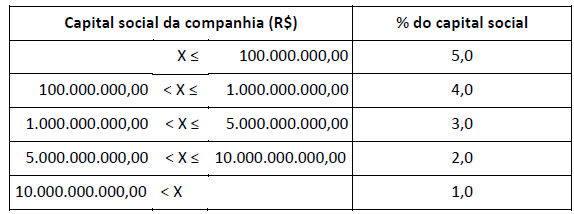
Due to the need to adapt systems and companies’ routines, Resolution 204 enters into force on January 2, 2025.
[1]Question of the restrictive conditions of the exercise of rights by shareholders at a meeting to the presentation of documents to prove circumstances related to the ownership of shares that can be objectively verified based on the ownership records already held by the company, including those that have been transmitted by the central depositary and the bookkeeper.

- Category: Tax
The Attorney General's Office for National Treasury and the Special Secretariat of the Federal Revenue of Brazil have issued two notices with proposals for the settlement of federal tax credits. The aim is to offer new methods for taxpayers and companies to regularize their tax situations. Below are the main aspects and implications of the new rules.
Notice PGDAU 2/24
The Attorney General's Office for National Treasury published Notice PGDAU 2/24 on May 13, which presents proposals for the negotiation of credits enrolled in the Union's active debt.
According to the notice, the following are eligible for negotiation: credits enrolled in the Union's active debt, even if in the stage of a filed lawsuit or subject to previous rescinded installment, with suspended or unsuspended enforceability, whose consolidated value is equal to or less than R$ 45 million.
The notice provides for three types of negotiation:
- enrollment in the Union's active debt collection;
- small value dispute related to the Union's active debt collection processes; and
- registrations secured by guarantee insurance or surety bond.
Among the main requirements for joining the negotiation, the provisions of article 3 stand out:
- for the negotiation of already installment credits, joining is conditioned on the prior withdrawal from the ongoing installment;
- the negotiation must cover all eligible registrations that are not secured, installment or suspended by judicial decision. Partial joining is prohibited, but the combination of one or more available types is allowed;
- joining related to credits enrolled in the Union's active debt subject to judicial discussion is subject to the presentation of withdrawal from the actions, objections, or appeals related to the negotiated enrolled credits;
- if the taxpayer is part of an economic group, whether recognized or not in an administrative or judicial decision, they must list all related parties and allow their inclusion as co-responsible in the active debt systems.
The notice provides for discounts of up to 100% on interest, fines, and legal charges according to the taxpayer's payment capacity and the recoverability degree of the tax credit. Regarding the debt installment, it is possible to settle the debt in up to 133 months.
It is also noteworthy that, by joining the negotiation, the taxpayer is obliged to authorize, at the time of effective financial availability, the offsetting of values related to:
- refunds, reimbursements, or reimbursements recognized by the Special Secretariat of the Federal Revenue of Brazil, with installments of the signed agreement, due or to become due; and
- federal court orders.
Furthermore, the negotiation provided for in Notice PGDAU 2/24 does not include the use of credits resulting from tax loss and negative calculation base of the Social Contribution on Net Profit (CSLL).
Interested taxpayers can already join the negotiation, exclusively through the Regularize portal, until August 30.
Notice PGDAU 6/24
On the other hand, Notice PGDAU 6/24, jointly published by the Attorney General's Office for National Treasury and the Special Secretariat of the Federal Revenue of Brazil on May 17, deals with the possibility of negotiating tax credits "whose collections are the subject of administrative or judicial dispute related to discussions on the Withholding Income Tax (IRRF), the CIDE, the PIS, and the COFINS on remittances abroad, resulting from the bipartition of the legal business agreed upon in a charter party contract for vessels or platforms and another for service provision" under the terms of Law 9,481/1997.
Therefore, it is a proposal by the tax authorities for the negotiation of debts of relevant and widespread legal controversy related to the oil sector, commonly known as split contractual.
According to the notice, taxpayers who join the program can pay the tax credits under the following conditions:
- after the automatic conversion of deposits into final payment, a 65% discount on the total debt value or eligible entry for negotiation. The remaining amount is paid as follows:
- a minimum initial payment of 30% of the debt or eligible entry for negotiation, after the application of the 65% discount mentioned above; and
- payment of the remaining balance in up to six monthly installments.
- 35% discount on the debt value or eligible entry for negotiation. The remaining amount is paid as follows:
- a minimum initial payment of 10% of the debt or eligible entry for negotiation, after the application of the 35% discount mentioned above; and
- payment of the remaining balance in up to 24 monthly installments.
The negotiation allows the use of tax loss and negative calculation base of CSLL credits owned by the taxpayer, the controlling legal entity, or controlled entities - directly or indirectly - or companies controlled - directly or indirectly - by the same legal entity, calculated and declared to the Federal Revenue of Brazil, regardless of the business line, up to the limit of 10% of the remaining balance after the application of the discounts indicated above.
Finally, we highlight some points of attention:
- according to item 1.2 of the notice, the taxpayer must include in the negotiation all tax debts related to the subject;
- item 2.14 of the notice indicates that joining the negotiation implies the taxpayer's or the responsible party's compliance with the tax administration's understanding of future or unconsummated triggering events, related to the incidence of IRRF on the portion of the charter party or rental contract for maritime vessels that exceeds the percentages established in §§ 2, 9, and 11 of article 1 of Law 9,481/97, with the wording given by Law 13,586/17; and
- for the purpose of joining the negotiation program, the taxpayer must waive the administrative and judicial processes related to the tax debts subject to the negotiation. However, in the judicial sphere, the waiver or withdrawal of the action would imply the condemnation of the party to the payment of attorney's fees, calculated based on the updated value of the debt. The notice does not provide for the waiver of the payment of the costs of losing.
Joining the negotiation provided for in Notice PGDAU 6/24 must also be done through the Regularize portal. The deadline is August 31.
Our tax team is fully available to address in more detail and depth the aspects, requirements, and points of attention of the two notices.

- Category: Labor and employment
The applicability and sovereignty of collective bargaining agreements were examined by the Brazilian Supreme Court (STF) under general repercussion, Theme Theme 1.046. In the decision, the constitutionality of collective bargaining agreements that establish restrictions or exclusions of labor/employment rights was recognized, as long as absolutely non-negotiable rights are complied with.
Recent verdicts from the Brazilian Superior Labor Court (TST) have reflected the STF position, with particular attention to rights that would be considered absolutely non-negotiable. The official TST website frequently publishes news related to the matter, including a recent decision involving the collective bargaining agreement (CBA) of the banking category.
In the decision[1], published on April 10, the TST validated the application of the first paragraph of Clause 11 of the CBA of the bank employees category, which establishes the possibility of offsetting the amounts paid as a function bonus with the 7th and 8th overtime hours, in the event of a judicial decision that mischaracterizes the employee's framework as an exception in article 224, §2, of the CLT.
The pronouncement of the Third Panel of the TST was unanimous and emphasized that the applicability of Clause 11 of the CBA is in line with STF Theme 1.046.
Furthermore, it was emphasized that there is no violation of article 7, item VI, of the Federal Constitution, as alleged by the employee in his appeal, as the provision itself establishes an exception to salary non-reducibility in the case of provision in a CBA.
According to the reporting minister, José Roberto Freire Pimenta, it is not a not-negotiable right, as it “does not violate the minimum civilizational standard, linked to human dignity, citizenship, especially from the perspective of its social dimension in the labor field, and the minimum valorization of their work”.
Before Theme 1.046 of general repercussion of the STF, the TST understanding was consolidated in Precedent 109 of the TST[2], which expressly provided for the impossibility of offsetting the mentioned amounts, based on the impossibility of offsetting amounts with different legal nature.
However, the Fifth Panel of the TST[3] also ruled in the same terms as the decision mentioned above. In this case, the reporting minister, Breno Medeiros, pointed out that the issue does not involve workers' waiver of rights. He also said that, although contrary to the TST consolidated understanding in Precedent 109 of TST, the provision for offsetting is not related to absolutely non-negotiable rights and is not an illicit object - justifying the application of Theme 1.046 of general repercussion of the STF.
Therefore, after the decision with general repercussion issued by the STF, it is observed that the judgments of the Labor Court are in opposition to the previously consolidated understanding by the TST itself in Precedent 109. Now, the negotiated prevails over the legislated, as established in Theme 1.046.
The TST precedents express the expectation that negotiated matters will prevail over the legislated matters in the Labor Court. This is extremely relevant for the legal certainty of companies in negotiating CBA, in addition to standardizing case law on the application of Theme 1.046 of general repercussion of the STF.
[1] Process Ag-RR-868-65.2021.5.13.0030. Judgment published on December 7, 2023, and reanalyzed after motion of clarifications, with a new publication on April 10, 2024.
[2] Precedent 109 of the TST: "Bank employees not classified under § 2 of article 224 of the CLT, who receive a bonus payment, cannot have the salary related to overtime hours offset with the value of that benefit”.
[3] RR-1000315-49.2020.5.02.0383