
- Category: Labor and employment
Law No. 13,699/2018, published on August 2, amended article 2 of Law No. 10,257/2001 (the City Statute) so as to refer to conditions applicable to domestic workers:
“Article 2. Urban policy aims to order the full development of the social functions of city and urban property, through the following general guidelines: XIX - guarantee of decent conditions of accessibility, use, and comfort in the internal premises of urban buildings, including those intended for habitation and service of domestic workers, observing minimum requirements for dimensions, ventilation, lighting, ergonomics, privacy, and quality of the materials used."
In a quick analysis, it is possible to interpret the new provision as establishing obligations for the domestic employers. However, since the City Statute provides regulations implementing articles 182 and 183 of the Federal Constitution, which deal with urban development policy, its articles are directed to the municipal public power. They establish general guidelines that must be followed by municipalities in order to attend to the social function of urban properties and to seek the well-being of their inhabitants.
It is, therefore, a programmatic law, which defines ideals to be observed by the public power in the development of its urban master plans. For this reason, it does not contain in its framework provisions for inspections or penalties.
In the statement of reasoning by Senator Cristovam Buarque, author of the bill that resulted in the amendment of the law, the reference to domestic servants was aimed at alerting the legislative houses of municipalities for them to, when drafting urban policy development plans, take into account the conditions of workplaces and housing for domestic workers:
"Although the Federal Government, because of the autonomy of federal entities, cannot penetrate the legislative territory of municipalities, which are responsible for the promulgation of urban land use and occupation laws, federal legislation should guide the establishment of such rules at the local level, observing, as is the case, the guarantee of human rights and dignity and labor rights, as this is a matter exclusivity incumbent on the Federal Government. This is what the present proposition. Without changing the essence of the simplification directive of so-called "building codes", the wording proposed here adds to the City Statute the provision that municipalities, upon legislating on this matter, establish adequate standards of accessibility and comfort for housing, including that of domestic workers. It is intended, therefore, within the scarce limits of the federal jurisdiction in the field of urban norms, to ensure due respect for the dignity of persons in the building of domestic spaces."
Along these lines, unlike what mere reading of the new legal provision might suggest, domestic employers' obligations were not established.
Incidentally, it is necessary to consider what counter-interpretation could cause serious difficulties in the very viability of domestic work. This is because the new item XIX of article 2 of the City Statute presents comprehensive and undefined mentions of accessibility, comfort, dimensions, ventilation, lighting, ergonomics, and privacy, which would make it natural to adopt as a parameter the rules presented by the Ministry of Labor on the topic.
As a consequence, there would be great difficulty in meeting the ergonomic requirements and physical conditions of workplaces for domestic servants, since the regulations of the Ministry of Labor and Employment[1] are quite rigid and often more demanding than the conditions that domestic employers themselves have in their homes.
It is concluded that the new provision included in the City Statute does not impose obligations on domestic employers, but only tries to make municipal urban development policies take into account the working conditions of domestic workers.
In any case, it is essential that, within a reasonable standard and taking into account the possibilities of their residences, employers are careful to provide good conditions for dimensions, ventilation, lighting, ergonomics, privacy, and material quality for domestic workers.
[1] According to Regulatory Rule 1, compliance with the regulations of the Ministry of Labor and Employment is mandatory only for private and public companies and public bodies of the direct and indirect public administration, as well as the bodies of the Legislative and Judiciary Branches that have employees governed by the Consolidated Labor Laws - CLT. They therefore do not apply to domestic workers.

- Category: Labor and employment
Every day, about 60 billion messages are sent on WhatsApp, an application that reached the mark of 1.5 billion active users per month this year.[1] In Brazil, the instant messenger reached 120 million users about a year ago, equivalent to more than half of the country's inhabitants. Parallel to this rapid spreading in recent years, there has been a significant increase in dismissals due to the improper use of software in Brazil due to the tenuous line between their use in private and professional life.
While using WhatsApp to communicate regarding work issues, many employees are also using the tool to complain or make jokes about the company they work for, their bosses, or colleagues. What most of them do not know is that, although it is a private instrument, employees can be warned, suspended, or even have their employment terminated for just cause if it is found that the content sent is offensive to the employer.
Employees should be cautious, therefore, when addressing colleagues or a hierarchical superior in conversations via the application, because if the comments about the employer go beyond the limits of the freedom of expression, the conduct might be classified within in the scenario provided for in letter k, of article 482, of the Consolidated Labor Laws (CLT), which provides as a just cause for termination of the employment contract by the employer an "act harmful to the honor or good reputation or physical offenses committed against the employer and hierarchical superiors, except in the event of legitimate defense of one’s self or others."
For this reason, more and more WhatsApp records are being used in labor lawsuits, while the Labor Courts have received as sufficient evidence the messages recorded in the application itself.
Offenses, jokes, biting complaints, or other conduct that may tarnish the good name of the employer are subject to termination for just cause. The novelty is the medium in which such conduct occurs (WhatsApp), and for this reason it is important to offer in-house training on behavior in the application.
In a recent decision, the Second Panel of the Court of Labor Appeals of the 23rd Circuit dismissed an ordinary appeal filed by the claimant and upheld a trial decision that recognized the just cause of his dismissal since offenses to the company where he worked were found in a WhatsApp group.
As reported in the record of case No. 0000272-85.2017.5.23.0081, in response to a posting from a co-worker on a pizza buffet offered by the company, the employee sent the following message: "This buffet sucks. only 2 hours ... Because of the delay it’s like a cafeteria. you can’t get more than two piece hahaha” [sic].
The judge drafting the opinion on the ordinary appeal, Appellate Judge Roberto Benatar, upheld the just cause applied to the employee on the grounds that "the worker’s behavior consisting of publishing a derogatory comment on the quality of the service of the defendant in a group created in a messaging application reveals clear offense to the honor and the good reputation of the employer, thus yielding an opportunity for termination due to just cause."
In another case, decided by the Court of Labor Appeals of the 11th Circuit, the claimant, in the capacity of appellant, sought to overturn a trial decision that rejected a plea to reverse just cause on the grounds that the injuries directed at the employer were not rendered in the work environment or even while working.
In the meantime, the adjudicatory panel accepted the trial decision’s reasoning on the merits, according to which the decision made by the employer does not represent censorship of the content of the conversations held within a group via the mobile phone. This is because offense against superiors in a social network exceeds the limits of employees’ freedom of expression and consists of "a fact that permanently impedes the continuity of the employment agreement due to fiduciary breach", considering that "the employment relationship has as one of its pillars trust between the parties, which unfolds in the duties of good faith and loyalty, which must be observed even outside the work day and the place of provision of services":
“CLAIMANT'S APPEAL. JUST CAUSE. ACT HARMFUL TO THE HONOR AND GOOD REPUTATION OF THE EMPLOYER CARRIED OUT BY THE EMPLOYEE. DEPRECATORY COMMENTS ABOUT HIERARCHICAL SUPERIOR PUBLISHED IN SOCIAL NETWORK (WHATSAPP). APPLICATION OF ARTICLE 482, ITEM K, OF THE CLT. The employment relationship has as one of its pillars the trust between the parties, which unfolds in the form of the duties of good faith and loyalty, which must be observed even outside the work day and the place of provision of services. In this case, by publishing derogatory comments about hierarchical superiors on a social network (“WhatsApp”), the claimant carried out an act detrimental to its honor and good reputation, especially when considering the repercussion and scope that information can have on account of the means by which it was disclosed, which authorizes the application of just cause by the employer, with a basis on article 482, k, of the CLT. Appeal heard and granted.” (Case No. 0001977-57.2014.5.11.0017).
Although just cause is the maximum punishment that can be applied by employers, there are situations in which a single incident is serious enough to justify immediate termination. As already settled by the Labor Courts, offense to the honor and good reputation of the employer is a clear example of this.
With the advancement of new technologies, training of teams is therefore essential to prevent employees and employers from committing punishable acts, whether to employees, as warnings, suspensions, or even termination for just cause, or to employers, such as judgments for harassment committed by its representatives.
In the event of use of a message as evidence in court, most courts admit the submission of screenshots of WhatsApp. However, even in view of the informality of the Labor Courts, the ideal is to have a transcription of the content through notarial acts because of the possibility of using other applications to manipulate the conversations.
[1] Techtudo, "WhatsApp beats 1.5 billion active users mark." https://www.techtudo.com.br/noticias/2018/02/whatsapp-bate-15-bilhao-de-usuarios-ativos.ghtml. Accessed on: August 19, 2018.

- Category: Tax
The 1st Panel of the Superior Court of Justice (STJ), in the judgment on Special Appeal No. 1.477.320, recognized the right to PIS and Cofins credits in relation to transportation in transactions to purchase vehicles from the manufacturer by the dealer with the purpose of later resale to the final consumer.
In that case, Bigger Caminhões Ltda. sought to secure its right to a credit from the contributions due to its being responsible for the payment of the freight transport of vehicles (automobiles, vans, and utility vehicles) from the Ford factory to its commercial establishments.
The precedent is relevant, since it reaffirms the position of the 1st Panel favorable to the taxpayer. This is because the 2nd Panel submitted Special Appeal No. 1.668.907 to the 1st Section (composed of the 1st and 2nd Panels) to investigate the need to review, or not, the STJ's understanding regarding the right to PIS and Cofins credits arising from expenses with transportation in the purchase of goods for resale.
The topic is not new in the 1st Section. In 2012, this adjudicatory body decided to recognize the right to PIS and Cofins credits in such situations. However, the composition of the body has changed substantially, since only five justices who voted at that time are still with the adjudicatory body.

- Category: Labor and employment
“Panel rules out untimeliness of appeal related to error in identification of movant"
"Company shall have time limit to bring appeal bond paid at lower amount into good standing"
“Dismissal of appeal due to incomplete number in the form for collection of costs"
"Error in filling out petition sent via Electronic Judicial Proceeding (PJe) does not invalidate examination of appeal"
“Panel rules out irregularity in power of attorney with expired term of duration”
“Attorney with power of attorney granted when he was an intern may represent company"
"Company demonstrates that it has not been summoned to prove payment of costs and rules out dismissal"
“Panel rules out default applied due to six minute delay at hearing"
All of the excerpts transcribed above have been circulated in the news section on the website of the Superior Labor Court (TST) in recent months. The professionals who have been litigating in the Labor Courts for some time know that decisions favoring greater reasonableness and flexibility in the application of procedural law were not common.
A few years ago, appeals were being seen as dismissed due to immaterial differences in the payment of the appeal bond, often in the amount of a few cents. Irregularities were found in procedural representation due to a lack of authentication on the copy of power of attorney submitted to the record. It was considered to be default by a company when it arrived a few minutes late for a hearing while the plaintiff was still testifying.
At the time, when attorneys were faced with these difficult circumstances, they sought aid in civil and federal case law, which had long seen in such situations, mere procedural "setbacks" perfectly curable in the name of the principles of instrumentality, reasonableness, and a full defense.
But then, what helped to make the understanding of the Labor Courts more flexible?
Certainly, the advent of the Code of Civil Procedure of 2015 and Normative Instruction No. 39 of the TST were of great importance in the process of adapting the application of procedural rules, especially to make cogent and codified principles previously ignored by the Superior Labor Court.
In other words, the new code of civil procedure, whose articles are applied in a subsidiary manner in labor procedure, has introduced rules that ease the formalities of procedural acts, thus allowing litigants to repair, in certain circumstances, any defects/errors. In this manner, formal prejudice is avoided with a view to the full delivery of an adjudication.
Another factor that may have influenced the flexibility of the exacerbated formalism was the implementation of the Electronic Judicial Proceeding (PJe), which considerably reduced case processing time.
The CNJ, in a very interesting research study commissioned by the FGV, showed that less than 25% of electronic proceedings exceed the four-year processing level, compared to 50% of proceedings in physical media.
Thus, some defects such as procedural representation, insufficient payment of costs, clerical mistakes in filling out court forms, among others, that previously could moot an analysis of the merits of the litigation and impact greatly on the length of the proceedings, and as a consequence, violate the principle of speed, today can be resolved in a few days and few clicks.
Nor can we ignore the fierce advocacy of lawyers who have relentlessly brought before the higher courts the catastrophic repercussions of this rigorous understanding for the parties, the proceedings, and, why not, the lawyers themselves.
The news highlighted at the beginning of this article indicates that labor procedure finally moves towards reasonableness, thus avoiding innocuous formalisms and ceasing to be an end in itself in order to meet the true social, political, and legal longings for which it was conceived.

- Category: Tax
The Government of the State of Rio de Janeiro has enacted a new special program for the payment of tax debts and fines from the State Accounting Court, through Complementary Law 182/2018 (LC 182/2018), published last Friday (September 21). Justified by the need to pay the 13th salaries of the Executive's officers, the measure came as an exception to Complementary Law 175/2016, which prohibited the grant of amnesty or remission of tax debts by the State of Rio de Janeiro for 10 years.
According to the new complementary law, the taxpayer can settle tax debts related to ICMS, IPVA (in the case of natural persons) and fines imposed by the State Accounting Court, with an amount higher than 450 UFIR-RJ (currently BRL 1,482.25), with due dates before June 30, 2018, whether assessed or not, enrolled into the State outstanding debtors list or not and include those already being collected in court.
LC 182/2018 allows the payment of the consolidated tax debt (updated amount plus fines and interest) according to the following alternatives:
(i) a lump sum payment, paid up until the last working day of the issuance month of the payment form (DARJ), with a reduction of 85% of fines and 50% of default interests;
(ii) in 15 installments, with a reduction of 65% in fines and 35% of default interest;
(iii) in 30 installments, with a reduction of 50% in fines and 20% of default interest; or
(iii) in 60 installments, with a reduction of 40% in fines and 15% of default interest.
Debts related exclusively to fines resulting from non-compliance with ICMS’ obligations, whether or not enrolled into the State outstanding debtors list, can be included in the program if the fault occurred until March 31, 2018, according to the following payment alternatives:
(i) in a lump sum payment, paid up until the last working day of the issuance month of the payment form (DARJ), with a reduction of 70% of fines and 50% of default interest;
(ii) in 15 installments, with a reduction of 55% in fines and 35% of default interest;
(iii) in 30 installments, with a reduction of 40% in fines and 20% of default interest; or
(iii) in 60 installments, with a reduction of 20% in fines and 15% of default interest.
The law also allows taxpayers to cumulate these discounts with the fines reduction provided by the articles 70, 70-A, 70-B and 70-C of Law 2.657/96, which are:
(i) 50% in the case of payment within 30 days counted from the date of the knowledge of the Tax Assessment;
(ii) 20% in the case of payment within 30 days counted from the knowledge of the 1st administrative instance’s decision;
(iii) 10% in the case of payment within 30 days counted from the knowledge of the 2nd administrative instance’s decision;
(iv) 90% and 70% for fines for not complying with ancillary obligations, if these have been settled within 30 days or before the tax inspection, respectively; and
(v) 50% in penalties for infractions committed by micro and small enterprises, defined by Federal Complementary Law 123/2006.
In addition, taxpayers can use LC 182/2018 to pay (i) the remaining amounts of the consolidated tax debts of previous payment in installments programs, except for those related to other amnesty or remission programs; (ii) the ICMS related to tax substitution; and (iii) fines resulting from non-compliance with ancillary obligations.
The Complementary Law expressly prohibits the payment of tax debts enrolled into the program with the conversion of judicial deposits into State’s revenue. Therefore, taxpayers must have to pay the amount due with the relevant reduction stated in the amnesty program and then request the withdrawal of the judicial deposit.
The enrollment into the amnesty program implies in the irrevocable and irreversible confession of the tax debt, expressly renounces of any defense or administrative or judicial appeal as well as the withdrawal of those already filed. If there is an administrative proceeding in progress regarding the debt, the taxpayer must have to inform the waiver of defenses and appeals within 30 days counting from the enrollment into the amnesty program.
Finally, the enrollment into the amnesty program requires the regularity of the taxpayer over the entire installment period. Taxpayers can be excluded in case of (i) non-payment of three consecutive installments; (ii) existence of unpaid installment for more than 90 days; and (iii) default or irregularity of any other principal or ancillary obligations due for more than 60 days.
The deadline established for the enrollment into the amnesty program was set at 30 days from the regulation by the Executive Power, which has not occurred yet.

- Category: Competition
On September 5, the Administrative Council for Economic Defense (Cade) issued a new regulation, Resolution No. 21/2018, to govern disclosure of sensitive materials produced in the course of administrative proceedings to investigate antitrust violations.
Disclosure of such materials was highly debated due to the existence of two conflicting and legitimate interests that Cade should take into account. The first interest is the need to maintain the incentives for Cade’s whistleblowing programs (leniency and settlement agreements), which became the cornerstone of public enforcement in Brazil. The second interest is the need to encourage follow-on civil litigation in Brazilian court (private enforcement), thus reducing the burdens faced by plaintiffs who seek redress for damages arising from antitrust violations.
CADE intended to harmonize these two interests in the new regulation, which clarifies the level of confidentiality to be granted to sensitive materials during different phases of the antitrust investigation.
The regulation preserved the confidentiality of negotiations of leniency and settlement agreements, as well as of the documents and information provided by the parties, even if they withdraw from the negotiations. Those materials shall only be disclosed to the parties themselves and authorized Cade personnel, thus maintaining incentives for wrongdoers to cooperate with Cade’s investigations.
In the course of the investigation phase of the administrative proceeding, CADE will disclose to any interested third-party public versions of both the complaint and the note drawing the conclusions of CADE Superintendence-General. These documents will contain the names of the companies and individuals under investigation, the alleged violation, a summary of the facts under investigation, and the provisions of law applicable. No details on the case or transcription of the documentary evidence will be disclosed.
Highly sensitive materials, such as self-accusatory material derived from leniency and settlement agreements, including a summary of violations (document describing details of the violation and the wrongdoers); documentary evidence produced by whistleblowers; documents and information protected by legal confidentiality; and documents the disclosure of which could grant a competitive advantage to other market players shall be kept in confidential files only accessible to the defendants, who are allowed to use them solely for the exercise of their due process rights before Cade.
Third parties with legitimate interests may be granted access to highly sensitive materials on an exceptional basis upon specific court order; when expressly authorized by law; when authorized by the signatory of the leniency agreement or settlement agreement; or pursuant to mechanisms for international judicial cooperation.
Documents and information not covered by the above-mentioned restrictions, including the identity of the signatory of the leniency agreement, will be made available to third parties once the CADE Court issues its ruling on the administrative proceeding.
The rules on disclosure under the new regulation tend to favor public enforcement. Parties seeking compensation for damages caused by cartels or other antitrust violations will need a specific court order to access materials that could support their civil claims. Moreover, the regulation provides that Cade’s Chief Counsel shall intercede in lawsuits involving access to highly sensitive documents and information, and shall request the suspension of those suits that could compromise Cade’s public enforcement policies.
On the other hand, in an attempt to reduce the hurdles for private enforcement, the regulation provides that evidence regarding compensation for damages caused by antitrust violations shall be considered by Cade as a mitigating factor in calculating fines or monetary contributions in settlements to be paid by wrongdoers. Cade has not detailed yet how this provision will work in practice.

- Category: Real estate
Municipal Complementary Law (LC) No. 192/2018, published on July 19, establishes special conditions for the licensing of buildings (future improvements – named “mais valerá”) and additions in buildings (improvements – named “mais-valia”) in order to stimulate the regularization of buildings in the city of Rio de Janeiro and increase tax collection of the municipality. In 2015, when another improvements law was enacted, legalization of additions yielded R$ 1 billion for municipal public coffers.
The “mais-valia” is the amount paid to the city government to legalize improvements/additions built on residential and commercial real estate without the proper license. The term “mais-valerá” is a novelty of LC 192/2018, as it is also expected to regulate additions on real estate that are still under construction.
The new legislation makes it possible to legalize modifications and/or additions to constructions done irregularly, that is, without proper authorization, by means of payment of a sum to the municipality. The alteration and/or addition shall be accepted provided that (i) the construction does not exceed more than one floor in addition to the plan permitted for the property and its respective approved plan and (ii) does not constitute use in disagreement with what is allowed for the property.
The “mais-valia” also allows the closing of balconies, both at the front and back of properties. In this case, the rate charged by the city government is proportional to the area of the enclosed space, calculated based on the appraised value of the property for the purposes of calculating the Urban Property Tax (IPTU) and based on the purpose of the property, whether residential or commercial. The closing of balconies with so-called "glass curtains" will be exempted from the payment of the fee due to the provisions of the Municipal Complementary Law No. 145/2014, amended by Municipal Complementary Law No. 184/2018.
The “mais-valerá”, in turn, allows horizontal enlargements under the roof, provided that it is within construction standards. For commercial buildings, LC 192/2018 provides conditions for mezzanine construction of up to 50% of the floor area on the floors above the first floor, which was only allowed in shops on the ground floor. This change will be allowed throughout the city, including in the South Zone.
Interested parties will have 90 days to legalize their projects (extendable for the same period) as of the publication of the law. Those who adhere to project within 30 days from the date of entry into force of the law (July 19, 2018) will have a 5% discount on the tax due. If the fee is paid in cash, there will be a further 7% discount. Only those taxpayers who are in good standing with their tax obligations with the municipality may join this benefit of the new legalization.
According to the decree regulating LC No. 192/2018 (Municipal Decree No. 44.737/2018), the concession of the license for the execution of construction of the “mais-valerá” is conditioned on the payment of the first installment of the sum. A possible extension of this license is conditioned on the payment of the other installments. The concession of the legalization license of construction works already executed, in turn, depends on full payment of the sum.
Applications must be submitted through the online application system of the Municipal Department of Urbanism (SMU), available at: http://www.rio.rj.gov.br/web/maisvalia/requerimento-online.
Then, the applicant must deliver in one of the units of the SMU the printed application, the architecture plans, and other documents necessary to prepare the fee counterpart report.

- Category: Infrastructure and energy
Presidential Decree (MP) No. 845/18, published on July 20, established the National Railway Development Fund (FNDF), with the objective of allocating resources to the national railway system. The FNDF will give priority to the implementation of the stretch between the Port of Vila do Conde in Pará and the North-South Track (EF-151 or FNS). The investments will start in the municipality of Barcarena/PA, per the terms of article 3 of MP 845/18.
Among the sources of income for the FNDF are funds received from the granting of the FNS sub-concession for the strech between the National Port in the State of Tocantins and the municipality of Estrela D'Oeste in the State of São Paulo.
Although MP 845/18 referred only to the granting of the FNS sub-concession, instead of having generically indicated any and all railway concessions and sub-concessions, the solution found by the government releases funds from the concessions of the other railway stretches for other purposes.
If we analyze other regulated sectors, as in the case of telecommunications, we will note that industry funds[1] have already been created without the funds linked to them being effectively used, as has been proposed by the Federal Accounting Court (TCU), for example in appellate decision No. 749/2017 - en banc, in which Justice Bruno Dantas drafted the written opinion. In any case, since the government has already prioritized the construction of the port of Vila do Conde, in Pará, over the FNS, the selection criterion tends to ensure, even if not entirety, its effective use in that stretch.
Pursuant to the terms of article 8 of Law No. 11,297/06, the construction, use, and enjoyment of the FNS was assigned to Valec Engenharia, Construções e Ferrovias S.A. Since MP 845/18 did not change these assignments to Valec and since this entity has the legal nature of a public company, and therefore with its own legal personality, one asks how the relationship between the FNDF and Valec will proceed. This matter may be addressed in the regulation to be issued, since the presidential decree did not govern under what guise the FNDF’s budget will be used by Valec.
The role of the FNDF in the current public policy for the rail sector remains clear: the objective is not only to collect grants in order to offset the investments already made, but also to provide resources for new and strategic rail stretches according to the National Logistics Plan (NLP). The prioritization contributes to directing, without eliminating, the field of action of administrative discretion in the expansion of installed rail transport capacity in Brazil.
[1] Telecommunications Supervisory Fund (Fistel), created by Law No. 5,070/66; Fund for the Universalization of Telecommunications Services (Fust), created by Law No. 9,988/00; and Telecom Technology Development Fund (Funttel), created by Law No. 10,052/00.

The Brazilian Clean Company Act or the Anti-Corruption Law (No. 12,846/2013) became noteworthy due to the creation of a normative framework that allows for punishment of companies for acts of corruption carried out on their behalf or benefit. Following market trends and global best practices, the same law also established an incentive to create and implement integrity (or compliance) programs within companies.
Although these initiatives are not mandatory, since the Anti-Corruption Law does not provide sanctions for companies that fail to implement integrity programs, it is notable that they are increasingly receiving the attention and resources of corporations as mechanisms to mitigate risks and assist in the fulfillment of officers and directors’ diligence duty.
There are, however, exceptions to the optional nature of integrity programs given by the Anti-Corruption Law. Some laws require companies under special circumstances to adopt elements of these programs. An example are the financial institutions subject to the regulation of the Brazilian Central Bank (“Bacen”). Resolution No. 4,595/2017, issued by Bacen, regulates the integrity policies applicable to such institutions, as well as other institutions authorized to operate by Bacen.
Publicly-held companies that qualify as category "A" issuers are also subject to a degree of this obligation. Instruction No. 480 of the Brazilian Securities and Exchange Commission replicates the integrity directions of the Brazilian Code of Corporate Governance (in Portuguese, Código Brasileiro de Governança Corporativa) in recommending the implementation of a code of conduct and a whistleblower channel for complaints and the existence of an independent and autonomous conduct committee. The Instruction, of course, does not demand complete fulfillment, but follows the "comply or explain" model, thus forcing issuers to report whether they follow each recommended practice and, if not, to explain.
Public companies, government-controlled companies, and other entities subject to the Brazilian State-Owned Companies Law (Federal Law No. 13,303/2016) are bound by corporate governance rules and compliance practices, mainly regarding the hiring and the relations with the general external public. Among the obligatory initiatives is the preparation and dissemination of a code of conduct and integrity that provides for, for example, whistleblower channels and sanctions applicable in the event of violation of the code’s rules.
In addition to these companies, there is an increasing group of corporations that are forced to implement integrity programs in order to maintain or enter into contracts with some bodies of the public administration, which is why there is a higher number of public entities that require the implementation of compliance programs by their suppliers.
Relevant examples are the state of Rio de Janeiro and the Federal District, where the implementation of an effective integrity program is already provided for in specific legislation as a fundamental requirement for contracting with the public administration.
Laws No. 7,753, enacted in October of 2017 by the state of Rio de Janeiro, and No. 6,112, enacted in February of 2018 by the government of the Federal District, provide for the requirement of an integrity program for companies that contract with the public administration. For Rio de Janeiro, the obligation applies to contracts with values that exceed the amounts determined by law for competitive bidding modalities[1], and, for the Federal District, the obligation applies to contracts with values equal to or greater than that of the best price bidding modality[2].
Both laws provide for monetary sanctions (between 0.1% and 0.2% per day over the value of the contract) applicable to companies that do not comply with the requirement of implementation of an integrity program. The companies are also prevented from entering into contracts with the public administration for a period of two years, for the Federal District, or until the situation is regularized, for Rio de Janeiro.
In addition, Espírito Santo, through Law No. 10,793, of December 2017, required its suppliers of goods and services to have a code of conduct and integrity aimed at observing ethical principles.
Companies that are also interested in entering into contracts with some entities at the federal level are forced to implement integrity programs. An example of this is Petrobras, which included in its contracting process an integrity diligence phase, according to which suppliers must demonstrate the existence of an integrity program upon registering, renewing, or reclassifying their registrations. Based on this and other information, the state-owned company assigns an integrity risk grade, which is considered in the selection of companies that participate in its bidding processes.
The Brazilian Ministry of Agriculture, Livestock, and Food Supply, in turn, through Ordinance No. 877/18, created the obligation to implement risk management procedures, a whistleblower channel, a code of conduct and integrity policies for companies that enter into contracts with the body in amounts equal to or greater than R$ 5 million.
It is concluded, therefore, that what was considered a good practice recommended in the text of Law No. 12,846/13 has been increasingly transformed into a legal or business obligation. This suggests that companies of all sizes may need to adopt, in the medium term, at least some elements of an integrity program.
[1] R$ 1,500,000 for construction and engineering services and R$ 650,000 for purchases and services, even if in the form of an electronic auction.
[2] Estimated between R$ 80,000 and R$ 650,000, although in the form of an electronic auction.

- Category: Environmental
Two new regulations issued by the Brazilian Institute of the Environment and Renewable Natural Resources (“Instituto Brasileiro do Meio Ambiente e dos Recursos Naturais Renováveis” - IBAMA) regulate the Federal Technical Register of Potentially Pollution Activities (CTF/APP). Effective as of June 29, IN No. 11/2018 and IN No. 12/2018 have brought about significant changes in the framework of activities subject to registration with the CTF/APP, unlike previous Ibama instructions published on the subject.
IN No. 11/2018, for example, consolidated all the information related to the subject and included, in its Annex I, a list of activities subject to registration with the CTF. They were divided into two categories: (i) those provided for in Federal Law No. 6,938/1981 (the National Environmental Policy); and (ii) those provided for in other federal regulations.
With this, the analysis of activities subject to registration became faster and more efficient, and offers greater certainty to entrepreneurs, since all the activities that are subject to registration are listed in a single rule. For the most part, they underwent only modifications in their descriptions, which are now more detailed and specific and with reference to rules related to each one of the subjects.
Other relevant changes brought about by the rule are provided for in articles 10, 10-A, and 10-B. The provisions broaden the understanding that only undertakings in the operating phase would be subject to registration with the CTF, therein establishing the obligation of registration for projects that carry out activities subject to environmental control and inspection, which have an Installation License (LI) or other licenses or authorizations (which are also considered as environmental control and inspection actions). This rule includes activities set forth in technical conditions for environmental licenses or authorizations. Thus, even if the main licensed activity is not subject to registration with the CTF, if any of the technical conditions includes one of the activities listed in Annex I of IN No. 11/2018, enrollment with the CTF should be performed.
The articles mentioned make it clear that not only the licensee but also a third party carrying out the activities set forth therein (and listed in Annex I) must be registered with the CTF. In addition, entrepreneurs must register all activities that are required to be registered with the CTF developed in their establishment, and not only those stated in their corporate purpose or in the National Register of Corporate Taxpayers (CNPJ).
Thus, in general terms, Ibama IN No. 11/2018 clarifies some important concepts and obligations that were not explicit in the previous rules and extends the cases giving rise to an obligation to effect registration with the CTF. IN No. 12/2018, in turn, was responsible for creating a specific regulation for the classification of activities with the CTF.
The rule established criteria not only normative (as had been happening) but also technical standards to classify the activities subject to registration with the CTF. Therefore, in addition to the list in Annex I of IN No. 11/2018, the IN provided for the use of the Technical Classification Form (FTE) as a guide in describing the activities of the CTF.
The FTE consists of an electronic form that contains detailed descriptions for classifying activities. Each of the activities listed in Annex I has a corresponding FTE.
This may have been the greatest benefit for entrepreneurs brought about by the new INs, since the FTE can resolve most of the uncertainties regarding the activities registrable and non-registrable with the CTF and, therefore, avoid mistaken registrations that may generate undue costs arising from the quarterly payment of the Environmental Control and Inspection Fee (TCFA).
The rule also provided a glossary with definitions of various concepts mentioned in both Annex I of IN 11/2018 and in the FTEs, thus creating a useful consultation tool for entrepreneurs upon registering activities.
In view of the recent entry into force of the rules, it remains to be seen how the new provisions will be applied in practice and whether Ibama will propose in the coming months new regulations directed to the payment of the TCFA, since the subject has not been addressed in the rules recently published.

- Category: Tax
The Federal Supreme Court (STF) recognized the constitutionality of the Social Contribution on Net Income (CSLL) on July 1, 1992, by means of the decision rendered in RE No. 138.284/CE. This position was confirmed in a consolidated manner in ADI No. 15/DF, decided on June 14, 2007. Since then, however, there has been a controversy over the effects of the decision by the STF for taxpayers who have in their favor a final and unappealable decision that affirmed the unconstitutionality of the rule. It is not clear, in this case, whether there would be a cut-off date for the application of the judicial decisions and, if so, what the date would be. All this has generated doubts in assessments of taxpayers and the Brazilian Federal Revenue Service.
There are, at the moment, recognized general repercussions that could, in theory, remedy these doubts. First, RE 949297, topic 881,[1] is already released for judgment, but without moves towards its effective inclusion on the Court’s schedule for decisions. In an earlier stage, RE 955227, topic 885,[2] is not yet released for judgment.[3]
If, on the one hand, it is not possible to be sure of the STF’s position on the topic at the moment, there is a decision by the STJ that, in principle, could resolve the issue. As well delimited in the judgment in the systematic framework of repetitive appeals, it was ruled in REsp No. 1,118,893/MG that "the fact that the Federal Supreme Court subsequently rules in the opposite direction to the final and unappealable judicial decision cannot change the legal relationship stabilized by res judicata, under penalty of denying validity to the diffuse control of constitutionality."
It so happens that the application of repetitive cases has been controversial. The Administrative Council of Tax Appeals (Carf), through the Superior Chamber of Tax Appeals, is the last administrative body that carries out an analysis of tax matters in the context of the Federal Government. The body analyzed various cases in which the CSLL tax is discussed in the terms above. Since April of 2016, the case law has been converging to the effect that the decision reached in REsp No. 1.118.893/MG does not have the power to vacate certain assessments made. We shall explain.
The position presented by the taxpayer, both in administrative and judicial terms, is based mainly on the effects of res judicata and on the principle of legal certainty. Reaffirming what was stated by the STJ in REsp No. 1.118.893/MG, subsequent decisions issued by the STF would not have the power to change the individual res judicata of the taxpayer, especially in cases in which the review period by means of an action for relief from the judgment has closed.
Countering the main arguments by the Federal Tax Authority, the taxpayer is of the position that STF Precedent No. 239,[4] upon analyzing the legal context at the time of its issuance, focused on repressive actions against specific charges, not actions that sought to confirm the non-existence of a legal relationship, and the latter are much more comprehensive than the former. In addition, subsequent amendments to the laws governing the CSLL do not constitute substantial changes in the legislation analyzed in the individual suit. In this sense, the "rule of law" on which the analysis of the unconstitutionality of the tax was carried out remains unchanged.
On the other hand, the position of the Office of the General Counsel for The Federal Treasury (PGFN) is essentially based on the logical construction of PGFN/CRJ Opinion No. 492/2011. According to the analysis contained in the opinion, the case law of the STF leads to the understanding that there should be a softening of res judicata for future events, when this contrasts with an understanding later issued by the STF in an "objective and definitive" precedent with binding effect. The justification for this softening for future events is in particular deference to the principle of equal protection and free competition, to avoid a disparity between taxpayers ad aeternum.
In the specific case of the CSLL, there is supposedly a change in the factual scenario of the final decisions, most of them obtained during the 1990s, in relation to the scenario with respect to which the constitutional review was conducted in No. ADI 15/DF, decided only in 2007, in view of subsequent legislative changes. This modification would supposedly justify that the res judicata obtained did not cover later years.
Thus, one should not speak of an offense to res judicata. It would cover only the period up to the subsequent legislative changes, and they would be respected in their entirety. In this same sense, REsp No. 1.118.893/MG supposedly analyzed the CSLL only in its wording with the changes until 1992. Its application is not subject to the period of the amendments from 1995 onwards.
Administratively, Carf's Superior Court of Tax Appeals analyzed the matter and decided it was possible to collect the CSLL,[5] even when the taxpayer obtained a favorable final and unappealable decision. In such cases, periods prior to the decree of unconstitutionality by the STF in ADI No. 15/2007 were reviewed, therein making reference to the judgment of RE No. 138.284/CE, of 1992, by the STF.
According to the current administrative position, it is supposedly possible to collect the CSLL for events after 1995, in spite of the final and unappealable individual decision. On the other hand, based on the understanding defended by the taxpayer, the position presented in REsp No. 1.118.893/MG guarantees the right to not collect the tax until the present moment.
The current upheaval is due to the lack of a settled position and invariably leads to legal uncertainty for taxpayers. It is hoped that the STF, upon reviewing the discussion, will take both arguments into account and will be able to determine an effective resolution for the specific cases, thus clarifying the existing divergence.
[1] 881 - Limits of res judicata in tax matters, especially before judgment, in control concentrated by the Federal Supreme Court, which declares the constitutionality of a tax previously considered unconstitutional, by way of incidental control, via a final and unappealable decision.
[2] 885 - Effects of the decisions of the Federal Supreme Court on diffuse constitutionality control over res judicata formed in ongoing tax relations.
[3] In view of the order to suspend the progress in all cases dealing with topics 881 and 885, the recent decisions of the STJ are to the effect of staying the matters, as done for example in ERESP No. 841.818 and EAg No. 991.788.
[4] Decision declaring the collection of the tax undue in a given year does not constitute res judicata in relation to subsequent collection actions.
[5] Recent references, appellate decisions 9101-003.531, 9101-003.472, and 9101-003.496

- Category: Labor and employment
Recent news articles published on the internet have raised doubts among companies about the obligation under the Consolidated Labor Laws (CLT) to extend maternity leave of employees in the event of hospitalization of the newborn, but in fact they referred to decisions rendered in favor of public servants, and not employees covered by the CLT.
In one of the cases, the public servant of the Federal District filed a lawsuit in the Civil Court alleging that, due to complications at childbirth, her daughter had to be hospitalized for a period of three months and twenty-one days in a neonatal ICU and that she needed full-time care from her mother. Cohabitation with the mother during the first months of life was therefore alleged to be fundamental to ensure the physical, psychological, and emotional development of the child, which had not been possible during the period in which she was hospitalized in the ICU due to health problems.
The Second District Court of the Special Courts of the Federal District granted the claim of the public servant and ordered the Federal District to count as beginning of the maternity leave only the time of discharge of the newborn from the ICU. In addition, the period of hospitalization should be considered paid leave to care for a sick child.
This decision and similar ones do not apply to employees governed by the CLT, since they were based on complementary laws that set forth the legal framework for public civil servants, which, for the most part, provide for the possibility of paid leave to care for sick family members.
Thus, although the decisions issued take into account the principle of the best interests of the child, there is no way to grant such an extension to employees governed by the CLT, since there is no possibility of extension of maternity leave or provision of paid leave to care for a sick family member in the labor and social security laws applicable under the CLT.
In other words, if the situation of the public servant in the Federal District occurred with an employee with a private employer, there would be no way to delay the beginning of maternity leave. This is because, under the provisions of the Federal Constitution, the maternity leave period under the CLT is 120 days, and may be extended for another 60 days only if the employer has joined the Citizen Company Program, under the terms of Law No. 11,770/2008. It is also possible to extend the period of rest before or after delivery for up to two weeks, in exceptional cases, upon delivery of a specific medical affidavit, provided for in article 93, paragraph 3 of Decree 3,048/1999.
What currently exists for employees under the CLT is a proposal for an Amendment to the Federal Constitution (99/2015),[1] already approved by the plenary session of the Senate and in progress before the Chamber of Deputies. The objective is to amend item XVII of article 7 of the Federal Constitution to provide for the possibility of extending maternity leave for employees under the CLT in the event of premature birth due to the number of days the newborn is hospitalized.
It is worth noting that the content of the decision handed down in favor of public servants demonstrates the growing awareness of the real purpose of maternity, or paternity, leave which would be the need for the presence of the parents during the first weeks of the baby's life.
However, until the proposal for Amendment to the Federal Constitution No. 99/2015 is approved, there is no provision that provides for and regulates extension of maternity leave for employees of private companies, and there is no way to use the decisions rendered in favor of public servants as a paradigm for private sector workers.
Thus, for now, private companies are not obliged to extend maternity leave in the event of hospitalization of newborns.
[1] https://www25.senado.leg.br/web/atividade/materias/-/materia/122324

- Category: Real estate
National Monetary Council (CMN) Resolution No. 4,661/2018 established new rules and restrictions on investment in real estate by pension funds. Published on May 29, the regulation revoked Resolution No. 3.972/2009, prohibited the direct acquisition of real estate by closed-end private pension entities (EFPC), and forced them to sell properties owned directly by them within a period of up to 12 years (or May 28, 2030).
According to Resolution No. 4,661, the new limit for the participation of EFPCs in the real estate segment is 20%, and this participation may only be done through: (i) units of real estate investment funds (FII), (ii) units of investment funds in units of FIIs (FICFII), (iii) real estate receivables certificates (CRIs), or (iv) real estate credit certificates (CCIs). In addition to increasing the percentage limit from 8% to 20%, this new resolution changed the assets of the real estate segment in which EFPCs may invest. Previously, the real estate segment encompassed investments in (i) real estate projects, (ii) rental and income properties, and (iii) other real estate. Although permitted, investment in units of FIIs was classified in the segment of structured investments and analyzed in a segregated manner, in order to comply with the percentage limits.
In addition to prohibiting direct investment in real estate in order to make pension funds more liquid so that they can pay the pensions of their pensioners, the new resolution authorized investment in FICFIIs, CRIs, and CCIs issued by publicly traded companies or CCIs issued by limited companies or privately held corporations, provided that there is co-obligation of a financial institution authorized to operate by the Central Bank (Bacen). All of these changes have been in effect since May 29.
Some issues deserve attention in relation to pension fund investments in the real estate segment. First of all, they were expressly authorized to use assets to pay in units of investment funds. Therefore, an alternative to accommodate the current restriction on direct ownership of real estate and real estate projects is to pay them in via FIIs to be created by EFPCs. A limit of 25% of shareholders' equity on concentration in FIIs and FICFIIs per issuer was set, but this limit does not need to be observed for FIIs that include in their investment portfolio real estate that was originally part of the direct equity of the EFPC. There is also no restriction on whether these FIIs, formed by real estate that previously comprised the investment portfolio of pension funds, act as real estate developers, directly or indirectly, or acquire other real estate, subject to the applicable regulations of the Brazilian Securities and Exchange Commission (CVM) and subject to the review of real estate registration.
Second, as long as EFPCs are not in conformity with the restriction on direct ownership of real estate, the inventory of real estate currently in their portfolios will be taken into account for the purposes of calculating the limit on investments in the real estate segment. In order to adjust to these new limits, pension funds should assess the need to sell these properties or to pay them in via FIIs. It is worth remembering that, although the investment limit in this segment increased from 8% to 20%, the FIIs that were previously accounted for as structured investments are now included in the real estate segment.
Finally, it should be considered that, despite the rather elastic period (12 years) for the sale of properties owned by the EFPCs, it is prudent for these entities to already begin to organize and look into the existence of pending issues that may affect the ownership of these properties via-à-vis third parties or their payment in FIIs. Encumbrances, liens, or other types of restrictions or irregularities, for example, may require prior regularization with the real estate registration offices, municipalities, or the Federal Government Property Board. In addition, it is important to conduct tax planning regarding the legal structure to be adopted in the transfer of the ownership of these properties in order to evaluate the possible incidence of capital gain tax, Tax on Transfer of Real Estate (ITBI), and laudemium.

- Category: Intellectual property
Law 13,709 / 18, named Personal Data Protection Law (PDP) establishes strict rules for the protection of personal data. The PDP will enter into force 18 months after its official publication, occurred on August 15.
Below we highlight its main aspects:
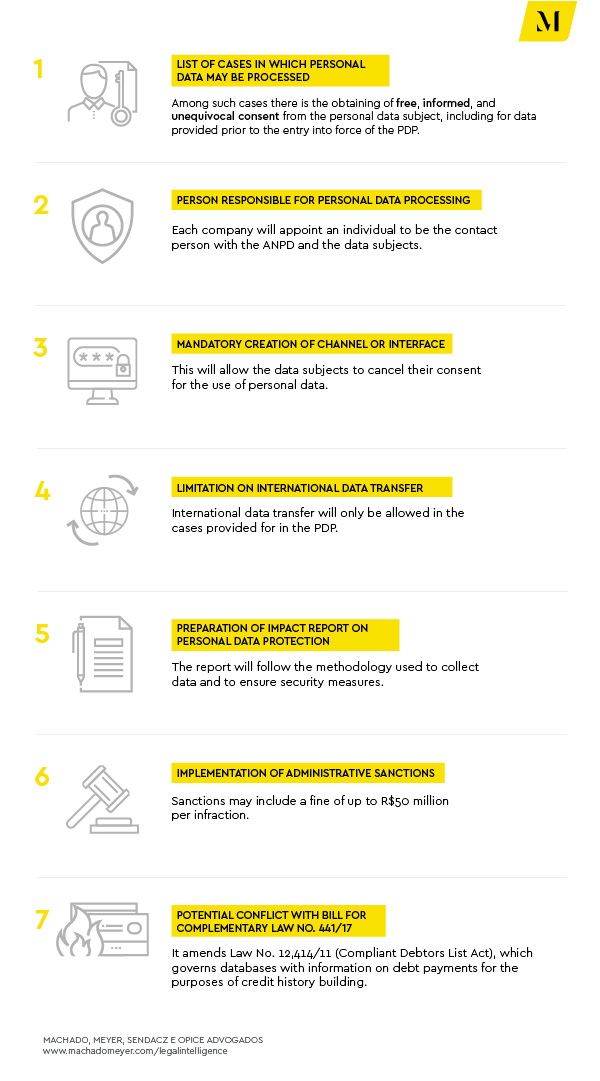
CLICK HERE TO DOWNLOAD THE E-BOOK WITH MORE DETAILS AND IMPORTANT CONCEPTS ABOUT THE LAW

- Category: Litigation
Among the significant changes in the framework of registered warrants (precatórios) promoted by Constitutional Amendment No. 99, of December 14, 2017, the fourth paragraph of article 101 of the Transitory Constitutional Provisions Act (ADCT) stands out, which gives the Federal Government the duty to make available to the states, the Federal District, and municipalities, as well as to their instrumentalities, foundations, and state-owned companies a special credit line for payment of registered warrants submitted to the new special payment system, that is, registered warrants due on March 25, 2015, and those that expire by December 31, 2024, the deadline to settle all these registered warrants.
According to the provision, the Federal Government should have the credit line available within six months of the entry into force of the new special payment system, that is, by June of 2018. However, the Minister of Planning, Development, and Management, Esteves Colnago, has already said that the Federal Government has no budgetary forecast to provide credit lines to the states, Federal District, and municipalities in order to subsidize the payment of registered warrants of these states and that it is not yet possible to know whether it will be able to meet the standard and if so, how.
The National Treasury Secretary, Mansueto Almeida, announced that, in the opinion of the Federal Government, the regulations implementing Constitutional Amendment No. 99/17 could be provided, but not the actual availability of the credit line to other federal entities within the period originally provided. This is because, according to the National Treasury, the possibility of granting a subsidy from the federal public coffers for this purpose before the 2020 fiscal year is not envisaged. Therefore, the other federal entities should seek their own funds to pay registered warrants.
The Federal Government had announced that it would conclude the preparation of the draft regulations of Constitutional Amendment No. 99/17 in order to submit it to the National Congress by June 30, 2018. However, so far, there is no news that this has happened.
Faced with the Federal Government's failure to comply with the constitutional norm, the state government of Minas Gerais submitted Bill No. 5,011/18 to the Legislative Assembly. The text proposes that the Executive Power be authorized to obtain credit from a federal official financial institution in the amount of up to R$ 2 billion for the state of Minas Gerais to apply such funds to the payment of registered warrants submitted to the new special framework.
Bill No. 5,011/18 was received by the plenary session of the Legislative Assembly of Minas Gerais on May 13, 2018. After receiving a favorable opinion from the rapporteur of the Commission on Constitution and Justice, Congressman Leonídio Bouças, on July 11, 2018, the bill is awaiting a vote in the first round in the plenary session.
In turn, the state government of São Paulo submitted Bill No. 801/17 to the Legislative Assembly, requesting an urgent procedure, proposing terms and conditions for offsetting registered warrants with state tax debts.
To that end, Bill No. 801/17 proposes that the offset should occur between (i) a debt claim that is for a certain, liquid, and enforceable amount against the state of São Paulo, its instrumentalities and foundations, provided that there is no challenge, appeal, or defense in relation to the amount of the debt claim; and (ii) debit of a tax nature or of any nature in which the state of São Paulo, its instrumentalities or foundations appear as creditor, registered as overdue debt by March 25, 2015, and that has not been subject to an agreement to installments that is in force.
Bill No. 801/17 was assigned to Congressman Marcos Zerbini, of the Commission of Constitution and Justice, as rapporteur, and has been on the agenda of the Legislative Assembly of São Paulo since October 10, 2017.
The state of Bahia also enacted State Law No. 13,930/18, authorizing the Executive Branch to contract for financing in the amount of up to R$ 1 billion for the payment of registered warrants subject to the new special framework with the financial institution that presents the best proposal to the Treasury of the State of Bahia.
In addition, Proposed Constitutional Amendment No. 100/11 (PEC No. 100/11), which allows the use of registered warrants in the payment of housing financing, regulates the assignment, in whole or in part, of payment of debt claims in registered warrants to third parties, including for the payment of housing financing to official financial institutions, provided that the holder of the registered warrant debt claim is not the owner of another residential property.
If approved, these bills and laws may serve as an incentive for other federal entities to adopt similar initiatives aimed at raising funds for the payment of registered warrants or reducing the volume of existing registered warrants and debt claims that will potentially be converted into registered warrants in the future. These initiatives are important, especially considering that all registered warrants submitted to the new special framework should be discharged by 2024 and that the Federal Government has no budgetary forecast to release the credit line provided for the payment of registered warrants to other federal entities in 2018 and 2019.
It is worth noting that under the terms of Constitutional Amendment No. 99/17, there is an express provision that, in relation to the contracting of loans to obtain funds to be used for the payment of registered warrants, "the indebtedness limits dealt with in items VI and VII of the head paragraph of article 52 of the Federal Constitution and any other limits of indebtedness provided for by law,” that is, such financing is not subject to the limits set forth in the Fiscal Responsibility Law and any other limits, in addition to being able to rely on real guarantees from public revenues.

- Category: Labor and employment
Among the changes introduced by Law No. 13,467/2017 (the Labor Reform), the introduction of fees for loss of suit (article 791-A of the Consolidated Labor Laws) has raised controversies not only regarding the timing of its application, but also its parameters for setting such fees.
As provided for in articles 22 and 23 of Law No. 8,906/94 (the Statute of Brazilian Lawyers and the Brazilian Bar Association), despite being paid by the parties (claimant and defendant), fees for loss of suit belong to the attorneys and aim to remunerate the provision of services in the course of each case.
To define the amount to be paid, article 791-A of the Consolidated Labor Laws establishes that fees for loss of suit shall be set between a minimum of 5% and a maximum of 15%: (i) over the amount resulting from the liquidation of the judgment; (ii) over the value of the economic advantage obtained; or (iii) over the updated value of the cause if it is not possible to measure the economic benefit.
The legal provision also established guidelines to be observed in setting these fees, such as the degree of care by the professional, the place of provision of services, the nature and importance of the case, the work performed by the attorney, and the time required for his service.
All this shows that the law has no criterion that justifies the adoption of different methods to determine fees for loss of suit owed by the parties.
It so happens that the large majority of decisions after the Labor Reform with an order to pay reciprocal fees for loss of suit has set different criteria for calculating them for the parties, without there being a justified reason in that regard:
- Case No. 1002224-91.2017.5.02.0073: 5% fees for loss of suit calculated over the value of the liquidation of the judgment, 70% of this amount in favor of the claimant's attorney and 30% in favor of the defendant's attorney.
- Case No. 1002429-79.2017.5.02.0604: 10% fees for loss of suit, calculated over the value of the liquidation of the judgment in favor of the claimant’s attorney and over the estimated value of the claims rejected in favor of the attorney of the respondent.
- Case No. 1000485-90.2017.5.02.0491: 5% fees for loss of suit, calculated on the value of the liquidation of the judgment limited to the amount of R$ 5,000 in favor of the claimant's attorney and on the value of the matter limited to the amount of R$2,000 in favor of the defendant's attorney.
- Case No. 1000247-46.2018.5.02.0391: 5% fees for loss of suit, calculated over the value of the liquidation of the judgment in favor of the attorney of the claimant and over the value attributed to the prayer for relief dismissed per an estimate in favor of the defendant's attorney.
From the examples above, cited as examples, one notes that, in favor of the claimant party's attorneys, the fees for loss of suit are set at higher percentages and based on the value of the liquidation, whereas those established in favor of the attorneys of the respondent party tend to to be set per an estimation or based on the value attributed to the cause (which, for suits filed prior to the Labor Reform, usually do not represent the totality of the prayers for relief submitted in the matter).
The practice shows that the labor courts have set fees for loss of suit according to protective principles of labor, such as weaker position of one of the parties, while ignoring that the setting of the amount is not linked to the socioeconomic condition of the worker, but only to the services provided by the parties’ attorneys in the course of the proceedings.
There is in article 791-A of the Consolidated Labor Laws no criterion that differentiates the payment of fees for loss of suit according to the condition of the worker, but only according to the form of service performance of the attorneys.
In fact, the application of different criteria is tantamount to recognition by the judge that the work of one attorney is more valuable than that of the other party, which is not supported by the law and is not consistent with the common reality of the proceedings.
The establishment of different criteria for assessing the attorneys' work without any express and grounded justification is a clear violation of constitutional rights, such as equality (article 5 of the Federal Constitution), the prohibition on discrimination between professionals (article 7, XXXII, of the Federal Constitution), and access to work (article 6 of the Federal Constitution).
On the other hand, in matters relating to procedural law, the use of a different basis for calculation runs counter to the principle of parity in the treatment of the parties in the course of proceedings (articles 7 and 139 of the Code of Civil Procedure), which enshrines the need to ensure to the parties equality of treatment between procedural rights and duties, which includes the payment of fees arising from loss of suit.
Therefore, especially in cases of reciprocal loss of suit, the fees for the parties should be estimated according to identical criteria, preferentially taking into account the economic benefit, since it represents the actual gains and losses: the amount to be paid by the claimant must be set based on the liquidation of the prayers for relief dismissed, while the amount to be paid by the respondent must be set on the basis of the prayers for relief granted.
If different parameters are set, it is legitimate to bring an appeal questioning the differentiation.