
- Category: Labor and employment
The Ministry of Labor and Employment (MTE) has finally released the salary transparency reports, but, as we anticipated, the numbers presented do not reflect the real scenario of the companies so that the comparison intended by Law 14,611/23 can be made.
This discrepancy led companies to turn to the Judiciary, especially due to the pressure to disclose these inaccurate reports in such a short period of time – considering the date of disclosure of the reports by the MTE and the deadline for their disclosure on the companies' websites and social networks.
In this scenario, on the afternoon of Friday, 03/22, the decision issued in the of Interlocutory Appeal 6002221-05.2024.4.06.0000/MG, filed from the proceedings of the Class Action 6002221-05.2024.4.06.0000, filed by the Federation of Industries of the State of Minas Gerais (FIEMG), was released. This decision granted the preliminary injunction sought by FIEMG to suspend the effects of Decree 11,795/23 and MTE Ordinance 3,714/23, specifically regarding the publication of salary transparency reports and remuneration criteria.
According to Judge Mr. Lincoln Rodrigues de Faria, who ruled on the interlocutory appeal, the decision is effective erga omnes (for all), which would extend its effects to the national scope and beyond the sphere of the companies represented by FIEMG.
- But what about now: should companies disclose the reports made available by the MTE or not?
The answer to that question initially depends on the nature of the decision itself. Preliminary injunction, as the name suggests, has a precarious effect over time. This means that it can be revoked or modified at any time. From this, the obligation to publish the reports would immediately be in force again.
It is important to note that the decision issued in the case of FIEMG does not determine the suspension of the effects of Law 14,611/23, but only of the decree and the ordinance. Therefore, the recommendation to prepare a salary transparency report is still in force because, depending on the interpretation given to the scope of FIEMG's decision, it may be necessary to disclose a report every six months. The scenario is still uncertain and surrounded by legal uncertainty.
As we have recommended from the beginning, it is important that companies maintain their own salary transparency reports, prepared according to the specificities of the occupations and, above all, with an analysis of the requirements of article 461 of the Brazilian Labor Law - CLT. This applies both to the need for biannual publication and as a result of requests for information from the Labor Prosecutor's Office or other inspection entities.
Precisely because of the precariousness of a judicial decision of a provisional nature, any company interested in not disclosing its report on the day immediately following the revocation or modification of FIEMG's decision must be prepared to adopt the appropriate judicial measures to avoid the publication.
Update on 03/26/2024, at 7:57 p.m.:
The preliminary injunction that suspended the obligation to publish salary transparency reports was revoked. At the request of the Federal Government, the President of the Federal Regional Court of the 6th Region, Judge Mrs. Monica Jacqueline Sifuentes, suspended the effects of the preliminary injunction previously granted to FIEMG, resuming the need to publish the reports of the Ministry of Labor and Employment on companies' websites and social media until 03/31/2024
Companies that wish to prevent the disclosure of the report, at this time, must adopt the appropriate legal measures before the courts.
We remind you that not disclosing reports within the deadline stipulated in Decree 11,795/2023 and MTE Ordinance 3,714/2023 may lead to the payment of a fine of 3%, calculated on the payroll of the company, limited to the amount of 100 minimum wages.

- Category: Labor and employment
March 21 was established by the United Nations (UN) in 1976 as the International Day to For the Elimination of Racial Discrimination, in memory of the massacre that took place on March 21, 1960, in South Africa, during the Apartheid regime.
In a peaceful demonstration attended by about 20,000 people against the Pass Law – which required black people to carry identification cards showing the places they could go – the local army fired at the protesters. The attack left 69 dead and 186 injured and became known as the "Shaperville Massacre".
The fight against racial discrimination is an old international struggle, long before Apartheid. In Brazil, although there were previous movements, including the promulgation of the International Convention on the Elimination of All Forms of Racial Discrimination in 1969,[1] the agenda gained strength with the Federal Constitution of 1988.
The new constitutional charter established the crime of racism as non-bailable and imprescriptible (article 5, item XLII), dealt with and regulated by Law 7,716/89 and Law 14,532/23, which equates racial insult to the crime of racism.
There is no doubt that the topic is extremely important, both nationally and internationally. Keeping the issue in the spotlight helps combat the scars left by centuries of enslavement. The discussion should also take place in spheres that may seem to play a secondary role in the fight for the elimination of racial discrimination, but which have an important impact on this fight, as is the case of labor/employment law.
The reader may be wondering what the employer, employee or workers in general and the labor/employment laws have to do with this agenda. The answer is: everything.
March 21 serves to draw attention to important issues that affect all of society and is an opportunity to reflect on the role of labor relations in this historic struggle.
The Federal Constitution itself provides, in article 7,[2] item XXX, that any type of difference in salary, exercise of functions and admission criteria due to sex, age, color or marital status is prohibited.
Before establishing any employment relationship, therefore, the employer must guarantee equal access to the hiring process for all, regardless of race or ethnicity.
It is also considered a crime, subject to imprisonment of two to five years, to deny or prevent employment in a private company due to discrimination or prejudice based on race, color, ethnicity, religion or national origin.[3]
This does not mean that the company cannot establish specific selection processes for certain groups, the so-called positive discrimination, as established in article 4, item II, of the Statute of Racial Equality.[4]
What needs to be clear is the company's need, the requirements of the position, and the justification of the criteria established for the process. A case that illustrates the subject well is the much-talked-about trainee program exclusively for black people carried out by Magazine Luiza in 2020.
At the time, the Labor Court understood that the program was fully valid, based on the Federal Constitution and the Statute of Racial Equality, which establishes policies to promote racial equality and combat discrimination, in addition to creating reparation mechanisms for victims of racism.
This is a historical reparation in a country that, for years, used the regime of slavery to organize its society.
In the Statute of Racial Equality there is an express provision that it is the duty of the State and society to guarantee equal opportunities, regardless of skin color or ethnicity (Article 2). This concept of "society" naturally encompasses companies and employers in general.
The principle of the social function of the company and of ownership is one of the pillars of our legal system. This principle involves precisely the responsibility of companies to contribute to society. In addition to profit, they must seek to promote equality, create jobs, respect the environment and ethical practices in the exercise of their activities.
Another rule that regulates the subject is Law 14,553/23, according to which companies must declare race and ethnicity in labor/employment documents, which is a way to corroborate the commitment of the private sector and labor law to promote racial equality.
We also highlight the issue of equal pay. As already addressed in several articles on our portal, this topic has been treated by the government with extreme attention, with the proximity of the deadline for companies with more than 100 employees to prepare the Salary Transparency Report, instituted by Law 14,611/23. Although the focus is currently on gender equality, it is expected that, in a next stage, other aspects will be addressed, such as racial equality.
Employers Should Be Mindful of Their Obligations
It is the employer's role to allow access to job positions to all on an equal basis, in addition to ensuring a healthy work environment from a physical and psychological point of view, prohibiting any and all discriminatory practices in their establishments and refraining from practicing any discriminatory act.
In addition to being considered crimes, discriminatory acts such as hindering or preventing access to the labor market, hindering career progression with the institution of totally subjective and unjustified criteria, allowing the adoption of expressions or jokes of a discriminatory nature also characterize, in the labor sphere, the so-called "moral harassment".
All these acts are punishable by compensation to the victim and may generate various administrative penalties, such as investigation by the Labor Public Prosecutor's Office and administrative fine, among others.
Other points that employers should be aware of:
- failing to provide the necessary equipment on equal terms for all employees;
- prevent the employee's functional advancement or other form of professional benefit; and
- provide differential treatment in the workplace – especially in relation to salary.
These practices are classified as a crime by Law 7.716/89 and punishable by imprisonment of two to five years, in addition to administrative fines and sanctions from the Public Prosecutor's Office.
In addition to all the pecuniary effects and judicial and administrative penalties already mentioned, it is necessary to consider the reputational impact in the event of a conviction for moral harassment as a result of racial discrimination or any act of discrimination related to skin color.
Thus, on March 21st, in addition to remembering the reasons that marked the date in the past, we take the opportunity to draw the attention of our readers, customers and partners to the theme of racial discrimination, especially to the role of companies as fundamental agents in the fight for racial equality.
We must all be allies of the government in the fight for the elimination of any form of discrimination, not only to avoid the penalties mentioned here, but also to fulfill the social function provided for in the Federal Constitution and collaborate in the construction of the just and egalitarian society that we so much desire.
Therefore, we encourage employers to inform themselves on the topic. It is necessary to study, promote and disseminate actions to combat racial discrimination and to deepen its obligations, as well as to know the tools available for the fulfillment of this social role.
Concluding and proposing an answer to the title of this article, labor law is an important and essential tool to combat racial discrimination, ensure equality, isonomy and the creation of a society that is always and necessarily inclusive.
[2] Article establishing minimum workers' rights
[3] Law 7.716/89, article 4
[4] Law 12.288/10

- Category: Environmental
The Amazon Summit, one of the greatest international events of the year, will take place in Belém, capital of the state of Pará, on August 8th and 9th.
Heads of state from all the eight countries that compose the Amazon Cooperation Treaty Organization (Organização do Tratado de Cooperação Amazônica or OTCA) will attend the meeting: Bolivia, Brazil, Colombia, Ecuador, Guyana, Peru, Suriname and Venezuela. Leaders from other countries interested in environmental issues involving the Amazon rainforest, such as France and Norway, are also expected to attend the event.
OTCA is the only socio-environmental group in Latin America. The organization was founded in 1995 by the signatory countries of the Amazon Cooperation Treaty (Tratado de Cooperação Amazônica or TCA), signed in 1978 by the eight Amazonian countries mentioned above.
TCA was incorporated into the Brazilian legal system through Federal Decree 85,050/80. The treaty emphasizes the importance of collaboration between Amazonian and outlines a set of actions aimed at achieving "equitable and mutually profitable results, as well as for environmental preservation, besides conservation and rational use of these territories’ natural resources" (Article I).
Among these actions, it is worth mentioning:
- ensuring broad freedom of commercial navigation along the Amazon River and other international Amazonian rivers (Article III);
- promoting scientific research and the exchange of information and technical personnel between the countries’ authorities (Article VII);
- coordinating health services, with the purpose of improving the region’s sanitary conditions and improving methods of preventing and combating epidemics (Article VIII);
- promoting studies in order to establish or improve road, river, air and telecommunications interconnections (Article X);
- promoting measures aiming at conserving ethnological and archaeological resources located at the Amazon area (Article XIV).
The Amazon Summit reinforces TCA provisions, and its main objective is to settle a common policy intending on the region’s sustainable development, through declarations from the treaty’s member states.
For the first time, countries are seeking cooperation to enable the establishment of a unique position in global discussions concerning the Amazon region. The topics to be discussed are the main challenges in the region, including climate change, organized crime, energy transition and social development of communities.
The final statements arising from the discussions held at the Amazon Summit will be presented during the general debate of the United Nations General Assembly in September.
Shortly before the start of the summit, from August 4th to 6th, the so-called Amazon Dialogues will take place. In this period, civil society and other interested parties will have the opportunity to actively discuss new strategies for the Amazon region through seminars, debates, exhibitions, and cultural performances.
The General Secretariat of the Presidency of the Republic (SGPR) released, on June 14th, a conceptual note about the Amazon Dialogues. According to the document, the activities will be split into meetings organized by the federal government, with broad social participation, and self-organized meetings by civil society, academia, research centers and government agencies.
There will be five sessions, and reports of each of them will be produced and presented by five representatives of civil society to the leaders of the Amazonian countries during the summit.
According to the conceptual note, after several consultations with the main stakeholders (Amazonian peoples and communities), dozens of topics were identified to be discussed, such as:
- combating and preventing deforestation, and the sustainable management and conservation of the forest;
- climate change;
- cooperation to prevent and combat environmental crimes in the Amazon;
- management and restoration of the Amazon river basin;
- cooperation between Amazonian countries;
- the role of civil society in the sustainable development of the Amazon;
- health and food safety;
- combating Amazonian poverty;
- reduction of regional inequalities;
- challenges of gas, mining and oil projects; and
- climate-environmental financing and favorable environment for bio-business in the Amazon.
To better organize the Amazon Dialogues, Ordinance SG/PR 155/23 established a technical working group to “define the structure and organization of the Amazon Dialogues, mobilize civil society for the event, organizing the initiatives in seminars for debates and exhibitions.”
The Ministry of Environment and Climate Change also published Ordinance MMA GM/MMA 553/23, establishing the working group to organize the Amazon Summit. It is worth mentioning the diversity of the group, composed by a representative of each of the following bodies, as determined by article 2 of the Ordinance:
- Executive Secretariat;
- Extraordinary National Secretariat for Deforestation Control and Territorial Environmental Planning;
- National Secretariat for Climate Change;
- National Secretariat for Biodiversity, Forests and Animal Rights;
- National Secretariat of Urban Environment and Environmental Quality;
- National Secretariat of Bioeconomy;
- National Secretariat of Traditional Peoples and Communities and Rural Sustainable Development;
- Brazilian Forest Service (Serviço Florestal Brasileiro or SFB);
- Special Advisory on International Affairs;
- Brazilian Institute of the Environment and Renewable Natural Resources (Instituto Brasileiro do Meio Ambiente e dos Recursos Naturais Renováveis or Ibama);
- Chico Mendes Institute for Biodiversity Conservation – Chico Mendes Institute; and
- National Agency for Water and Basic Sanitation (Agência Nacional de Águas e Saneamento Básico or ANA).
The meeting of several participants also occurs in the preparatory phase of the event. About 140 organizations of indigenous peoples, quilombolas, traditional communities and civil society (at regional, national and international levels) sent a letter to the Amazonian countries’ presidents, to Brazilian President’s International Office, to Itamaraty, to OTCA and to the Ministries of Foreign Affairs of the Amazonian countries requesting, in general, “spaces for the active and effective participation of indigenous peoples, quilombolas, traditional communities and civil society in the planning and development of the Amazon Summit.”
This effective and active participation could be materialized, for instance, through:
- autonomously appointed representatives;
- organizations of diversified working groups, so that their proposals and opinions influence the governments determinations;
- transparency mechanisms that allow the documents and issued reports to be public; and
- channels to receive contributions and suggestions.
Pará gains prominence as a venue for environmental discussions
Pará is becoming increasingly important in the environmental agenda especially due to the several international events taking place in its area.
In 2021, for example, Belém hosted the World Bioeconomy Forum, becoming the first venue to host such an event outside of Finland. This year, in addition to the Amazon Summit, the 1st Amazon Environmental Judicial Summit – Judges and Forests at Pará State Court of Justice is scheduled for August. In 2025, the capital of Pará will host the 30th UN Conference of the Parties on Climate Change (COP 30).
The Amazon Summit is fundamental to the implementation of measures towards the region’s sustainable development. In an unprecedented move, the expectation is that the eight countries that have sovereignty over the Amazon Rainforest develop with the interested groups an agenda focused on the protection and ecological conservation of the Amazon.
As an immediate political consequence of the event, the Amazon Summit is expected to strengthen OTCA by boosting cooperation among its member states and intensifying joint actions to address the region's environmental and socio-economic challenges.

- Category: Telecommunications
Obtaining funding for projects on competitive conditions has historically challenged telecommunications services providers, especially small providers (“Prestadoras de Pequeno Porte” or PPPs).
Facing this scenario, the Ministry of Communications (MCom), alongside the National Bank for Economic and Social Development (BNDES) and the Financier of Studies and Projects (FINEP), has been working to operationalize financing mechanisms using resources from the Fund for the Universalization of Telecommunications Services (FUST) and the Fund for the Technological Development of Telecommunications (FUNTTEL).
By 2025, BRL 2.2 billion in resources from these sectoral funds are expected to be made available to finance the expansion of telecommunications networks in the country. Added to these figures is BRL 1.16 billion already allocated from FUST to BNDES last year, totaling more than BRL 3.3 billion available in various funding modalities and targeted at companies of all sizes.
In addition, MCom is currently constructing a platform with data on regional internet providers to provide critical information for financial agents and facilitate the analysis and release processes to make funding resources available.
BNDES
In the telecommunications sector, BNDES has the specific programs BNDES Finame FUNTTEL and FUST, BNDES Finem – Telecommunications, FUST BNDES and FUNTTEL BNDES.
BNDES Finame FUNTTEL assists telecommunications services providers and suppliers of specialized goods and services for the sector, while BNDES Finame FUST is aimed explicitly at micro, small or medium-sized internet providers. Both modalities focus on financing the acquisition of telecommunications equipment, optical fiber cables, or associated working capital, limited to 30% of the total financing amount.
The BNDES Finem – Telecomunicações program is aimed at investments in the universalization of broadband in Brazil and the implementation, expansion, and modernization of telecommunications networks. The minimum amount of financing is BRL 20 million for PPPs and BRL 40 million for other companies.
FUNTTEL BNDES aims to fund investments by the Brazilian telecommunications industry in innovation, expansion of production capacity, and acquisition of equipment developed or produced in the country’s plans. In turn, FUST BNDES finances investments to expand and improve the quality of networks and services in schools, cities, and rural areas. Both are aimed at funding starting from BRL 10 million.
FINEP
FINEP is a public company linked to the Ministry of Science, Technology, and Innovation (MCTI) that aims to support projects and studies of interest to Brazil’s economic, social, scientific, and technological development.
FINEP offers FINEP 5G, using FUNTTEL resources, in two modalities. The first, called Research, Development and Innovation, focuses on developing technological solutions enhanced by adopting 5G technology. Special conditions apply to proponents’ projects with annual gross operating revenue of up to BRL 300 million, headquartered in the North, Northeast or Midwest Regions of Brazil or with investment in internal Research and Development equal to or greater than 10% of their Net Operating Revenue.
The second modality, called Networks, aims to implement the winners’ projects from the 5G bidding process in Brazil and install private 5G networks.
FINEP Aquisição Inovadora Telecom, on the other hand, is targeted at Brazilian companies of any size. It finances the acquisition of technologies developed by innovative national companies.
In addition, FINEP also has the product FINEP Telecom, which focuses on innovative activities in the sector. In this modality, companies with revenues of more than BRL 90 million will use the Direct Support to Innovation – FINEP Telecom, with special conditions, while those with revenues lower than the mentioned amount will receive resources within FINEP Inovacred Telecom.
Thus, we see that, although obtaining resources through funding has been a historical problem in the telecommunications sector in Brazil, especially for smaller providers recent MCom initiatives involving BNDES and FINEP offer a diversified portfolio of funding options, with different objects to support companies operating in the sector.
This represents a relevant opportunity, especially for smaller companies, which will be able to obtain funding under competitive conditions from these entities, receiving resources to work on expansion and innovation projects in their businesses.

- Category: Life sciences and healthcare
On November 29, the Brazilian House of Representatives approved the proposed text of Bill of Law No. 7,082/17 (PL 7,082/17), which aims to create a legal framework for clinical research with human beings in Brazil, in addition to establishing ethical guidelines and control of good practices through research ethics committees (CEPs).
The Bill of Law will now be analyzed by the Federal Senate's Committee on the Constitution and Justice and Citizenship (CCJC) and then go to the plenary.
As a general rule, clinical research is a study that aims to discover or confirm disease risk factors, new therapeutic indications, adverse reactions, and/or effects on a particular therapy (including gene or cellular), technique, drug, and/or medical device.
The purpose of this type of research is to evaluate aspects involving quality, efficacy and safety of the product in human volunteers. The main steps involve:
- Preclinical stage: manipulation of cells and/or animals to verify the feasibility of a substance or product becoming a new therapy, to know the mechanisms of action and to evaluate the potential for toxicity.
- Clinical stage: carried out in human beings with the aim of progressively testing the safety and efficacy of the new therapy, divided into:
- Phase 1 (group of 20 to 100 participants) – evaluate the safety of therapy on a preliminary basis.
- Phase 2 (group of 100 to 300 participants with a certain disease and/or condition) – Analyzes the efficacy and possible adverse effects of the molecule, substance, or product.
- Phase 3 (group of 800 or more patients with a certain disease and/or condition) – Evaluates the therapeutic advantage, establishes indications, contraindications, dosages and routes of administration, among others.
In practice, the results of these surveys must be submitted to the health agencies of each country (in the case of Brazil, the National Health Surveillance Agency – Anvisa), for regularization and commercialization of the product, as applicable.
In addition, this evidence can also be analyzed in the context of health technology assessment (HTA) for incorporation into the Unified Health System (SUS) or in the list of procedures for mandatory coverage by health plans established by the Brazilian National Supplementary Health Agency (ANS). This analysis considers aspects of cost-effectiveness, necessity, and financial/budgetary impact.
There is also the possibility of a phase 4 research, after commercialization, when the therapy is already used by hundreds or thousands of patients. The purpose is to collect and process real-world data (RWD), develop real-world evidence (RWE), monitor pharmacovigilance actions, and search for new indications.
In practical terms, Brazil already has a structured clinical research system that includes the Brazilian Health Council (CNS), the Brazilian Research Ethics Commission (CONEP), and research ethics committees (CEPs) established in hospitals, research centers, and academic institutions.
Bill of Law No. 7.082/17, however, intends to bring legal certainty, in addition to legal ballast, to the regulation and inspection of public and private institutions that carry out research with human beings in Brazil.
It is also expected that this new legal framework will bring predictability and more attractiveness to the performance of international studies, boosting technical and scientific development.
Check out the main points of the Bill of Law below.
Definitions and operational aspects
According to the text approved by the Brazilian House of Representatives, research with human beings includes the management of their data, information, or biological material, directly or indirectly, and can be divided into three categories:
- Scientific, technological or innovation research – Study that interacts with human beings (individually or collectively), directly, without the objective of registering the product under research.
- Clinical research – A set of scientific procedures developed systematically with the aim of:
- evaluate the action, safety and efficacy of medicines, products, techniques, procedures, medical devices or health care for preventive, diagnostic, or therapeutic purposes;
- to verify the distribution of risk factors, diseases, or conditions in the population;
- assess the effects of health factors or states.
- Clinical Trial – Its purpose is to discover or confirm the clinical, pharmacological, or any other pharmacodynamic effects of the investigational drug, to identify any reaction to the drug or to study its absorption, distribution, metabolism, and excretion, to analyze and verify the action, safety and efficacy of the investigational drug.
In these cases, it will be necessary to submit a research protocol to a prior ethical analysis, to be carried out in a single instance by the Research Ethics Committee (CEP), putting an end to the double review carried out by CONEP, which today still occurs in specific cases.
As in other countries, the study will continue to be previously evaluated by the IRBs, considering ethical principles, such as protection of dignity; based on a risk-benefit relationship (individual and/or collective) favorable to the research subject; voluntary participation; preventing foreseeable damage; and respect for dignity, safety, and well-being.
Bill of Law No. 7,082/17 also provides that a body for the registration, inspection, and training of CEPs will be created by the Executive Branch within a period of up to two years.
Another regulatory gap that will be filled concerns the establishment of a maximum period of 30 days for deliberation by the CEPs, except when it comes to research of strategic interest to the SUS, which will have priority and will have special evaluation procedures. For sanitary analyses by Anvisa for sanitary registration of the product under investigation, the maximum period may vary between 90 and 120 days.
Post-study supply
According to the proposed text approved by the Brazilian House of Representatives, before the start of the clinical trial, the research sponsor and respective researcher must submit a post-study access plan to the CEP.
This plan should contain details on whether it is necessary to provide the investigated product free of charge at the end of the clinical trial. The obligation will be incumbent on the sponsor as long as it is considered the best therapy or treatment for the research participant's clinical condition.
Contrary to what is currently provided for in the CNS regulation, this supply may be interrupted in the following situations:
- the research participant's own decision;
- cure of the disease or health problem that is the subject of the clinical trial;
- introduction of a satisfactory therapeutic alternative;
- when the continued use of the investigational drug does not bring benefit to the research participant;
- when there is an adverse reaction that makes it impossible to continue the investigational drug, even in the face of possible benefits;
- impossibility of obtaining or manufacturing the investigational drug for technical or safety reasons, provided that the sponsor provides an equivalent or superior therapeutic alternative existing on the market;
- after five years of the commercial availability of the experimental drug in Brazil; or
- when the experimental drug is available in the SUS.
Indemnity
Bill of Law No. 7,082/17 innovates by establishing that, in the case of research sponsored by governments, national or international government agencies, or non-profit institutions, the collaborating Brazilian institution may assume and exempt the responsibilities of one or more sponsors who participate in the research from the obligation to indemnify and provide health care for any damages caused.
Open points
Other operational points that should be contemplated in a regulation to be issued by the regulatory body include:
- availability of information about the research on a publicly accessible website;
- definition of standard operating procedures and best practices;
- rules for biobanks and biorepositories;
- mandatory clauses for clinical research contracts;
- definition of special groups;
- procedures for suspension or termination of zip codes;
- monitoring rules for research;
- definition of information and procedures for ethical analysis by the IRBs;
- creation of a national registry of volunteers in bioequivalence studies;
- requirements for the design and implementation of a post-study supply program or continuation of the experimental treatment;
- specificities of research in the humanities and social sciences;
- functioning of independent ethics committees (IECs).

- Category: Telecommunications
This article presents guidelines for businesses wanting to enter the mobile phone industry in Brazil. It explains how to get permission to operate and the different business models available.
Service authorization
Authorization to provide telecommunications services is mandatory for any company that aims to constitute a mobile phone operator in Brazil. The National Telecommunications Agency (Anatel), Brazil’s sector’s regulatory body, must grant the service authorization.
Currently, service authorizations issued by Anatel have a generalist nature, being valid for different telecommunications services and for an indefinite period. However, the interested company shall notify the Agency of the services it plans to explore. Specifically for mobile services, the notification shall indicate the Personal Mobile Service (“Serviço Móvel Pessoal” or SMP).
The interested company must submit an authorization requirement form, accompanied by company and tax documents and declarations of technical qualification and sound financial conditions. Moreover, the company must declare that no regulatory hindrances prevent them from obtaining the authorization.
The applicant must be a legal person constituted according to Brazilian law, with its headquarters and administration in Brazil. The company must also comply with other regulatory and legal requirements.
It will also be necessary to pay a regulatory fee of BRL 400.00 to Anatel regarding the expedition of the grant instrument.
Access to radio frequencies
Companies interested in becoming SMP carriers in Brazil must also obtain access to the radiofrequency spectrum. In that regard, they need Anatel to grant them authorization to the right to use radio frequencies.
Applicants can secure radiofrequency bands by submitting an application or engaging in a public call or bidding process. The method to obtain the frequency will depend on evaluating existing technical limitations, manifestations of other interested parties and the possibility of band use sharing. Moreover, Anatel may organize a bidding process to encourage competition in the telecom market.
The granted right to use can either be primary or secondary. In both cases, protection against prejudicial interference is guaranteed. However, in secondary use, there is no protection against interferences caused by primary or subsidiary use resulting from industrial exploration contracts (“Contratos de Exploração Industrial”).
The regulatory authority can authorize secondary use in areas where the primary use holder has not yet effectively used their radio frequencies. This authorization depends on prior notification and, possibly, negotiations with the primary use holder. The secondary user must discontinue the use once the primary use of the band starts.
The interested company must also pay a public price for Anatel to grant them the right to use radio frequencies. The public price will be calculated based on the chosen band’s capacity and coverage, population and geographic area of the authorization, grant period and the service provided.
MVNO models
As an alternative to the traditional mobile carrier model, it is also possible for interested companies to constitute a mobile virtual network operator (MVNO) in Brazil.
There are two different MVNO models in Brazil: authorized and accredited. In the former, the MVNO provides their services through network sharing with the MNO (traditional operator).
An authorized MVNO is also considered an SMP provider. In that sense, the authorized MVNO must comply with the same legal conditions of a traditional operator to obtain service authorization. Moreover, the interested company must also submit to Anatel their network sharing agreement signed with the MNO.
Furthermore, the authorized MVNO can set up an enabler business strategy. In this model, the authorized MVNO operates as an MNO to accredited MVNOs, providing support and solutions to help them structure their own businesses.
On the other hand, accredited MVNOs are just representatives of their respective MNOs. They incur lower regulatory, tax and infrastructure investment costs than traditional mobile carriers and authorized MVNOs.
Companies interested in becoming accredited MVNOs must submit their signed contract with an MNO to Anatel. The Agency then validates the contract.

- Category: Labor and employment
The legality of outsourcing companies' core activities is already pacified, including in the Brazilian Supreme Court - STF, allowing the engagement of legal entities to provide services related to the essential and non-essential activities of companies.
The doubts now concern the legality of hiring legal entities to provide services, essential or not, even if the requirements of the employment relationship are present.
In a recent decision STF, Minister mDias Toffoli, in Complaint 65868 (RCL 65868), revoked a decision of the Labor Court of Appeals of the 15th Region (TRT-15) that pronounced the employment relationship between a officer engaged through a legal entity incorporated by him and the contracting company.
Although the issue has already been the subject of discussion in Brazilian courts, especially in recent months, the decision has fostered arguments in favor of the validity of this type of engagement.
In the recent judgments of the Allegation of Non-Compliance with a Fundamental Precept (ADPF 324), the Declaratory Action of Constitutionality (ADC 48), the Direct Action of Unconstitutionality (ADI 3961) and the Extraordinary Appeal 958252 (Theme 725), the STF recognized the lawfulness of other forms of organization of the workforce in addition to the employment relationship.
Based on these decisions, the STF has issued several decisions recognizing the legality of engaging individual independent contractors through legal entities incorporated by them.[1] Such decisions determine, in general terms, that different employment relations can be established, including the provision of services by a legal entity for the outsourcing of companies' core activities , provided that the contract is real and reflects, in practice, the absence of the requirements of the employment relationship, especially subordination.
Forexample, RCL 56285, the MinisterRoberto Barroso decided under the following terms, on December 6, 2022:
(...) 4. Contracts for the outsourcing of labor, partnerships, and the provision of services by a legal entity (pejotização) are lawful, even if for the execution of the company's core activity, provided that the contract is real; that is, that there is no employment relationship with the company taking the service, with subordination, hours to be fulfilled, and other obligations typical of the labor contract, hypothesis in which the hiring would be rigged. 5. In this case, the claimant is not a low-income worker, and is therefore able to make an informed choice about his hiring. There is no concrete evidence in the contested decision that there was coercion in the contract concluded. 6. The appeal is dismissed. (g.n.)
The decision of theinsinister Dias Toffoli in RCL 65868 also refers to the above decision to revoke the decision of the TRT-15. In this case, however, the TRT-15, responsible for the analysis of facts and evidence, verified that, in the specific case, the officer provided services under subordination and, based on this, upheld the original judgment that recognized the employment relationship.
The TRT-15 decision, therefore, was not based on the intrinsic illegality of engaging individual independent contractor through legal entities incorporated by him/her. It was based on the analysis of the facts that, according to the understanding of the judges, evidenced the subordinate work:
Now, considering that both (the defendant's witness and the plaintiff) were subordinate to the president, the only difference lies in the greater or lesser flexibility of working hours, which confirms that the non-hiring of the plaintiff as an effective employee resulted solely from the defendants' choice to defraud labor rights. In view of all the above, there is no other conclusion to be reached than that the hiring of the plaintiff through a company constituted exclusively for this purpose (a phenomenon known as "pejotization") was perpetrated with the evident intention of defrauding rights provided for in the labor legislation. Therefore, it is necessary to recognize the nullity of the work performed (article 9 of the CLT) and the consequent pronouncement of the employment relationship during the entire period of service provision, including because all the legal requirements necessary for the pronouncement of the employment relationship are present. (g.n.)
Thus, although the STF has issued several decisions recognizing the validity of other forms of hiring other than the employment relationship, this validation is not absolute. The lawfulness of suc hemployment is conditional on the absence of the requirements of the employment relationship.
Thus, it is clear that the topic still needs to be further debated to bring greater legal certainty to forms of engagement that do not only involve the employment relationship.
In the current scenario, there is still not enough legal certainty to affirm that the STF considers any form of contracting the provision of services through a legal entity to be lawful.
We understand that the best interpretation of the decisions issued by the STF to date is that forms of employment other than the employment relationship are valid, provided that the elements of the employment relationship are not present in the specific case.
We will continue to follow the theme.
[1] Rcl: 58583, Rcl: 56453, Rcl: 60436, Rcl: 57057, Rcl: 59735.

- Category: Labor and employment
The Ministry of Labor and Employment (MTE) has just released to the public the Salary Transparency Reports of all companies with more than 100 employees on a specific portal.
As we had already anticipated in our articles, the methodology used by the MTE to prepare the Salary Transparency Report does not comply with the legal requirements for salary equalization and is based on a non-objective comparative basis.
The use of Major Groups of Occupations as a grouping parameter for comparing the remuneration of women and men also generates distortions and tends to lead to erroneous conclusions on the subject.
The issue became even more critical due to the publicity given to the reports by the MTE – which was not expected and is not in line with the regulation of the subject, which gave companies the responsibility for publication of their respective reports.
In view of this scenario, companies should evaluate the appropriate administrative and/or judicial measures due to the publicity given by the MTE to the report.
Machado Meyer Advogados will continue to monitor the evolution of the matter and its potential developments.
Update on 03/15/2024, at 7:52 PM:
The MTE has just released an update on its website stating that companies should only consider as valid the Salary Transparency Reports that will be made available starting from March 21 on the Emprega Brasil portal.
The MTE emphasized that "only the report, which will be released from March 21, should be considered official" and that "information disseminated before this date should be disregarded."
In light of this, companies should continue working on their own reports and consider how to proceed, according to the options below, based on their own reality:
- publish the report of the Ministry of Labor and Employment, exactly as provided by the labor authority (recommended only if there is no wage discrepancy);
- publish the report of the Ministry of Labor and Employment and, jointly, publish the company's own report, in which possible inconsistencies in the report of the labor authority are clarified; or
- file a lawsuit seeking not to publish the report of the Ministry of Labor and Employment, but at the same time work on the company's own report, considering that the precedents are not yet well established and different decisions may be rendered – in addition to the obligation to publish the Salary Transparency Report remaining in force.
For companies that choose to file lawsuits, we recommend that it be done as soon as possible, as the deadline for publication of the Salary Transparency Report is maintained for March 31.
We continue to follow the topic and will inform you of any news.
- Category: Life sciences and healthcare
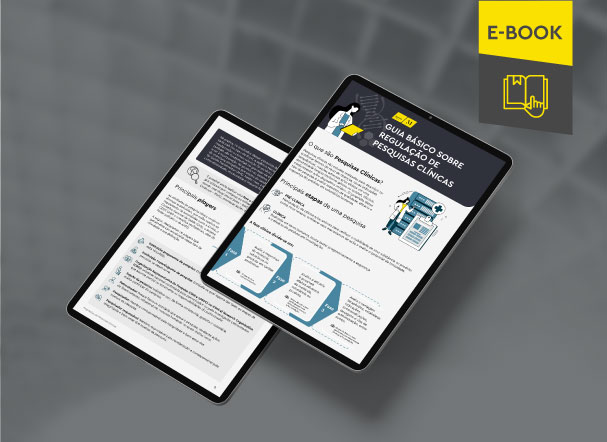
Clinical research is conducted to discover or confirm risk factors for diseases, new therapeutic indications, adverse reactions, and/or effects of a specific therapy (including gene or cell therapy), technique, medication, and/or medical device. The purpose of this type of research is to evaluate aspects of quality, efficacy, and safety of the product in human volunteers.
Our ebook "Basic Guide on Clinical Research Regulation" details each step of introducing new therapies, medications, and medical devices to the market, from pre-clinical phases to human trials, addressing the regulation involved.
The ebook explains the vital role of the key participants in the process – including researchers, institutions, and volunteers – in conducting these research studies. Additionally, it provides a clear overview of Bill 7,082/17, which aims to establish a legal framework for clinical research in the country, ensuring legal certainty and process simplification.
The publication highlights all relevant aspects of the topic:
- Research stages
- Regulation and approval
- Key participants
- Bill 7,082/17

- Category: Life sciences and healthcare
The Ministry of Health published, on May 4th, 2024, Ordinance GM/MS 3.232/24, which alters Consolidation Ordinance GM/MS 5/17 and launches a new digital health program within the Brazilian Publica Health System (“SUS Digital Program”). The initiative seeks to promote digital transformation in the SUS in areas such as:
- comprehensive health care;
- health surveillance;
- training and continuing education of health workers and professionals;
- management of the SUS (at all levels and spheres); and
- planning, monitoring, evaluation, research, development and innovation in health.
The SUS Digital Program will be implemented by the Federal Government, states, the Federal District and municipalities, with the possibility of participation of higher education institutions, technological institutes and research institutions.
Concepts and definitions
The new ordinance brings important concepts and definitions for understanding the objectives, development stages and actions/projects of the SUS Digital Program. Among them, the following stand out:
- Sensitive personal health data: any data relating to a data subject's health or health care provided to him or her that reveals information about your physical or mental health in the present, past, or future. It is important to note that this is a complementary definition to the concept of sensitive personal data, relating to health or sex life, genetic or biometric data, brought by Law 13.709/18 (General Data Protection Law – LGPD);
- Digital health ecosystem: system with technical objects, techniques and technologies organized on a physical basis (connectivity, equipment and auxiliary devices), structures (networks, systems and databases), instruments (electronic medical records, self-applied records and protocols), operational processes (programs, applications and routines) and applications of digital techniques, for problem solving or interventions in health situations;
- National Digital Health Maturity Index (INMSD): representation of the results of metrics used for the diagnosis, monitoring and evaluation of digital maturity, including the most important indicators to demonstrate the sustainability of digital health actions and services;
- Digital health: a set of knowledge, techniques, practices, attitudes, ways of thinking and values related to the use of digital technologies in health and the growth of the digital space.
Objectives
Among the objectives of the SUS Digital Program, we highlight:
- foster the appropriate, ethical, and critical use of new digital technologies in the SUS;
- support the proposition of collaborative and free digital solutions that improve the provision of services, the management of care by health professionals and the quality of health care;
- encourage training and continuing education in digital health;
- promote sensitization, awareness and engagement for the use of digital technologies and adequate data processing by SUS actors, fostering the culture of digital health and the protection of personal data;
- promote the interoperability of health data;
- reduce inequality in access to digital health solutions and services in the different regions of the country.
Development Steps
The SUS Digital Program will be divided into three stages of development:
- Step 1: preparation of the Action Plans for the Transformation of Digital Health (PA Saúde Digital) by the states, the Federal District and municipalities that adhere to the SUS Digital Program, according to the following phases (Ordinance GM/MS 3.233/24):
- diagnosis of the territory situation, considering the health macro-region to which the plan refers and establishment of the degree of digital maturity based on the application of the INMSD – according to guidelines to be released by the Secretariat of Information and Digital Health by April 3rd of this year; and
- analysis of the territory situation diagnosis and the recommendations resulting from the application of the INMSD.
The execution of the three phases related to the preparation of the Digital Health PA must meet the following deadlines – under penalty of suspension of the financial incentives (transfers) provided for in Ordinance GM/MS 3.233/24:
- by April 3 of this year – states, the Federal District and municipalities must submit a request to join the SUS Digital Program;
- within 90 days from the Ordinance publication date – diagnosis of the territory situation must be sent; and
- within 120 days from the date of submission of the territory situation diagnosis – PA Digital Health by macro-region must be sent.
- Step 2: Implementation of the respective Digital Health Transformation Action Plans, elaborated in the form of Step 1.
- Stage 3: evaluation of the actions implemented as a result of the program, with reference to the INMSD.
The Ministry of Health will publish other ordinances with guidelines on stages 2 and 3 of the SUS Digital Program and its actions.
Actions and projects
According to Ordinance GM/MS 3,232/24, the digital transformation actions and projects resulting from the SUS Digital Program must be based on one or more of the following axes of action:
- Axis 1: digital health culture, training and continuing education in health, which covers initiatives such as:
- training and continuing education in digital health;
- strengthening the digital health ecosystem by promoting open innovation; the structuring of a collaborative network for the sharing of experiences, knowledge, culture and practices among actors; and co-creation with citizens and organised civil society;
- strengthening the use of studies and evidence for the incorporation of digital technologies in health;
- fostering a culture of protection of personal and sensitive health data; and
- improvement of health records.
Axis 2: technological solutions and digital health services within the scope of the SUS, which covers initiatives such as:
- support for the computerization of the SUS and the adoption of electronic medical records that meet the interoperability standards of the RNDS;
- supporting the improvement of infrastructure for digital and connectivity systems;
- strengthening security mechanisms for access to health systems, data, and information;
- encouraging the structuring and use of technological solutions and digital health services within health establishments and services;
- strengthening digital health for health care for neglected, vulnerable, and geographically isolated populations and indigenous peoples; and
- expansion of the offer of telemedicine and telehealth within the scope of the SUS in the national territory.
- Axis 3: Interoperability, analysis and dissemination of health data and information, which covers initiatives such as:
- promoting the interoperability of health data with the RNDS;
- management and governance in the sharing of health data;
- elaboration of technical studies, guidelines and protocols, analysis and dissemination of data to support digital health strategies and innovation in health;
- standardization of national information models, as well as health vocabularies and terminologies;
- promotion of the dissemination of health data and information, maintaining confidentiality, privacy, data protection and security of personal health information; and
- preservation of the authenticity, integrity, traceability and quality of health information.
The following guidelines must be observed for the execution of digital transformation actions and projects:
- universality and equity in access to digital health products and services, at all levels of health care;
- recognition of the National Health Data Network (RNDS) as the digital platform for interoperability, innovation, information and health services for all of Brazil;
- active transparency in the availability of data and information that enable the monitoring and participation of society in the social control of digital health services and policies, with cooperation between federated entities;
- use of information and communication technologies to support the decentralization of health activities, observing regional and local specificities;
- recognition of access to quality internet as essential to promote digital inclusion and reduce inequalities in access to information and communication technologies necessary for the realization of digital health;
- guarantee of the safe use of information, in compliance with the rules on data protection provided for in the legislation;
- prioritizing digital health in the training and continuing education in health of SUS health professionals and workers; and
- association of the program's digital health actions with the SUS health care model, to guide its conduction.
Our Life Sciences & Healthcare practice can provide more information on the topic.

- Category: Labor and employment
Between the end of February and the beginning of March, two injunctions were granted to companies in the pharmaceutical sector, one by the Federal Court of São Paulo and the other by the Federal Court of Rio de Janeiro, establishing the companies involved in the lawsuits are not obliged to send personal and restricted data to the federal government for the preparation of the Salary Transparency Report. The two injunctions also exclude the obligation to publish the Salary Transparency Report on websites/social networks.
The injunction granted by the Federal Court of Rio de Janeiro also determined that the Union must not require the participation of professional unions in the preparation of action plans to mitigate inequality. It also waived the requirement to deliver the action plan to the labor union.
The decision of the Federal Court of São Paulo is based on the fact that Ordinance 3,714/23 and Decree 11,795/23 violate the principle of legality, by extrapolating Law 14,611/23 as follows:
- Ordinance 3,714/23 – by providing that the report to be answered by companies must be prepared based on various data extracted from the Emprega Brasil Portal. This means that it must be based on the questionnaire prepared by the Ministry of Labor and Employment, which includes questions about the existence of a job and salary plan, policies for hiring and promoting women, policies to support parenthood, and criteria for career progression; and
- Decree 11,795/23 – by determining the publication of the report on the companies' websites and social networks.
The decision of the Federal Court of Rio de Janeiro follows the same line as the decision of São Paulo by providing that the requirement of data for the preparation of the report (Ordinance 3,714/23) and the disclosure of this data (Decree 11,795/23) have no legal backing.
In addition to being based on the absence of legal support, the decision of the Federal Court of Rio de Janeiro is based on other points:
- the inspection of equal pay between men and women can occur through other more accurate databases (such as eSocial);
- It is not reasonable to require that this data should be published even on social networks. This requirement may even violate the General Data Protection Law;
- There is, for the time being, no point in disclosing this data to the general public, as equality must be ensured between employees of the same company;
- it is not reasonable to demand all the data provided, even relating to labor policies that are not even mandatory; and
- Distinctions between companies in the same industry cannot be based on labor programs and benefits that are not mandatory.
Given these decisions, would it be the end of the Salary Transparency Report? We don't think so.
The injunctions granted are applicable only to the companies involved in the lawsuit and do not favor other companies that do not obtain a similar decision – decisions resulting from lawsuits filed by associations or groups of companies, despite having greater scope, would also only be applicable to the companies represented in the lawsuit.
In addition, up to now, these decisions are provisional and are still subject to change. In our view, some of the grounds put forward by both would not be sufficient to rule out the obligation to publish the report in a broad and definitive manner.
This is because some of the arguments presented do not seem to strictly reflect the legislation in force. This is the case, for example, of the allegation of violation of the General Data Protection Law.
Specifically in relation to this ground, although Decree 11,795/23 and Ordinance 3,714/23 provide that the report must contain the "value" of wages and remuneration, the report model presented by the Ministry of Labor and Employment does not include the identification of any employee or the indication of salary or remuneration amounts in absolute numbers.
In other words, according to the Salary Transparency Report, it would not be possible to identify the salary of any employee or their respective remuneration – which was even reinforced in the "frequently asked questions" released by the Ministry of Labor and Employment.[1]
This understanding applies even when the comparison is made by the Ministry of Labor and Employment, considering the Large Occupation Group. The list of questions and answers released by the labor authority clarifies that the comparison based on this criterion will only be carried out if the Large Occupation Group has at least three people of each gender.[2]
All these points will possibly be questioned by the Union when it is up to it to express itself. There is therefore a risk that the preliminary injunctions will not be upheld.
There are, however, other grounds used in the decisions which we believe are robust enough to warrant the non-publication of the report, at least for the time being.
Among them, it is noteworthy that Ordinance 3,714/23 extrapolated Law 14,611/23 when it imposed on companies the obligation to answer the questionnaire of complementary information, whose questions do not assess compliance with any legal obligation imposed on companies.
It should be noted that the decisions rendered did not analyze the issue involving the methodology for comparing wage equity, which does not comply with Law 14,611/23 and article 461 of the Brazilian Labor Laws - CLT with regard to the performance of work of equal value or in the exercise of the same function. This point could completely invalidate the model released by the Ministry of Labor and Employment.
In our view, the aforementioned decisions do not have the power to fully invalidate Law 14,611/23, Ordinance 3,714/23 and/or Decree 11,795/23, as they consider specific points of these instruments. At the limit, the main obligation established (i.e., the report itself) would remain. The decision issued by the Federal Court of São Paulo expressly recognizes that "not all the rules provided for in the decree and in the ordinance violate the principle of legality."
Based on these grounds, we believe that, in the future, changes may be made to the regulations in order to restrict the data necessary for the preparation of the report and/or the obligation to publish it to the general public. However, it is unlikely that the obligation to publish the Salary Transparency Report will be extinguished, as this obligation has been imposed by law.
At the same time, on February 28, Legislative Proposal 500/24 (PL 500/24) was presented in the Chamber of Deputies to amend Law 14,611/23 and postpone the mandatory publication of reports to January 1, 2026.
The Legislative Proposal is based on the understanding that it is essential to establish an adequate period for companies to make the necessary adjustments and ensure their compliance with the new legislation.
Despite binding all companies covered by the obligations provided for in the new legislation, PL 500/24 still needs to be approved, which requires a long and complex path to be traveled.
In this context and considering the proximity of the deadline for companies to complete or rectify the questionnaire of complementary information, in addition to the deadline for the publication of the report, we understand that organizations should choose one of the options below, according to their own reality:
- publish the report of the Ministry of Labor and Employment, exactly as provided by the labor authority (recommended only if there is no wage discrepancy);
- publish the report of the Ministry of Labor and Employment and, jointly, publish the company's own report, in which possible inconsistencies in the report of the labor authority are clarified; or
- file a lawsuit seeking not to publish the report of the Ministry of Labor and Employment, but at the same time work on the company's own report, considering that the precedents are not yet well established and different decisions may be rendered – in addition to the obligation to publish the Salary Transparency Report remaining in force.
For companies that choose to file lawsuits, we recommend that it be done as soon as possible, as the deadline for publication of the Salary Transparency Report is maintained for March 31 (except for those companies that obtain a decision authorizing them to refrain from publishing the document).
We continue to follow the topic and will inform you of any news.
[1] Will there be disclosure of individual data?
There is no possibility for individual data to be disclosed. Rigor with the application of the General Data Protection Law is everyone's duty. Where the small number of persons in positions implies the identification of these persons, the information shall not be disclosed. The data refers to companies and not segments. In this case, the data will be compared with the other information requested – the analysis will be made from the set, and not just from an isolated piece of information.
[2] How will the confidentiality of employees who hold unique positions in the company be guaranteed?
The information will be made available to large CBO's groups, thus avoiding the identification of unique situations. In case this situation persists, statistical treatment will be applied indicating the possibility of identifying an identifiable number (up to 3 of each gender) of employees.

- Category: Digital Law
The Bill (PL) 2,338/23, currently under consideration, aims to establish the Regulatory Framework for Artificial Intelligence in Brazil. The proposal has expanded the national debate on the topic and led to the release of opinions elaborated by authorities and entities.
In our ebook "Artificial Intelligence in Brazil," we present the definitions, principles, and concepts related to the use of artificial intelligence proposed by the Bill and help to understand how the initiative seeks to promote research and development of AI systems, enable risk assessment, establish governance measures, and encourage responsible innovation.
In the publication, we also show the repercussions of the Bill and the next steps.

- Category: Labor and employment
The Ministry of Labor and Employment (MTE) has extended the deadline for companies to complete or rectify, on the Emprega Brasil Portal, the questionnaire of additional information that will be part of the Salary Transparency Report.
The deadline, which would have ended on February 29, is now March 8, 2024.
This additional time should be used by companies as an opportunity to carefully analyze the questions and evaluate which will be the most appropriate answers or review the answers already submitted.
The information was published on the MTE website and can be accessed here.
We continue to follow this matter.

- Category: Labor and employment
In recent discussions with clients regarding sending the additional information related to the Salary Transparency Report on the Emprega Brasil Portal, one of the most recurrent doubts was whether the company had a jobs and salaries plan.
After all, what is a jobs and salaries plan? According to the Brazilian Labor Law (CLT), a job and salary plan corresponds to a policy that establishes rules on employee promotions based on "merit and seniority, or only one of these criteria, within each professional category."
Any structure of positions and salaries – such as guidelines – that does not exclusively observe the legal criteria mentioned above does not fit the legal concept of a jobs and salaries plan.
As widely discussed in our previous articles on the Salary Transparency Report, the submission of the additional information related to the Salary Transparency Report on the Emprega Brasil Portal should consider legal concepts, and not administration/people management concepts.
Companies should know that, by expressly stating in the additional information form of the Salary Transparency Report that they have a jobs and salaries plan, they are subject to legal consequences.
The first of these consequences is the impossibility of using the legal requirements of equal pay as a justification for possible salary differences between employees occupying the same position. This is because, by legal determination, the existence of a jobs and salaries plan prevails over the salary equalization rules provided for in article 461 of the CLT that regulates equal pay for equal work.
This is an important consequence, but even more relevant is the second consequence: the jobs and salaries plan can be incorporated into the employment contract, as well as the career plan. By implementing these policies, the company recognizes that both can be incorporated into the employment contract of employees in the way they are established.
Such a contractual incorporation would difficult future changes and, consequently, could hinder the company's organizational structure. This topic has been widely discussed by labor courts over the past few years. Below is just one example:
ORDINARY APPEAL. COMPANHIA CEARENSE DE TRANSPORTES METROPOLITANOS METROFOR. CHANGE IN THE JOBS AND SALARIES PLAN THAT CONSTITUTES A HARMFUL CONTRACTUAL CHANGE. The adoption by the employer of a new Jobs and Salaries Plan is a harmful contractual change, which implies notorious damage to the worker, especially when the latter's adhesion is waived, and its transmutation is done automatically, without consulting his agreement. Under the terms of Precedent No. 51 of the Brazilian Superior Labor Court (TST), regulatory clauses that revoke or change previously granted benefits will only affect workers hired after the revocation or amendment of the regulation (...)[1]
In our view, general people management guidelines on jobs and salaries structure do not legally characterize jobs and salaries plans and/or career plans.
That is why it is essential that, when sending the additional information related to the Salary Transparency Report on the Emprega Brasil Portal, companies evaluate with great caution whether or not they have a jobs and salaries plan.
[1] Regional Labor Court of the 7th Region, 0000711-50.2012.5.07.0006, rapporteur Regina Glaucia Cavalcante Nepomuceno, 1st Panel, publication date: April 4, 2014

- Category: Labor and employment
The Ministry of Labor and Employment (MTE) recently clarified the format and content of the Salary Transparency Report (Report) and what would be the next deadlines to be observed by companies until March 30, when the first Report should be published by companies.
As we pointed out in our last article, the Report will be divided into two parts. The first will consist of the complementary information provided by the companies on the Emprega Brasil Portal and the second will present the comparison of salaries and remuneration of employees.
The first step to be taken by companies is to access the Emprega Brasil Portal and send the complementary information requested by the MTE by February 29. [This deadline was extended to March 8, 2024 by the MTE.]
At this stage, it is essential that the Human Resources (HR) team responsible for sending the information is aligned with the legal team. This is because HR's understanding of certain topics (such as what characterizes a positions and salary plan) may not be the same understanding from a legal point of view. Depending on the information sent, the company would be exposed to consequences on the result of the Report to be prepared by the MTE.
After the deadline for the submission of additional information by the companies, the MTE will begin the preparation of the Reports, which will be available to the companies until March 15.
Once the Report is released by the MTE, companies will have until March 30 to publish their Report on their websites, social networks or similar instruments and ensure wide dissemination to their employees, collaborators and the general public.
In view of this, until the beginning of March, companies should work internally to anticipate what will be the possible panorama of the comparison of positions and salaries between women and men that will be presented in the Report prepared by the MTE.
It is worth noting that although the MTE has stated in its events that the Salary Transparency Report will be carried out by CNPJ (tax ID) – that is, each branch of the company will have its own Report when it has 100 or more employees – this position is contrary to Law No. 14,611/23, which expressly provides that the Report must be prepared and published by private legal entities with 100 or more employees (even if there are CNPJs that have fewer than 100 employees).
Therefore, the ideal is that, when carrying out the prior analysis, companies simulate the two scenarios: the preparation of Reports by CNPJ – when they have more than 100 employees – and the preparation of a single Report, considering the sum of the company's employees.
Having made these considerations, the analysis prior to the publication of the Report will allow the company to identify whether the MTE Report will indicate:
- whereas there is no discrepancy in pay and pay criteria between women and men;
- minimal discrepancy in wages and remuneration criteria between women and men; or
- large discrepancy in pay and remuneration criteria between women and men.
In the first (unlikely) scenario, there are no measures to be adopted by the company, as there is no inconsistency in the salaries and remuneration criteria practiced between women and men. Therefore, it is up to the company to continue with the publication of the Report by March 30.
In the second scenario, as the discrepancies pointed out by the MTE Report are minimal, the company would find it easy to legally clarify the reason for these discrepancies. The most recommendable conduct to be adopted in this case would be to proceed with the publication of the MTE Report by March 30and, at the same time, to publish the legal clarifications – previously and internally prepared – on the minimal inconsistencies exposed in the Report.
In the third scenario, it is likely that the methodology used by the MTE will present large discrepancies that lead anyone who reads the Report prepared by the MTE to conclude that the company practices discrimination between women and men. In this case, in order to avoid a misinterpretation of the Report, as well as possible negative effects arising from the methodology used by the MTE, we believe that the best strategy to be adopted by the company would be to file a judicial measure with an injunction against the MTE.
The purpose of this measure would be to allow the company to refrain from publishing the Report prepared by the MTE and to publish exclusively its own report, following the parameters of the law.
For the preliminary injunction to be granted, the company must, together with the legal grounds on which the injunction is based, demonstrate the large discrepancies between the MTE Report and the reality practiced in the company, as well as the losses resulting from the publication of the MTE Report with discrepant information. Examples of these losses would be the company's exposure to reputational and competitive damage. It is also recommendable for the company to submit its own report to the court, both to highlight the discrepancies and to ask the court to determine that the Report prepared by the MTE not be disclosed by any source.
Therefore, for the company to have a complete and clear view of its current practices in the face of the scenario to be analyzed and exposed by the MTE, it is essential that, in addition to the prior evaluation, the company prepares its own report, as part of its defense and image strategy to be passed on to its employees, stakeholders and labor authorities.
In view of the above and considering the deadline for publication of the Report, the ideal is that, if the company chooses to prepare and anticipate the results of the MTE Report, the preliminary analysis and the report itself should be ready by March 15th.
In this way, the company will be able to quickly present its real and effective practices applied to salary and remuneration and take the appropriate measures strategically.
- Category: Digital Law
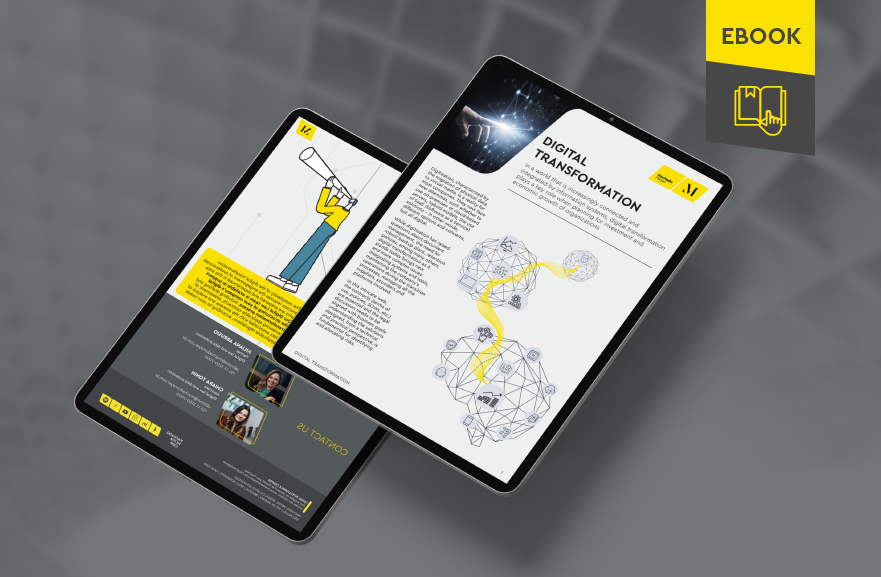
The digital transformation has become indispensable for the growth and innovation of organizations in an interconnected world. This ebook is an invitation to the digital journey, providing guidance for your company to seize the opportunities of the information age while knowing how to face its complexities and challenges.
We address critical aspects of the process, such as:
• Development and integration of systems
• Governance and training
• Service level agreements
• Business continuity
• Information security