Publications

- Category: Labor and employment
Between the end of February and the beginning of March, two injunctions were granted to companies in the pharmaceutical sector, one by the Federal Court of São Paulo and the other by the Federal Court of Rio de Janeiro, establishing the companies involved in the lawsuits are not obliged to send personal and restricted data to the federal government for the preparation of the Salary Transparency Report. The two injunctions also exclude the obligation to publish the Salary Transparency Report on websites/social networks.
The injunction granted by the Federal Court of Rio de Janeiro also determined that the Union must not require the participation of professional unions in the preparation of action plans to mitigate inequality. It also waived the requirement to deliver the action plan to the labor union.
The decision of the Federal Court of São Paulo is based on the fact that Ordinance 3,714/23 and Decree 11,795/23 violate the principle of legality, by extrapolating Law 14,611/23 as follows:
- Ordinance 3,714/23 – by providing that the report to be answered by companies must be prepared based on various data extracted from the Emprega Brasil Portal. This means that it must be based on the questionnaire prepared by the Ministry of Labor and Employment, which includes questions about the existence of a job and salary plan, policies for hiring and promoting women, policies to support parenthood, and criteria for career progression; and
- Decree 11,795/23 – by determining the publication of the report on the companies' websites and social networks.
The decision of the Federal Court of Rio de Janeiro follows the same line as the decision of São Paulo by providing that the requirement of data for the preparation of the report (Ordinance 3,714/23) and the disclosure of this data (Decree 11,795/23) have no legal backing.
In addition to being based on the absence of legal support, the decision of the Federal Court of Rio de Janeiro is based on other points:
- the inspection of equal pay between men and women can occur through other more accurate databases (such as eSocial);
- It is not reasonable to require that this data should be published even on social networks. This requirement may even violate the General Data Protection Law;
- There is, for the time being, no point in disclosing this data to the general public, as equality must be ensured between employees of the same company;
- it is not reasonable to demand all the data provided, even relating to labor policies that are not even mandatory; and
- Distinctions between companies in the same industry cannot be based on labor programs and benefits that are not mandatory.
Given these decisions, would it be the end of the Salary Transparency Report? We don't think so.
The injunctions granted are applicable only to the companies involved in the lawsuit and do not favor other companies that do not obtain a similar decision – decisions resulting from lawsuits filed by associations or groups of companies, despite having greater scope, would also only be applicable to the companies represented in the lawsuit.
In addition, up to now, these decisions are provisional and are still subject to change. In our view, some of the grounds put forward by both would not be sufficient to rule out the obligation to publish the report in a broad and definitive manner.
This is because some of the arguments presented do not seem to strictly reflect the legislation in force. This is the case, for example, of the allegation of violation of the General Data Protection Law.
Specifically in relation to this ground, although Decree 11,795/23 and Ordinance 3,714/23 provide that the report must contain the "value" of wages and remuneration, the report model presented by the Ministry of Labor and Employment does not include the identification of any employee or the indication of salary or remuneration amounts in absolute numbers.
In other words, according to the Salary Transparency Report, it would not be possible to identify the salary of any employee or their respective remuneration – which was even reinforced in the "frequently asked questions" released by the Ministry of Labor and Employment.[1]
This understanding applies even when the comparison is made by the Ministry of Labor and Employment, considering the Large Occupation Group. The list of questions and answers released by the labor authority clarifies that the comparison based on this criterion will only be carried out if the Large Occupation Group has at least three people of each gender.[2]
All these points will possibly be questioned by the Union when it is up to it to express itself. There is therefore a risk that the preliminary injunctions will not be upheld.
There are, however, other grounds used in the decisions which we believe are robust enough to warrant the non-publication of the report, at least for the time being.
Among them, it is noteworthy that Ordinance 3,714/23 extrapolated Law 14,611/23 when it imposed on companies the obligation to answer the questionnaire of complementary information, whose questions do not assess compliance with any legal obligation imposed on companies.
It should be noted that the decisions rendered did not analyze the issue involving the methodology for comparing wage equity, which does not comply with Law 14,611/23 and article 461 of the Brazilian Labor Laws - CLT with regard to the performance of work of equal value or in the exercise of the same function. This point could completely invalidate the model released by the Ministry of Labor and Employment.
In our view, the aforementioned decisions do not have the power to fully invalidate Law 14,611/23, Ordinance 3,714/23 and/or Decree 11,795/23, as they consider specific points of these instruments. At the limit, the main obligation established (i.e., the report itself) would remain. The decision issued by the Federal Court of São Paulo expressly recognizes that "not all the rules provided for in the decree and in the ordinance violate the principle of legality."
Based on these grounds, we believe that, in the future, changes may be made to the regulations in order to restrict the data necessary for the preparation of the report and/or the obligation to publish it to the general public. However, it is unlikely that the obligation to publish the Salary Transparency Report will be extinguished, as this obligation has been imposed by law.
At the same time, on February 28, Legislative Proposal 500/24 (PL 500/24) was presented in the Chamber of Deputies to amend Law 14,611/23 and postpone the mandatory publication of reports to January 1, 2026.
The Legislative Proposal is based on the understanding that it is essential to establish an adequate period for companies to make the necessary adjustments and ensure their compliance with the new legislation.
Despite binding all companies covered by the obligations provided for in the new legislation, PL 500/24 still needs to be approved, which requires a long and complex path to be traveled.
In this context and considering the proximity of the deadline for companies to complete or rectify the questionnaire of complementary information, in addition to the deadline for the publication of the report, we understand that organizations should choose one of the options below, according to their own reality:
- publish the report of the Ministry of Labor and Employment, exactly as provided by the labor authority (recommended only if there is no wage discrepancy);
- publish the report of the Ministry of Labor and Employment and, jointly, publish the company's own report, in which possible inconsistencies in the report of the labor authority are clarified; or
- file a lawsuit seeking not to publish the report of the Ministry of Labor and Employment, but at the same time work on the company's own report, considering that the precedents are not yet well established and different decisions may be rendered – in addition to the obligation to publish the Salary Transparency Report remaining in force.
For companies that choose to file lawsuits, we recommend that it be done as soon as possible, as the deadline for publication of the Salary Transparency Report is maintained for March 31 (except for those companies that obtain a decision authorizing them to refrain from publishing the document).
We continue to follow the topic and will inform you of any news.
[1] Will there be disclosure of individual data?
There is no possibility for individual data to be disclosed. Rigor with the application of the General Data Protection Law is everyone's duty. Where the small number of persons in positions implies the identification of these persons, the information shall not be disclosed. The data refers to companies and not segments. In this case, the data will be compared with the other information requested – the analysis will be made from the set, and not just from an isolated piece of information.
[2] How will the confidentiality of employees who hold unique positions in the company be guaranteed?
The information will be made available to large CBO's groups, thus avoiding the identification of unique situations. In case this situation persists, statistical treatment will be applied indicating the possibility of identifying an identifiable number (up to 3 of each gender) of employees.

- Category: Digital Law
The Bill (PL) 2,338/23, currently under consideration, aims to establish the Regulatory Framework for Artificial Intelligence in Brazil. The proposal has expanded the national debate on the topic and led to the release of opinions elaborated by authorities and entities.
In our ebook "Artificial Intelligence in Brazil," we present the definitions, principles, and concepts related to the use of artificial intelligence proposed by the Bill and help to understand how the initiative seeks to promote research and development of AI systems, enable risk assessment, establish governance measures, and encourage responsible innovation.
In the publication, we also show the repercussions of the Bill and the next steps.

- Category: Labor and employment
The Ministry of Labor and Employment (MTE) has extended the deadline for companies to complete or rectify, on the Emprega Brasil Portal, the questionnaire of additional information that will be part of the Salary Transparency Report.
The deadline, which would have ended on February 29, is now March 8, 2024.
This additional time should be used by companies as an opportunity to carefully analyze the questions and evaluate which will be the most appropriate answers or review the answers already submitted.
The information was published on the MTE website and can be accessed here.
We continue to follow this matter.

- Category: Labor and employment
In recent discussions with clients regarding sending the additional information related to the Salary Transparency Report on the Emprega Brasil Portal, one of the most recurrent doubts was whether the company had a jobs and salaries plan.
After all, what is a jobs and salaries plan? According to the Brazilian Labor Law (CLT), a job and salary plan corresponds to a policy that establishes rules on employee promotions based on "merit and seniority, or only one of these criteria, within each professional category."
Any structure of positions and salaries – such as guidelines – that does not exclusively observe the legal criteria mentioned above does not fit the legal concept of a jobs and salaries plan.
As widely discussed in our previous articles on the Salary Transparency Report, the submission of the additional information related to the Salary Transparency Report on the Emprega Brasil Portal should consider legal concepts, and not administration/people management concepts.
Companies should know that, by expressly stating in the additional information form of the Salary Transparency Report that they have a jobs and salaries plan, they are subject to legal consequences.
The first of these consequences is the impossibility of using the legal requirements of equal pay as a justification for possible salary differences between employees occupying the same position. This is because, by legal determination, the existence of a jobs and salaries plan prevails over the salary equalization rules provided for in article 461 of the CLT that regulates equal pay for equal work.
This is an important consequence, but even more relevant is the second consequence: the jobs and salaries plan can be incorporated into the employment contract, as well as the career plan. By implementing these policies, the company recognizes that both can be incorporated into the employment contract of employees in the way they are established.
Such a contractual incorporation would difficult future changes and, consequently, could hinder the company's organizational structure. This topic has been widely discussed by labor courts over the past few years. Below is just one example:
ORDINARY APPEAL. COMPANHIA CEARENSE DE TRANSPORTES METROPOLITANOS METROFOR. CHANGE IN THE JOBS AND SALARIES PLAN THAT CONSTITUTES A HARMFUL CONTRACTUAL CHANGE. The adoption by the employer of a new Jobs and Salaries Plan is a harmful contractual change, which implies notorious damage to the worker, especially when the latter's adhesion is waived, and its transmutation is done automatically, without consulting his agreement. Under the terms of Precedent No. 51 of the Brazilian Superior Labor Court (TST), regulatory clauses that revoke or change previously granted benefits will only affect workers hired after the revocation or amendment of the regulation (...)[1]
In our view, general people management guidelines on jobs and salaries structure do not legally characterize jobs and salaries plans and/or career plans.
That is why it is essential that, when sending the additional information related to the Salary Transparency Report on the Emprega Brasil Portal, companies evaluate with great caution whether or not they have a jobs and salaries plan.
[1] Regional Labor Court of the 7th Region, 0000711-50.2012.5.07.0006, rapporteur Regina Glaucia Cavalcante Nepomuceno, 1st Panel, publication date: April 4, 2014

- Category: Labor and employment
The Ministry of Labor and Employment (MTE) recently clarified the format and content of the Salary Transparency Report (Report) and what would be the next deadlines to be observed by companies until March 30, when the first Report should be published by companies.
As we pointed out in our last article, the Report will be divided into two parts. The first will consist of the complementary information provided by the companies on the Emprega Brasil Portal and the second will present the comparison of salaries and remuneration of employees.
The first step to be taken by companies is to access the Emprega Brasil Portal and send the complementary information requested by the MTE by February 29. [This deadline was extended to March 8, 2024 by the MTE.]
At this stage, it is essential that the Human Resources (HR) team responsible for sending the information is aligned with the legal team. This is because HR's understanding of certain topics (such as what characterizes a positions and salary plan) may not be the same understanding from a legal point of view. Depending on the information sent, the company would be exposed to consequences on the result of the Report to be prepared by the MTE.
After the deadline for the submission of additional information by the companies, the MTE will begin the preparation of the Reports, which will be available to the companies until March 15.
Once the Report is released by the MTE, companies will have until March 30 to publish their Report on their websites, social networks or similar instruments and ensure wide dissemination to their employees, collaborators and the general public.
In view of this, until the beginning of March, companies should work internally to anticipate what will be the possible panorama of the comparison of positions and salaries between women and men that will be presented in the Report prepared by the MTE.
It is worth noting that although the MTE has stated in its events that the Salary Transparency Report will be carried out by CNPJ (tax ID) – that is, each branch of the company will have its own Report when it has 100 or more employees – this position is contrary to Law No. 14,611/23, which expressly provides that the Report must be prepared and published by private legal entities with 100 or more employees (even if there are CNPJs that have fewer than 100 employees).
Therefore, the ideal is that, when carrying out the prior analysis, companies simulate the two scenarios: the preparation of Reports by CNPJ – when they have more than 100 employees – and the preparation of a single Report, considering the sum of the company's employees.
Having made these considerations, the analysis prior to the publication of the Report will allow the company to identify whether the MTE Report will indicate:
- whereas there is no discrepancy in pay and pay criteria between women and men;
- minimal discrepancy in wages and remuneration criteria between women and men; or
- large discrepancy in pay and remuneration criteria between women and men.
In the first (unlikely) scenario, there are no measures to be adopted by the company, as there is no inconsistency in the salaries and remuneration criteria practiced between women and men. Therefore, it is up to the company to continue with the publication of the Report by March 30.
In the second scenario, as the discrepancies pointed out by the MTE Report are minimal, the company would find it easy to legally clarify the reason for these discrepancies. The most recommendable conduct to be adopted in this case would be to proceed with the publication of the MTE Report by March 30and, at the same time, to publish the legal clarifications – previously and internally prepared – on the minimal inconsistencies exposed in the Report.
In the third scenario, it is likely that the methodology used by the MTE will present large discrepancies that lead anyone who reads the Report prepared by the MTE to conclude that the company practices discrimination between women and men. In this case, in order to avoid a misinterpretation of the Report, as well as possible negative effects arising from the methodology used by the MTE, we believe that the best strategy to be adopted by the company would be to file a judicial measure with an injunction against the MTE.
The purpose of this measure would be to allow the company to refrain from publishing the Report prepared by the MTE and to publish exclusively its own report, following the parameters of the law.
For the preliminary injunction to be granted, the company must, together with the legal grounds on which the injunction is based, demonstrate the large discrepancies between the MTE Report and the reality practiced in the company, as well as the losses resulting from the publication of the MTE Report with discrepant information. Examples of these losses would be the company's exposure to reputational and competitive damage. It is also recommendable for the company to submit its own report to the court, both to highlight the discrepancies and to ask the court to determine that the Report prepared by the MTE not be disclosed by any source.
Therefore, for the company to have a complete and clear view of its current practices in the face of the scenario to be analyzed and exposed by the MTE, it is essential that, in addition to the prior evaluation, the company prepares its own report, as part of its defense and image strategy to be passed on to its employees, stakeholders and labor authorities.
In view of the above and considering the deadline for publication of the Report, the ideal is that, if the company chooses to prepare and anticipate the results of the MTE Report, the preliminary analysis and the report itself should be ready by March 15th.
In this way, the company will be able to quickly present its real and effective practices applied to salary and remuneration and take the appropriate measures strategically.
- Category: Digital Law
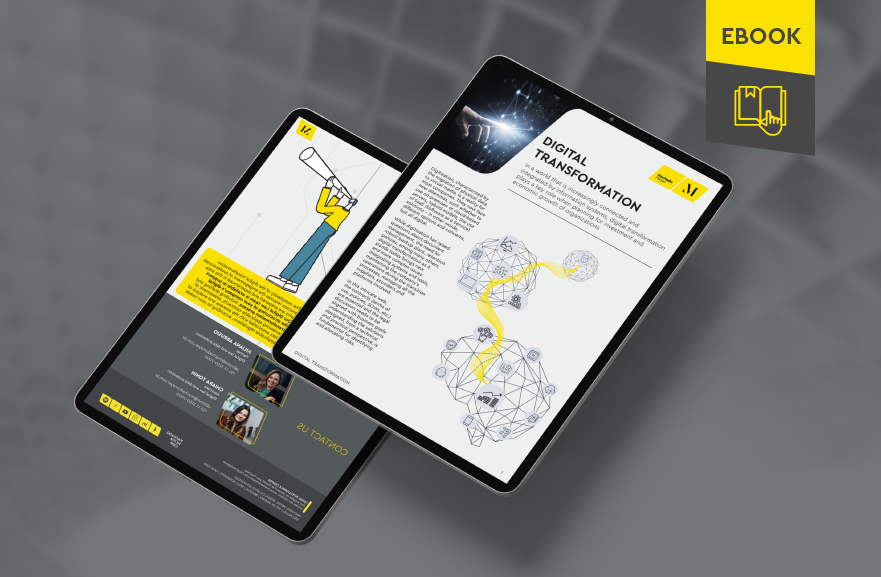
The digital transformation has become indispensable for the growth and innovation of organizations in an interconnected world. This ebook is an invitation to the digital journey, providing guidance for your company to seize the opportunities of the information age while knowing how to face its complexities and challenges.
We address critical aspects of the process, such as:
• Development and integration of systems
• Governance and training
• Service level agreements
• Business continuity
• Information security